
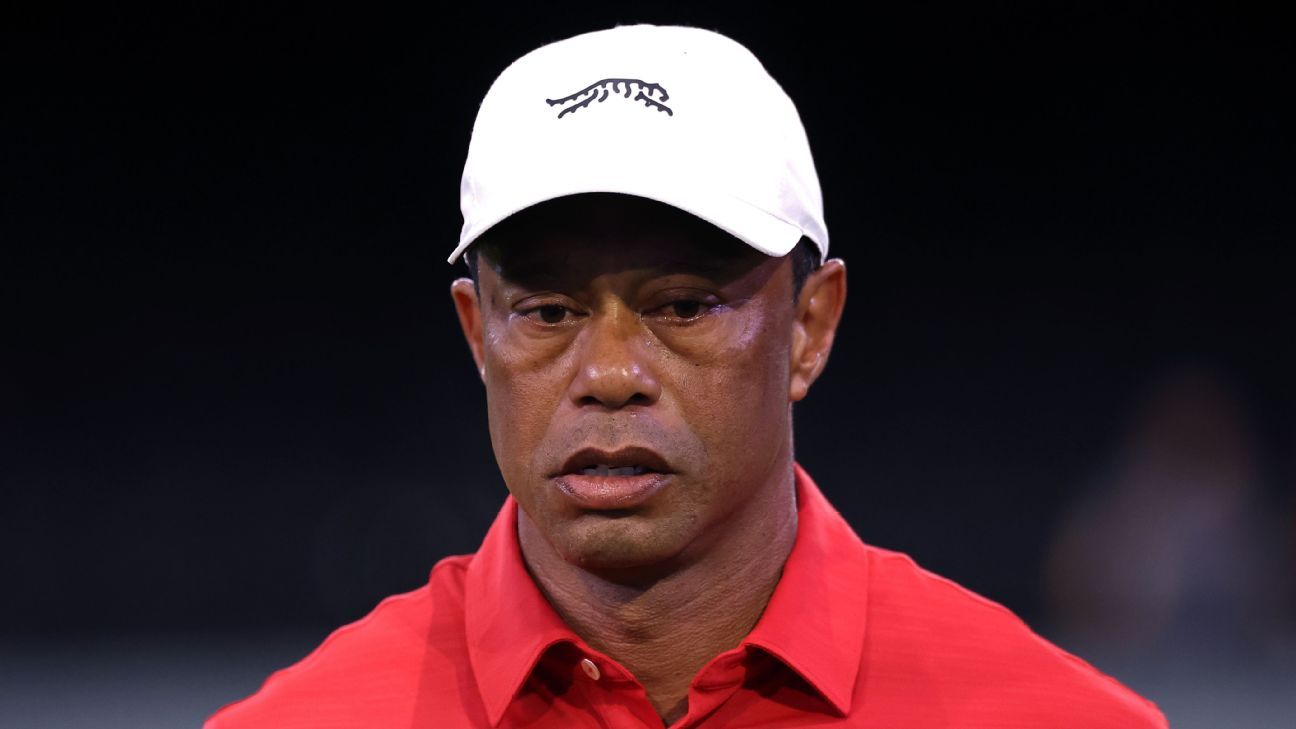
Tiger Woods: Another Tumultuous Chapter Closes, For Now – Golf Icon Steps Away for Health Amidst DUI Charges
The golf world, once again, finds itself holding its breath as its most transcendent figure, Tiger Woods, announced he is stepping away from the game “to seek treatment and focus on my health.” This seismic declaration, delivered in a statement Tuesday, arrives like a thunderclap just four days after Woods, 50, faced misdemeanor DUI charges following a rollover crash in Jupiter, Florida. He entered a plea of not guilty earlier Tuesday, setting the stage for yet another personal battle to unfold in the public eye.
Woods’ words carry the weight of a legendary career punctuated by both unparalleled triumph and agonizing personal turmoil. “I know and understand the seriousness of the situation I find myself in today,” Woods stated, his sentiment echoing previous apologies and promises. “I am stepping away for a period of time to seek treatment and focus on my health. This is necessary in order for me to prioritize my well being and work toward lasting recovery.” The phrase “lasting recovery” hangs heavy, a stark reminder of past struggles and the ongoing, seemingly relentless challenges that plague the icon.
— Tiger Woods (@TigerWoods)March 31, 2026
This isn’t just about golf; it’s about the man behind the myth. Woods’ commitment to returning “in a healthier, stronger, and more focused place, both personally and professionally” speaks volumes about the depth of his current predicament. The request for privacy for his family and loved ones underscores the personal toll this latest incident has taken, pulling back the curtain on the quiet desperation that often accompanies public figures battling private demons.
The Unraveling: A Detailed Look at the Incident
The PGA Tour’s statement, while supportive – “Tiger Woods is a legend of our sport… But above all else, Tiger is a person, and our focus is on his health and well being” – cannot mask the profound concern rippling through the sport. The details emerging from the Martin County (Florida) Sheriff’s Department arrest affidavit paint a grim picture of the events that transpired last Friday.
According to Deputy Tatiana Levenar’s arrest affidavit, Woods admitted to being distracted by his cellphone and changing the radio station, causing him to not see a slowing truck. This momentary lapse led to his Range Rover SUV clipping a trailer, swerving, flipping on its side, and sliding down the road. The severity of the crash itself – a rollover – immediately raises red flags, especially given Woods’ history of severe injuries from his 2021 Los Angeles crash.
The deputy’s observations upon arrival were particularly troubling. Levenar noted Woods was “sweating profusely” and his movements were “lethargic and slow.” While initial breath tests showed no alcohol, Woods’ refusal to submit to a urinalysis or blood test for other drugs immediately shifted the focus of the investigation. The affidavit details a litany of concerning signs: Woods, after agreeing to perform field sobriety exercises, was observed “limping and stumbling to the right.” He cited his seven back surgeries and over 20 operations on his right leg – injuries sustained from the catastrophic 2021 accident – explaining his physical limitations. Yet, once his sunglasses were removed, Levenar observed his eyes were “bloodshot and glassy” and his pupils “extremely dilated.”
When pressed, Woods denied consuming alcohol but admitted to taking “a few” prescription pills earlier that morning. The redacted names of these medications only fuel speculation, especially with the discovery of two hydrocodone pills in his left pants pocket. Hydrocodone, a powerful opioid painkiller, was a drug found in his system during his May 2017 DUI arrest, creating a chilling parallel to a past he seemingly worked so hard to overcome. Based on his performance during the field sobriety tests and the totality of the circumstances, Deputy Levenar concluded that Woods’ “normal facilities were impaired, and he was unable to safely operate the motor vehicle.”
Key Moments from the Tumultuous Timeline:
- Friday Morning, March 28, 2026:Tiger Woods’ Range Rover SUV crashes in Jupiter, Florida, rolling over after hitting a truck’s trailer. He is helped out of the vehicle by bystanders.
- Friday Morning, March 28, 2026:Martin County Sheriff’s deputies respond. Woods is observed sweating profusely, moving lethargically, and showing signs of impairment. He informs deputies of multiple past surgeries.
- Friday Morning, March 28, 2026:Woods’ breath test shows no alcohol. He refuses to submit to urinalysis or blood tests for other drugs. Deputies note his “bloodshot and glassy” eyes and dilated pupils.
- Friday Morning, March 28, 2026:Two hydrocodone pills are found in Woods’ pocket, a drug previously linked to his 2017 DUI arrest.
- Friday Morning, March 28, 2026:Following field sobriety tests, deputies determine Woods is impaired and unable to safely operate a vehicle. He is arrested on misdemeanor DUI with property damage and refusal to submit to a lawful test.
- Friday Evening, March 28, 2026:Woods is transported to Cleveland Clinic Martin South ER, where he refuses medical treatment. He is then booked into Martin County Jail and released on $1,000 bond.
- Tuesday, March 31, 2026:Attorney Douglas Duncan submits a plea of not guilty on Woods’ behalf, demanding a jury trial and waiving his arraignment hearing.
- Tuesday, March 31, 2026:Woods releases a public statement announcing he is stepping away from golf to seek treatment and focus on his health, prioritizing well-being and seeking lasting recovery.
A Troubling Pattern: The Ghost of Crashes Past
This latest incident forces an uncomfortable revisit to Woods’ past struggles. The 2017 DUI arrest, where he was found asleep at the wheel with two flat tires and damage, was attributed to a “bad mix of painkillers.” That incident led to a plea deal and mandatory diversion programs. Then, the horrific 2021 single-car crash in Los Angeles, where his SUV rolled multiple times at an estimated 84-87 mph in a 45 mph zone, left him with “open fractures” and extensive leg injuries requiring emergency surgery. These are not isolated events; they form a disturbing mosaic of a life teetering on the edge, where physical pain and the reliance on medication seem to intersect with dangerous decision-making.
For a man who has undergone seven back surgeries and more than 20 operations on his right leg alone, the constant battle against pain is undeniable. But the public is left to wonder: at what point does managing pain cross the line into impairment, and what underlying issues contribute to these repeated catastrophic failures of judgment? The juxtaposition of his recent TGL finals appearance for his Jupiter Links team – just three days before the crash – with his uncertain Masters status, highlights the precarious balance he has been attempting to maintain.
PGA Tour CEO Brian Rolapp’s statement reflects the deep affection and respect for Woods, but also the universal concern: “My thoughts are with him and his family as he takes this step, for which he has my full respect and support.” This isn’t just a golfer stepping away; it’s a global icon confronting deeply personal demons, and the entire sporting world watches with a mixture of sympathy, frustration, and a yearning for a true, lasting recovery.
The Road Ahead: Prediction for Tiger Woods
The announcement to seek treatment is a critical, albeit overdue, step. However, given the recurring nature of Woods’ struggles, a prediction for a swift return to competitive golf, let alone championship form, feels overly optimistic. The immediate future will undoubtedly be dominated by his treatment program and the looming legal process in Martin County. The not-guilty plea signals a fight, potentially a prolonged one, which will further distract from any athletic comeback.
Long-term, this latest incident could be a pivotal moment. It could either be the catalyst for genuine, profound change – a rock bottom that finally initiates a sustainable path to sobriety and health – or it could represent another tragic turn in a cycle of public apologies followed by private relapses. For his golf career, the outlook is increasingly bleak. Even if his legal issues are resolved and his health improves, the physical toll of his injuries, compounded by the mental and emotional strain of these recurring personal battles, makes a return to the elite level of the PGA Tour exceptionally challenging. We might see occasional appearances, perhaps at major championships he deeply reveres, but the era of Tiger Woods as a consistent contender appears to be definitively behind us.
Ultimately, Woods’ greatest challenge now isn’t conquering Augusta or St. Andrews; it’s conquering himself. His legacy, once defined solely by his unparalleled achievements on the course, is now inextricably linked to his very human, and very public, struggles off it. For the sake of his health, his family, and the millions who still root for him, one hopes this time, the recovery truly is lasting.