
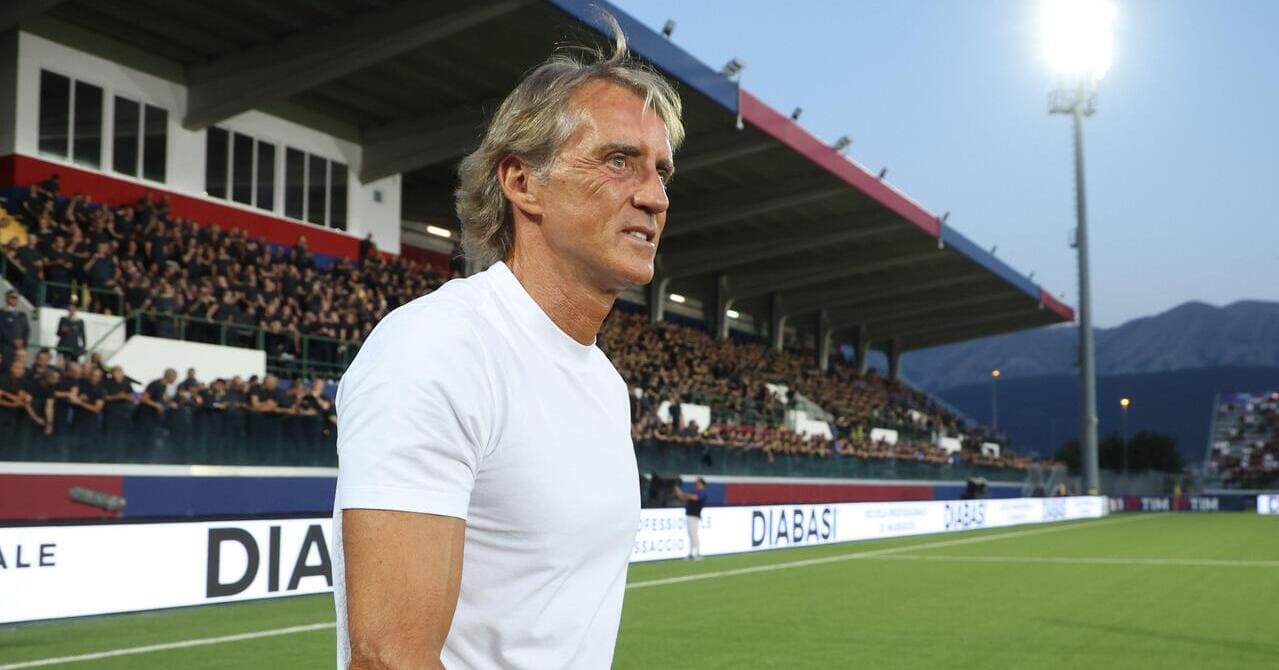
Mancini’s Risky Encore: Can The Maestro Reawaken Italy’s Sleeping Giant?
The footballing world watches with bated breath as Roberto Mancini, the architect of Italy’s glorious Euro 2020 triumph, steps back into the Azzurri hot seat for a second, seismic stint. This isn’t just a return; it’s a desperate plea, a high-stakes gamble to rescue a footballing nation reeling from unprecedented failure. At 61, the former Manchester City boss inherits not the champions he once forged, but a side that has astonishingly missed three consecutive World Cups – a dark stain on a four-time global champion.
“I’m here to bring Italy back to where it deserves to be,” Mancini declared at his unveiling, a statement laced with both steely determination and the immense weight of expectation. “Regardless of what happened in 2023, the goal is always to win and play well. I’m convinced the players are there and that they’re good, especially the young ones.” His ambition is clear: “I’d like to win a major trophy, maybe even two. I’d like to build a project with the national team.”
This isn’t merely about qualifying for Euro 2024 in England; it’s about restoring a shattered national identity. Italy, a titan of the sport, has failed to navigate past the World Cup group stage since their last triumph in 2006. That stark reality underscores the monumental task ahead. Mancini, the man who dared Italy to dream again after the ignominy of missing the 2018 World Cup, now faces an even more entrenched crisis of confidence and competence.
The analysis of Mancini’s return must dissect the dichotomy of his past success and present challenge. His Euro 2020 squad was a meticulously crafted symphony of seasoned veterans and emerging talents, playing an intoxicating brand of free-flowing, attacking football. That team embodied unity, resilience, and a tactical fluidity that surprised many. However, the subsequent failure to qualify for Qatar 2022 raises uncomfortable questions. Was the Euro 2020 victory an anomaly, a peak followed by an inevitable trough? Or did the squad’s core simply age out, with the pipeline of talent failing to replace them adequately?
Mancini’s belief in the current crop of players, “especially the young ones,” offers a glimmer of hope. Names like Gianluca Scamacca, Giacomo Raspadori, Nicolò Fagioli, and Destiny Udogie represent the future, but their integration and development into a cohesive international force is far from guaranteed. The tactical blueprint for this second era remains to be seen. Will Mancini revert to the expansive, possession-based football of his first stint, or will he adopt a more pragmatic approach, prioritizing solidity and results given the pressure cooker environment?
His first competitive match against Belgium in the Nations League promises an immediate litmus test. But before that, the ghost of recent failures looms large, demanding answers and a clear path forward.
Game Highlights: Euro 2024 Qualifier – Italy vs. Switzerland (2-2)
The journey back to the top is rarely smooth, and Italy’s recent Euro 2024 qualifier against perennial rivals Switzerland perfectly encapsulated the challenges facing Roberto Mancini. Played out in a raucous Stadio Olimpico, the 2-2 draw was a rollercoaster of emotions, highlighting both the tantalizing potential and nagging vulnerabilities of the Azzurri.
First Half Fury and Swiss Precision
Mancini opted for a familiar 4-3-3, with Nicolo Barella and Sandro Tonali pulling the strings in midfield, attempting to unleash the pace of Federico Chiesa and the guile of Giacomo Raspadori upfront. The opening 20 minutes saw Italy dominate possession, but without truly threatening Yann Sommer’s goal. Switzerland, ever disciplined, absorbed the pressure and struck with clinical efficiency in the 25th minute. A swift counter-attack, orchestrated by Granit Xhaka, saw Ruben Vargas ghost past Giovanni Di Lorenzo and finish coolly past Gianluigi Donnarumma. The Olimpico fell silent, a collective groan echoing the frustrations of recent years.
Italy responded with renewed vigour, their passing becoming sharper, their movement more incisive. In the 38th minute, a moment of individual brilliance from Chiesa brought them level. Picking up the ball wide right, he cut inside past two defenders, unleashing a venomous left-footed shot that nestled in the far corner – a reminder of his Wembley heroics. The roar of the crowd was deafening, hope reigniting in an instant.
Second Half Drama and Missed Opportunities
The second half began with Italy pressing for the lead. Mancini’s half-time instructions seemed to have injected a new urgency. However, just as Italy looked poised to take control, Switzerland delivered another sucker punch. A lapse in concentration at the back allowed Breel Embolo to capitalize on a deflected shot, heading home from close range in the 57th minute. Donnarumma had no chance.
Trailing again, Mancini made bold changes, bringing on Gianluca Scamacca for Raspadori to add a physical presence up top, and injecting fresh legs with Bryan Cristante in midfield. The impact was almost immediate. Scamacca, winning a crucial aerial duel in the 75th minute, flicked the ball into the path of a surging Barella, who finished with aplomb to make it 2-2. The final 15 minutes were a frantic affair, with Italy pushing relentlessly for a winner. Chiesa came agonizingly close, hitting the post with a curling effort, and Scamacca had a header cleared off the line in stoppage time. While the draw felt like two points dropped, the fighting spirit and late surge offered a glimpse of the resilience Mancini is striving to rebuild.
Mancini reflected: “If Italy qualified for the World Cup, as would be normal, they would still be a team aspiring to reach the final, even if they weren’t among the favourites. We want to become a team to beat: now we’ll prepare for the European Championship and then we’ll think about the World Cup.”
The Road Ahead: Building a Project, Restoring a Legacy
Mancini’s “project” isn’t just about results; it’s about a cultural reset, fostering a sense of pride and identity that has been eroded by years of underachievement. It requires patience, despite the inherent impatience of Italian football, and a clear vision for integrating youth while maintaining a competitive edge. The talent, as Mancini insists, is there. But nurturing it, instilling the winning mentality, and forging a cohesive unit under immense pressure will be the true test of his managerial acumen.
Prediction: A Bumpy but Ultimately Successful Qualification
Mancini’s return is a calculated risk, but one that Italy desperately needs. His previous success, combined with a genuine belief in the next generation, makes him the best candidate to navigate this treacherous period. While the road to Euro 2024 qualification will be fraught with challenges, and there will undoubtedly be more draws like the one against Switzerland, I predict Italy will secure their spot in the tournament. The World Cup remains a more distant and daunting prospect, but under Mancini’s renewed leadership, the Azzurri will, at minimum, restore a competitive edge and rekindle the flickering flame of hope for future glory. They may not be contenders for Euro 2024, but they will be a force to be reckoned with once more, laying the groundwork for a genuine World Cup challenge beyond that.