
While numerous AI proponents are convinced the technology can generate entire movies and television series from scratch, assertions that Hollywood’s demise is imminent appear highly premature. This becomes evident upon observing the creations people achieve with prevailing image and video models available today. Tools such as Sora, Veo, and Runway do not seem particularly well-suited for producing entertainment content.
However, an increasing number of AI companies are now developing a novel class of generative models. These are specifically crafted to meet the requirements of creative professionals across the entire development pipeline, simultaneously sidestepping concerns such as possible copyright violations. Nevertheless, what truly distinguishes these models from others is their alleged capacity for customization via training, transforming them into specialized instruments precisely tailored for each individual undertaking.
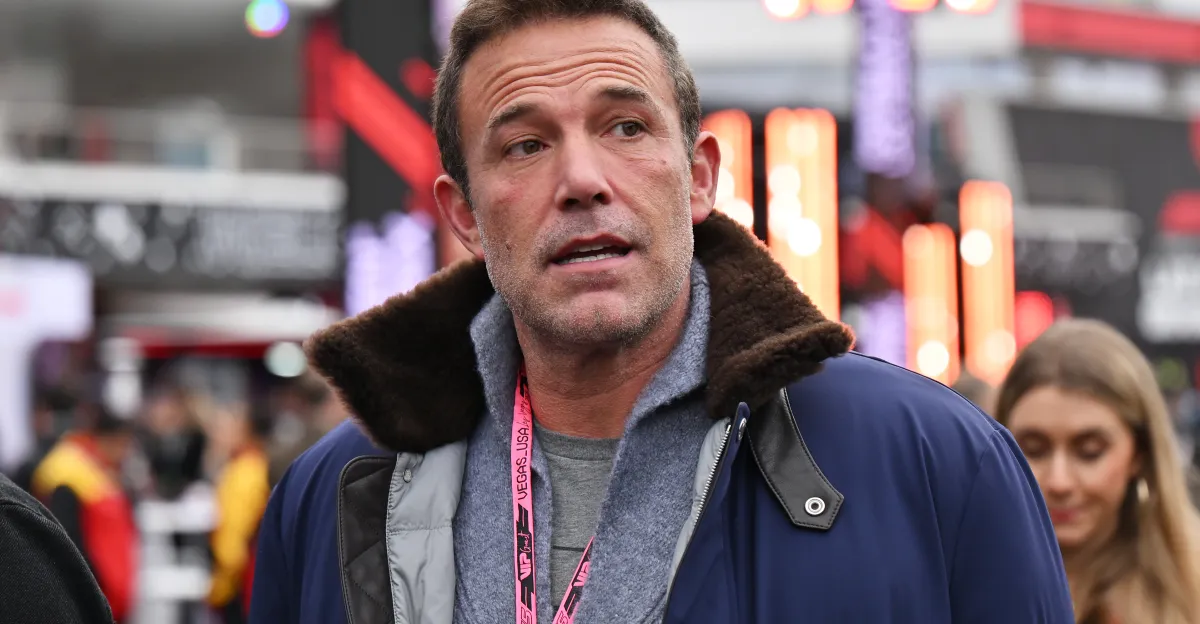
The aspect of customization received significant emphasis from Netflix last week, when the corporation revealed its acquisition of InterPositive, an AI startup established by Ben Affleck in 2022. While Netflix has not divulged the exact sum paid for InterPositive, *Bloomberg* suggests the acquisition price might reach $600 million. Even though generative AI has been employed in Netflix productions previously, this acquisition stood out as the streaming service openly declared its intention to integrate the technology as a fundamental element of its operations. Netflix — which chose not to comment to *The Verge* for this article — offered scant details regarding the internal deployment timeline and methods for InterPositive’s models. However, the company is positioning InterPositive’s AI as an instrument intended to “enable” moviemakers instead of removing them from the creative process.
Regarding the acquisition, Affleck elaborated that InterPositive’s team recorded “a unique dataset within a regulated soundstage, replicating the conditions of a comprehensive production,” which forms the foundation of the company’s principal model.
“My aim was to construct a procedural system that encapsulates on-set occurrences, utilizing terminology consistent with what cinematographers and directors commonly employ, and incorporating the level of uniformity and command they anticipate,” Affleck stated. “The outcome of this foundational endeavor yielded intentionally more compact datasets and models, concentrating on cinematic methods — as opposed to performances — thereby crafting instruments that artists can employ, govern, and derive advantages from.”
Through a procedural approach centered on this technology, Netflix is capable of generating distinct iterations of InterPositive’s model by subjecting it to training using dailies from ongoing filming sessions. Directors can subsequently leverage these project-tailored models to produce and modify various visual components during later stages of post-production. Netflix asserts these models empower directors to fine-tune a particular scene’s illumination, remove undesired elements such as prop supports, or wholly substitute backdrops. Given that these models undergo training with raw footage from the films or series for which they are utilized, their generated results can (allegedly) align effortlessly with a filmmaker’s artistic conception.
While this appears formidable in theory, it assumes InterPositive’s primary models received sufficient training across various production scenarios to yield outputs consistent with any type of scene directors envision. A complicating factor is the absence of universal benchmarks for elements such as Optimal Lighting™ that could be universally applied to every film or series Netflix might distribute. This could explain why InterPositive’s models require training on dailies before they can produce anything genuinely valuable during post-production. Nonetheless, it’s readily apparent why such a proposition would attract a studio aiming to launch additional projects while simultaneously curtailing expenses.
Affleck’s depiction of InterPositive bears a strong resemblance to the fundamental concept underpinning Asteria, Bryn Mooser’s AI-focused studio, presently engaged in producing Natasha Lyonne’s forthcoming film concerning a virtual reality game. Similar to InterPositive, Asteria’s principal offering is an exclusive generative AI model, adaptable through training on datasets comprising a client’s unique artwork. Furthermore, Asteria recently unveiled its Continuum Suite, an AI-driven operating system designed to scrutinize screenplays and compile an intricate database encompassing details on characters, settings, visual layouts, timelines, and financial allocations.
Asteria’s primary marketing advantage lies in its standard AI model being deemed “ethical” due to its foundational dataset consisting of company-licensed content. However, while InterPositive’s models appear more geared towards minor adjustments, Asteria’s have been employed to create elements such as full characters and environmental components that possess a coherent visual style originating from the model’s dataset.
Consequently, Asteria’s technology proves perfect for directors aiming to enrich their productions with elements that collectively convey a unified artistic team’s design. Theoretically, it additionally aids studios in deterring partners from utilizing generative AI in manners that might instigate legal challenges regarding intellectual property theft. Both Asteria and InterPositive perceive their offerings as instruments capable of accelerating production schedules without incurring additional costs; this perspective appears to be the principal catalyst encouraging more conventional studios to adopt AI solutions.
In contrast to Netflix, the majority of other production entities have not been nearly as transparent regarding their engagement with and exploration of AI. Nevertheless, the industry’s pivot towards an AI-friendly stance is discernible in initiatives such as Adobe’s recently declared collaboration with various studios to forge “IP-secure” models, applicable across the company’s extensive collection of production utilities. What remains more elusive, however, is precisely how, or if at all, human creators will gain from this transformation.
Expediting content creation
and more economically can assist production companies (along with their executive management) in amplifying earnings. However, these advancements do not inherently guarantee that artistic professionals will retain their employment, secure more substantial remuneration, or enjoy increased leisure time away from their workplaces. Despite the frequent discussions by these emerging AI firms regarding the “empowerment” of artists, they rarely elaborate on the concrete form this empowerment actually takes. Consequently, until they either achieve this clarity or are capable of doing so, a degree of skepticism towards their offerings remains advisable for everyone.