
Similar to the Omron Evolv ($75), this blood pressure device features its electronic components integrated directly into the cuff. This may render its operation somewhat cumbersome, particularly for individuals without a significantly large arm. Furthermore, Aktiia advises applying the cuff to the arm opposite to the one bearing the monitoring band. External blood pressure monitors cannot be employed to calibrate the cuff, thus preventing verification of Aktiia’s proclaimed precision. (The Hilo received FDA approval in 2025, having undergone evaluation and scrutiny in numerous rigorous clinical studies spanning several years, and it conforms to the ISO 81060-2 standard for confirming the exactness of blood pressure monitoring devices.)
A typical blood pressure monitor cuff gauges your blood pressure—the force the blood exerts against your arterial walls—by inflating to briefly halt circulation. Your physician, or currently an electronic oscillometric sensor, subsequently detects when blood flow in your vessels ceases and resumes; the maximum reading represents your systolic BP, and the minimum indicates your diastolic.
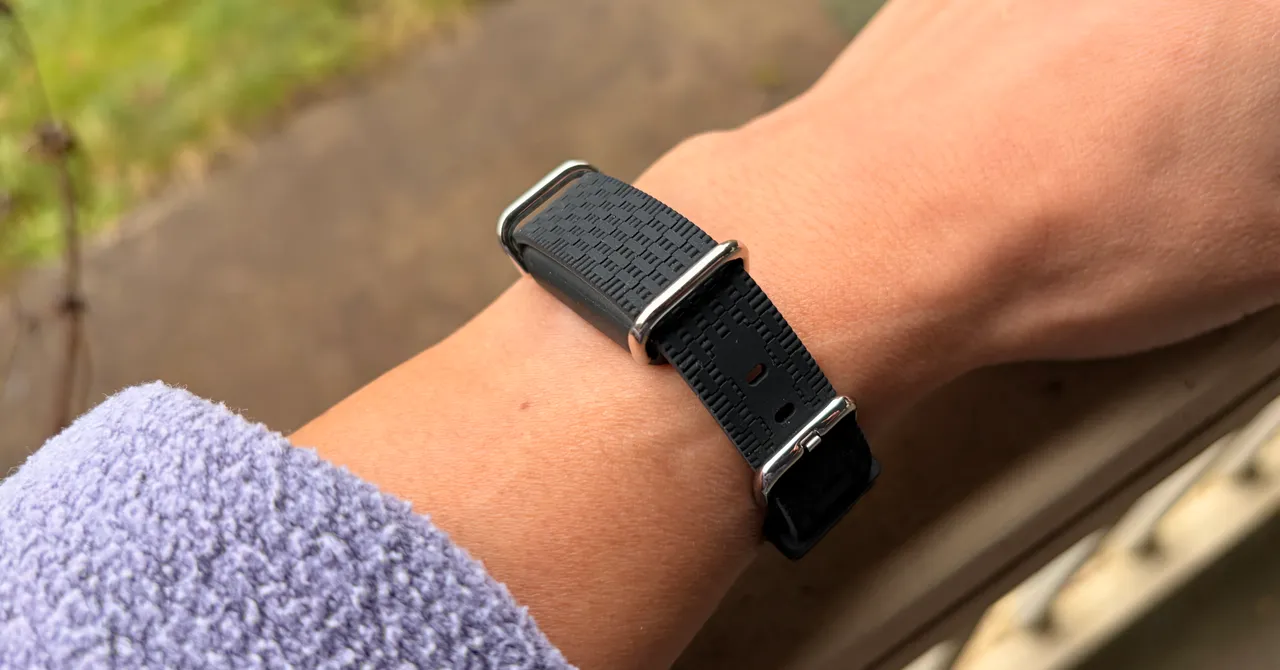
Rather than exerting force on your blood vessels, the Hilo band employs the identical photoplethysmography (PPG) light-based sensors already present in most fitness trackers to examine the pulse waveform of arteries beneath your skin. It subsequently utilizes its exclusive computation method to assess your blood pressure on numerous occasions daily during periods of inactivity.
Nocturnal Readings
ScreenshotHilo via Adrienne So
Uninterrupted blood pressure monitoring, particularly during activities such as strolling, sleeping, or simply resting, stands as the benchmark for evaluating your cardiovascular health. Should your blood pressure fail to decrease during nocturnal hours, it serves as a powerful sign that you could suffer from a heart ailment. Regrettably, unwinding becomes quite challenging if your arm is constantly compressed by a device while you are attempting to slumber.
For individuals unaware of existing hypertension, monitoring this condition is not something many of us might typically consider. My blood pressure consistently appears optimal whenever I visit a clinic, prompting the question: why would I inquire about measuring it while recumbent or during the night?
The Aktiia Hilo proves highly beneficial as it allows me to observe my blood pressure decreasing during slumber. It also calculates the mean of your BP readings across the day, instead of performing intermittent checks. Certain individuals, such as my spouse, maintain low blood pressure irrespective of their activities. My own can elevate suddenly if I encounter an incorrect email, become mildly dehydrated, or if my ankles are interlocked while taking a reading.
I compared this device with the Withings BPM Vision and verified that the readings matched; nevertheless, it’s convenient to be able to assess without dedicating half an hour of your daily schedule to sit down and get ready.
With the Apple Watch having enhanced its power longevity, allowing continuous wear for 24 hours daily, it is now also capable of observing your blood pressure during nocturnal hours. (The latest Whoop band also claims to provide high blood pressure alerts, though it is worth noting that Whoop has not sought approval for this feature with the FDA regulatory body.) However, the Apple Watch can merely identify trends over a 30-day duration. It does not provide steady systolic and diastolic values that your physician can review.
{content}
Source:{feed_title}