
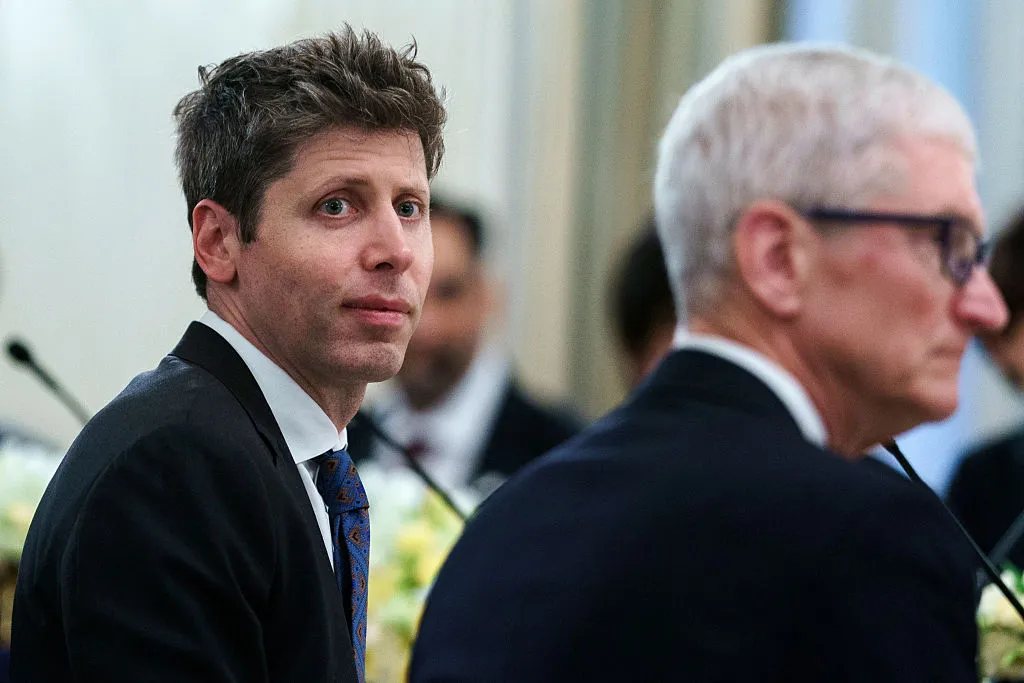
Apple is now seeking a preliminary injunction in its trade secrets case against OpenAI, which aims to stop the AI model maker from moving forward with developing an AI device or other products based on Apple’s technology. The iPhone maker also claims that more of its former employees may be involved with the trade secrets theft.
Key Takeaways
- Escalating Legal Battle:Apple has intensified its trade secrets lawsuit against OpenAI, seeking a preliminary injunction to halt development of AI devices and requesting expedited discovery into alleged intellectual property theft.
- Broader Network of Alleged Involvement:New evidence presented by Apple suggests the misconduct extends beyond the initially named individuals, potentially implicating at least 11 additional former Apple employees and pointing towards a coordinated effort linked to OpenAI’s device ambitions.
- Clash of Narratives:While Apple alleges a deliberate scheme to steal proprietary information for OpenAI’s product development, OpenAI vehemently denies the claims, asserting its focus on innovation and countering with accusations of Apple’s procedural errors and inadequate security.
In a significant escalation of its legal battle against OpenAI, Apple has filed a new motion seeking a preliminary injunction and expedited discovery, signaling a deepening commitment to protect its proprietary technology. The iPhone maker is aiming to prevent OpenAI from leveraging what it claims are stolen trade secrets to develop new AI devices or other products. This move not only underscores Apple’s resolve but also suggests a broader conspiracy than initially understood, as the company now claims evidence points to the involvement of at least 11 other former employees.
At the heart of Apple’s latest filing is a request for expedited discovery from several key parties: former Apple senior systems engineer Chang Liu and Chief Hardware Officer Tang Yew Tan, both now affiliated with OpenAI or related ventures; OpenAI itself and its foundation; and io, the device startup co-founded by Apple’s former lead designer, Jony Ive, where Tan reportedly holds a senior position. The urgency for expedited discovery stems from Apple’s belief that it has “good cause” to suspect a wider network of individuals may have participated in the alleged theft of its intellectual property.
Apple’s Expanding Allegations: A Coordinated Effort?
Apple’s ongoing internal investigation has unearthed what it considers compelling new evidence, painting a picture of a more extensive and potentially coordinated effort to pilfer sensitive data. Beyond the initially named individuals like Liu, Tan, and OpenAI employee Yu-Ting Peng, Apple now asserts that 11 additional former employees may have either witnessed or directly participated in the alleged scheme. This broadening scope suggests Apple is uncovering digital footprints and communication trails that indicate a pattern of misconduct, aiming to bolster its case against the AI behemoth.
The filing provides illustrative examples of this alleged activity, detailing specific instances of what Apple views as suspicious behavior. “For example, another former Apple employee seems to have met with Mr. Liu and Ms. Peng in advance of Ms. Peng’s interview at OpenAI and discussed with them during that meeting Apple proprietary information relating to unannounced products,” the filing states. This particular allegation suggests pre-meditation and the sharing of highly confidential data even before formal employment at OpenAI, underscoring the severity of the alleged breach. Another concerning revelation points to a former Apple employee who allegedly “took screenshots of confidential Apple documents relating to an unannounced Apple product before an interview at OpenAI,” further indicating a deliberate attempt to extract valuable, sensitive information directly related to Apple’s future product roadmap.
Perhaps most tellingly, Apple notes a surge in former employees now working at OpenAI reaching out to return company-issued work devices *after* Apple filed its initial complaint. This wave of belated returns, Apple implies, could be an attempt to cover tracks or mitigate potential legal exposure, suggesting awareness among a wider group of individuals about the ongoing investigation and the seriousness of the allegations. For a company as notoriously secretive as Apple, the protection of its “unannounced products” – the lifeblood of its future innovation and market advantage – is paramount, making these alleged breaches particularly egregious and the pursuit of a preliminary injunction a critical strategic move.
The Stakes: Preliminary Injunction and OpenAI’s Hardware Ambitions
The request for a preliminary injunction is a powerful legal maneuver. If granted, it would represent a significant setback for OpenAI, potentially halting or severely restricting its ability to develop AI-powered hardware or other products that Apple claims are based on its stolen technology. In the fiercely competitive landscape of AI, where companies are racing to integrate advanced models into tangible consumer devices, such an injunction could cripple OpenAI’s strategic initiatives and delay its entry into lucrative hardware markets. This legal move highlights the critical importance of intellectual property in the tech world, particularly as AI blurs the lines between software and hardware innovation.
The involvement of Tang Yew Tan, Chief Hardware Officer at io, also adds another layer of intrigue. Jony Ive’s startup, io, is rumored to be developing consumer AI devices, and the alleged connection to Apple’s trade secrets could cast a long shadow over its nascent product development. Apple’s claims suggest that the alleged theft isn’t merely about abstract AI models but specifically targets the very form factor and underlying technologies of future physical products, making the implications for OpenAI’s potential hardware ambitions, and those of its partners, particularly acute. This potential overlap between the alleged stolen IP and the development of new AI devices solidifies Apple’s argument for the immediate preventative action of a preliminary injunction.
OpenAI’s Defense: Denials and Counter-Accusations
OpenAI, for its part, has publicly pushed back against Apple’s intensified legal pressure, issuing a statement that vehemently denies the allegations. In a blog post, the AI model maker characterized Apple’s request for a preliminary injunction as “both based on false information and completely unnecessary because we do not have, nor want, any of their trade secrets.” This firm denial underscores OpenAI’s position that it is focused on organic innovation and has no need to resort to illicit means for competitive advantage. “We’re much more interested in building innovative products and technologies that push the frontier,” OpenAI reiterated, attempting to reinforce its image as a pioneer rather than a copier.
Beyond a simple denial, OpenAI has also sought to poke holes in Apple’s narrative, pointing to what it alleges are procedural missteps and even misrepresentations by the Cupertino giant. The company highlighted previously reported errors, such as Apple allegedly emailing the wrong person during its initial attempts to contact OpenAI due to confusing similar surnames. More significantly, OpenAI also claims that Apple “lied about discussing matters with its general counsel.” These accusations aim to undermine Apple’s credibility and suggest a pattern of sloppiness or even deliberate misdirection in its legal proceedings, attempting to shift the narrative away from alleged theft.
Furthermore, OpenAI directly challenged Apple’s narrative regarding how former employees might have accessed sensitive information. It alleges that Apple failed to admit that “the ‘residual access’ allowing former employees to access Apple’s system was the result of poor security procedures on Apple’s part.” This counter-claim attempts to shift blame, suggesting that any unauthorized access might be attributable to Apple’s own lax security protocols rather than a malicious, premeditated scheme by OpenAI or its employees. This line of defense introduces a critical element to the dispute, potentially turning the focus onto Apple’s internal safeguards rather than solely on the actions of the accused individuals, and raising questions about the true source of any alleged data leakage.
The Bottom Line
The escalating legal skirmish between Apple and OpenAI represents more than just a dispute over alleged trade secret theft; it’s a high-stakes battle that reflects the intense competition, rapid innovation, and inherent risks within the AI industry. For Apple, this case is about fiercely protecting its intellectual property and maintaining the competitive edge derived from its culture of secrecy and innovation, especially concerning its future product pipeline. For OpenAI, it’s about defending its reputation as a leading AI developer and preserving its ambitious plans for future product expansion, particularly into hardware, without the shadow of illicit gains. The outcome of this preliminary injunction request and the broader lawsuit will not only shape the future trajectories of these two tech giants but also set significant precedents for how trade secrets are protected and contested in the fast-evolving world of artificial intelligence and hardware integration, underscoring the delicate balance between fostering innovation and safeguarding proprietary information.
When you purchase through links in our articles, we may earn a small commission. This doesn’t affect our editorial independence.
{content}
Source:{feed_title}