
An ample display, robust imaging setup, and elite operational capability can rapidly deplete your power cell, but Xiaomi has succeeded in integrating a 6,000-mAh battery into the 17 Ultra (an increase from 5,410 mAh last year). This substantial boost grants it exceptional longevity, enabling the phone to function for multiple days between recharges.
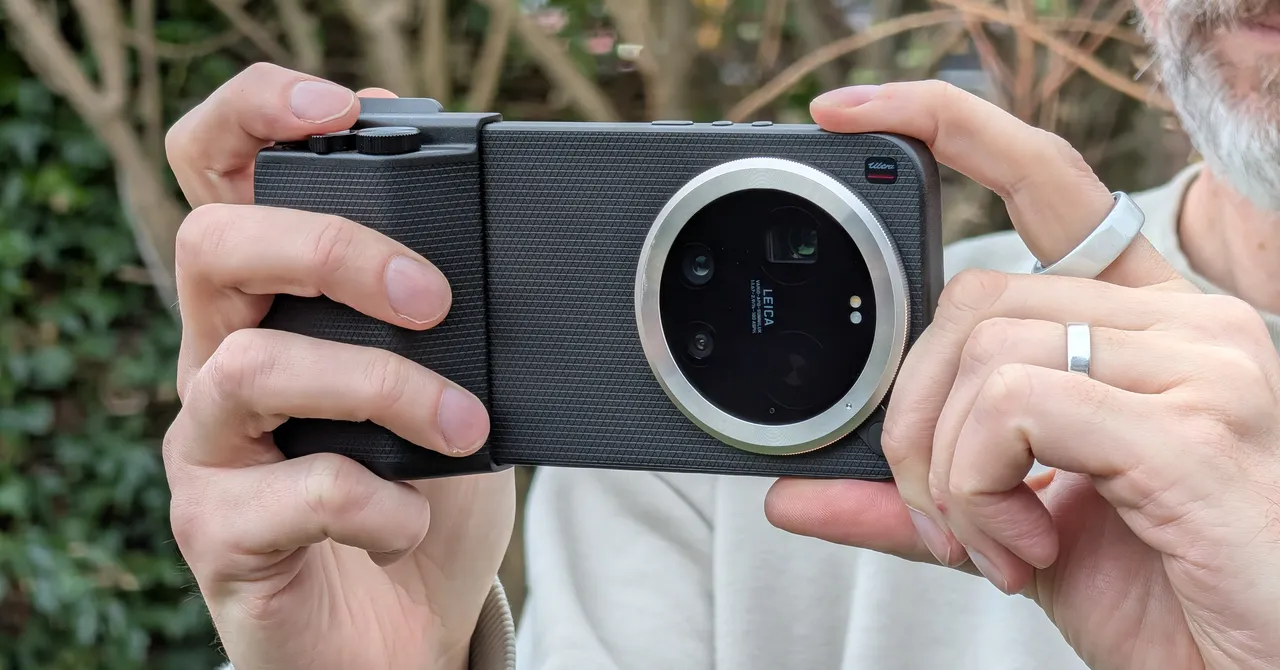
I wished Xiaomi had managed to incorporate Qi2, as magnetic wireless replenishment was the one feature I truly missed after transitioning from the Pixel 10 Pro XL (though it can be partially achieved with the optional photography kit case). The 17 Ultra indeed supports wireless power transfer at a remarkably rapid 50-watt speed, yet its prominent camera module renders it cumbersome for use with certain wireless charging pads. Cabled power delivery can reach 90 watts, provided the appropriate adapter is used (which is not supplied).
While software was once a significant concern, I identified minimal issues to criticize with the 17 Ultra. Xiaomi’s HyperOS emulates iOS in some aspects, and I still disapprove of the unlabelled quick-settings symbols, but it is predominantly quite acceptable. The Leica user interface, featuring understated application icons and photographic widgets, is considerably more aesthetically pleasing than the somewhat exaggerated HyperOS, and it’s highly flexible for personalization. I firmly believe that superfluous programs have no business on a premier smartphone, which is why I am perpetually displeased to discover applications such as Facebook and TikTok pre-loaded.
A substantial amount of artificial intelligence is integrated, for those who find it relevant; users can leverage Google’s Gemini or Xiaomi’s HyperAI for a diverse range of photo and video manipulation, text conversion, linguistic bridging, content compression, and other utilities. While it may not possess the same level of seamless sophistication as Google’s Pixel, one can largely secure comparable achievements.
The Xiaomi 17 Ultra is not formally distributed in the United States, but it can be procured for £1,299 in the United Kingdom (or 1,499 euros across Europe). The Leitzphone carries a price tag of £1,799 (or 1,999 euros). For those individuals who can more readily access the international version, it stands as an almost impeccable high-end rival that is sure to please anyone seeking a substantial, robust, and primarily photography-oriented smartphone.
{content}
Source:{feed_title}