
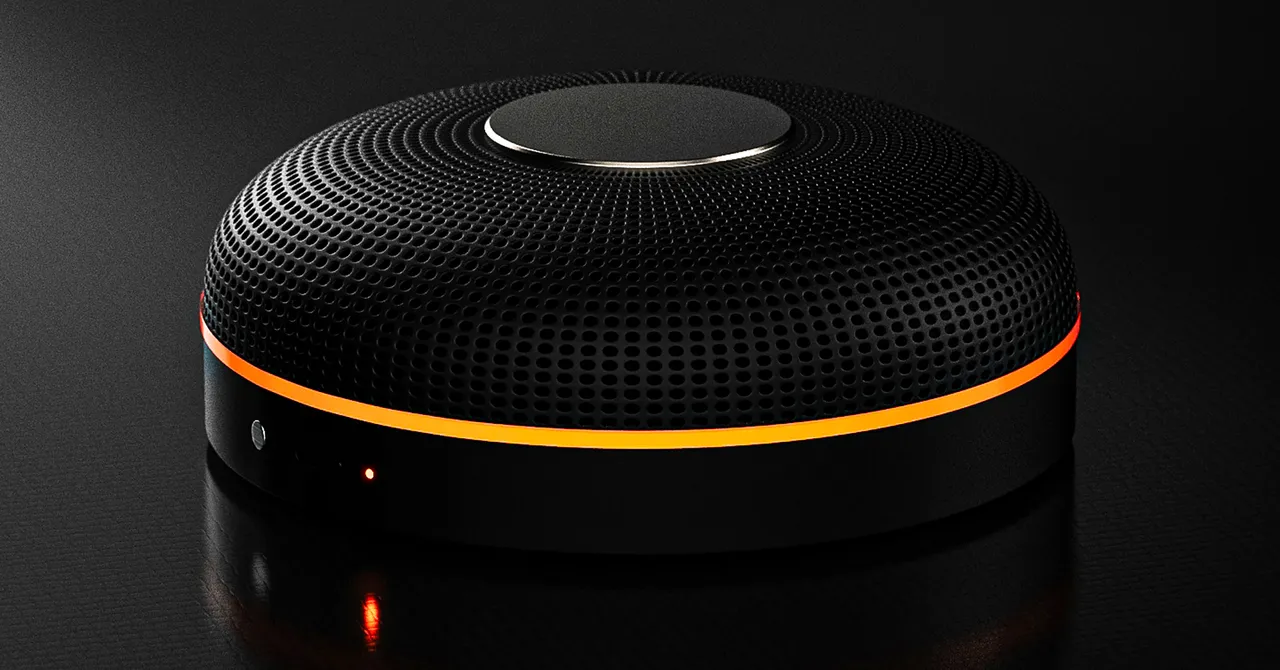
Deveillance additionally asserts that the Spectre is capable of locating proximate recording devices by sensing radio frequencies (RF); however, detractors argue that discovering a microphone through RF output proves ineffectual unless the detection apparatus is positioned directly adjacent to it.
“Should one be able to identify and discern components through radio waves as the Spectre purports, it would fundamentally revolutionize technology,” Jordan communicated via text to WIRED, following his construction of an apparatus to evaluate RF footprints in recording devices. “One could then conduct radio astronomy even amidst Manhattan.”
Deveillance is concurrently exploring methods for incorporating nonlinear junction detection (NLJD), an exceptionally high-frequency radio signal employed by security experts to pinpoint concealed microphones and eavesdropping devices. NLJD detection units incur significant costs and see their principal application within specialized domains, such as military endeavors.
Even assuming an apparatus could pinpoint the precise whereabouts of a microphone, items within an environment may alter the propagation and interplay of these frequencies. The transmitted frequencies themselves might also pose an issue. Sufficient research has not yet been conducted to demonstrate the impact of ultrasonic frequencies on human auditory perception, yet certain individuals and numerous animals can still perceive them and deem them irritating, or even agonizing. Baradari concedes her group must undertake further examinations to ascertain the impact on animals.
“This is simply beyond their capability,” Dave Jones, an engineer and YouTuber behind the EEVblog channel, communicated via email to WIRED. “They employ the conventional ruse of crafting language to suggest it will identify every category of microphone, when, in all likelihood, their sole action is scanning for Bluetooth-enabled audio equipment. It’s utterly ineffective.” Baradari reaffirms that the Spectre employs a blend of RF and Bluetooth Low Energy for microphone detection.
WIRED requested Baradari to furnish proof regarding the Spectre’s efficacy in detecting and inhibiting recording devices near an individual. Baradari provided several brief video segments depicting individuals holding phones to their ears while listening to sound bites—these were ostensibly interfered with by the Spectre—however, these visuals offer scant validation of the gadget’s functionality.
An Uncertain Tomorrow
Baradari has accepted the criticisms with equanimity, conceding that the technology remains in its nascent stages. “I genuinely value those observations because they prompt me to reflect and perceive additional aspects,” Baradari states. “I am convinced that through the concepts we are cultivating and incorporating into a singular apparatus, these apprehensions are amenable to resolution.”
Individuals swiftly derided the Spectre I across digital platforms, likening the technology to Dune’s ‘cone of silence’. Presently, Deveillance’s web portal declares, “Our aspiration is to actualize the ‘cone of silence’.”
John Scott-Railton, a cybersecurity investigator affiliated with Citizen Lab and a detractor of the Spectre I, applauded the gadget’s widespread attention as a testament to the genuine yearning for such devices to reclaim our personal anonymity.
“The favorable aspect of this significant surge in popularity is its resemblance to a Ring-esque occurrence, which underscores the rapid and profound alteration in consumer perspectives concerning ubiquitous recording equipment,” states Scott-Railton. “It is incumbent upon us to develop merchandise that fulfills all the desirable functions individuals seek, yet are devoid of the substantial undercurrent of privacy and consent infringements. There is a necessity for apparatus-specific controls, and for governmental oversight of the corporations engaged in these practices.”
Cooper Quintin, a principal technologist at the Electronic Frontier Foundation, reiterated those perspectives, even though detractors deem Deveillance’s endeavors to be imperfect.
“Should this technology prove effective, it might represent a considerable benefit to countless individuals,” Quintin conveyed via email to WIRED. “It is commendable to observe an enterprise developing a mechanism to safeguard personal data, rather than devising novel and ingenious methods for data exaction.”
{content}
Source:{feed_title}