
When AI transcends the digital realm and enters the physical world, the stakes skyrocket. A simple chatbot error is a nuisance; an AI controlling a vehicle, aircraft, or factory robot, however, poses an entirely different magnitude of risk. The transition from lab to real-world deployment demands an unwavering commitment to safety, precision, and human trust, especially when the cost of failure is measured in lives, resources, or critical missions.
Key Takeaways:
- **High Stakes, Zero Tolerance:** AI systems operating in the physical world – from military drones to autonomous vehicles and industrial robots – demand rigorous validation and an absolute assurance of safety, as failure is simply not an option.
- **Pioneers of Assurance:** Leaders from Shield AI, Waabi, and General Motors are at the forefront of tackling the complex challenges of deploying AI where real-world consequences loom large, focusing on safety culture, testing, and regulatory navigation.
- **Critical Insights at Disrupt 2026:** The upcoming TechCrunch Disrupt 2026 panel, “Building AI Systems When Failure Is Not an Option,” offers an invaluable opportunity to glean strategies from these experts on earning trust and ensuring reliability in mission-critical AI applications.
Navigating the Edge: When AI Moves from Code to Consequence
An AI chatbot can give you a bad answer. Annoying, perhaps, but rarely catastrophic. An AI system controlling an aircraft, vehicle, or robot, however, creates an entirely different kind of problem. When artificial intelligence moves into the physical world, a mistake can ground an aircraft, cause a vehicle crash, or compromise a vital mission. The question then becomes urgent and existential: How do you truly know when an autonomous system is ready to leave the controlled environment of the lab and operate with full confidence in the unpredictable reality?
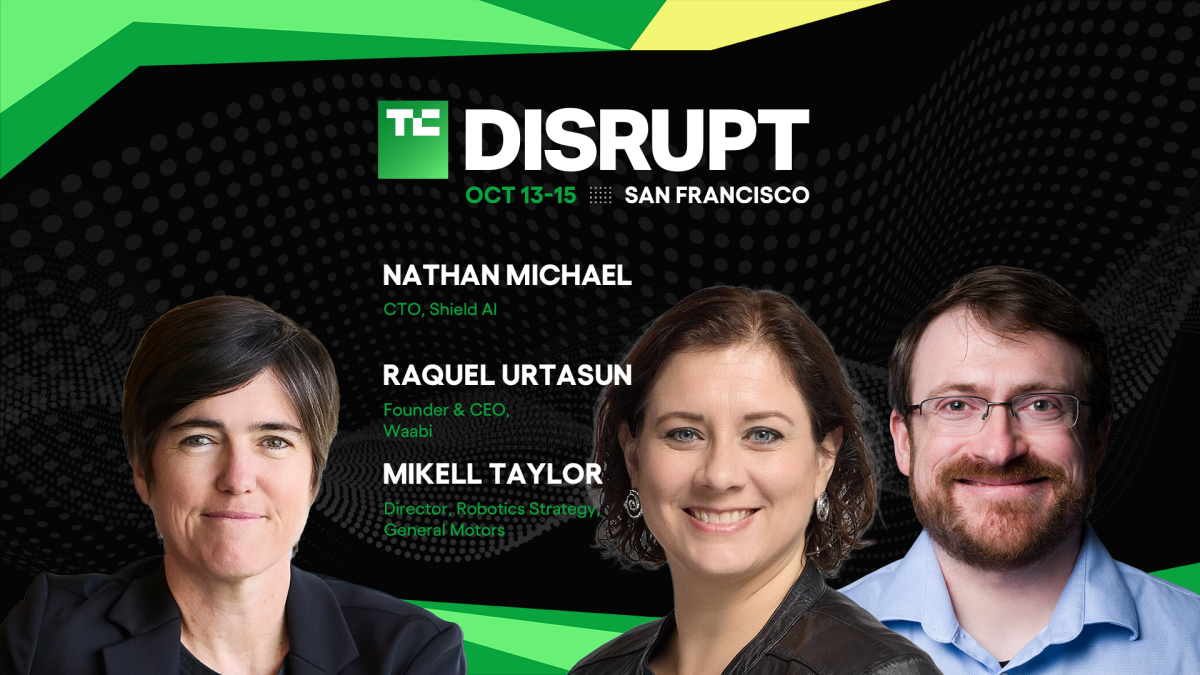
This monumental challenge—and its solutions—will be the focal point at **TechCrunch Disrupt 2026**. On the dedicated Real World AI Stage, three titans of AI deployment will converge for a panel titled “Building AI Systems When Failure Is Not an Option.” Join Shield AI’s chief technology officer Nathan Michael, Waabi founder and CEO Raquel Urtasun, and General Motors’ Director of Robotics Strategy Mikell Taylor as they dissect the methodologies and philosophies behind deploying AI where the stakes are profoundly high.
The conversation promises to delve deep into critical facets: fostering an impenetrable safety culture, designing exhaustive testing and validation protocols, deftly navigating complex regulatory landscapes, and, perhaps most crucially, earning and maintaining the trust of both users and the wider public.
Building AI for the physical world is the frontier of innovation and responsibility. Tomorrow marks your final chance to save up to $200 on your Disrupt pass. **Secure your ticket by September 25 at 11:59 p.m. PT** and gain unparalleled access to the insights of these leaders who operate where failure carries real-world consequences. Don’t delay—prices will increase after September 25, 11:59 p.m. PT.
The Architects of Assurance: Meet the Panelists
Ensuring AI reliability in the physical realm is not a theoretical exercise; it’s a hands-on, deeply technical, and strategically complex endeavor. Our panelists represent diverse sectors where autonomous systems are redefining capabilities, each bringing unique perspectives on engineering trust and preventing catastrophic errors.
Nathan Michael: Autonomy for High-Stakes Missions
At Shield AI, Nathan Michael spearheads the development and deployment of Hivemind, the company’s platform-agnostic mission autonomy software. His extensive background, honed over years at Carnegie Mellon University’s Robotics Institute where he directed the Resilient Intelligent Systems Lab, spans the critical domains of AI, control systems, perception, and multi-robot architectures.
This formidable expertise is now being channeled into technology designed for some of AI’s most challenging and high-stakes environments. A testament to Hivemind’s capabilities and Shield AI’s vision, the platform was selected in February as an autonomy provider for the U.S. Air Force’s Collaborative Combat Aircraft drone prototype program. This strategic endorsement was swiftly followed by Shield AI’s announcement of an impressive $1.5 billion in Series G funding, pushing its post-money valuation to a staggering $12.7 billion.
At Disrupt, Michael will offer an invaluable perspective as an AI leader who is not only developing cutting-edge autonomous systems but also meticulously ensuring their performance is unequivocally matched by assurance in environments where human lives and national security hang in the balance. What does it truly take to trust AI with a mission of such gravity? Secure your Disrupt pass before September 25, 11:59 p.m. PT, and hear Nathan Michael’s insights on developing autonomy for these critical, high-stakes environments.
Raquel Urtasun: Paving the Way for Autonomous Mobility
With 25 years dedicated to AI and autonomous vehicles, Raquel Urtasun is a veritable pioneer in the field. Before founding Waabi, her visionary leadership shone as chief scientist and head of R&D at Uber ATG. Her academic contributions are equally profound, serving as a distinguished professor of computer science at the University of Toronto, co-founding the esteemed Vector Institute for AI, and authoring over 200 influential AI papers.

Today, Waabi is set to significantly advance its autonomous-driving technology. In January, the company secured a remarkable $1 billion in funding and forged a pivotal partnership with Uber, aiming to support the deployment of 25,000 or more Waabi Driver-powered robotaxis. This ambitious rollout underscores the intense focus required on safety and validation.
Rigorous testing and validation form the bedrock of Waabi’s approach. Its innovative Waabi World simulator provides a crucial virtual environment to train, test, and stress-test the Waabi Driver under an infinite array of scenarios. Urtasun has consistently emphasized that the company’s autonomous trucks must undergo full validation before any driverless deployment, placing one of the session’s central questions directly within her expertise: How do you definitively determine when an AI system is truly ready to operate without a human behind the wheel, ensuring public safety and operational integrity?
Want to hear firsthand how autonomous-driving leaders approach the intricate processes of testing, validation, and deployment? Secure your Disrupt pass by September 25 at 11:59 p.m. PT to save up to $200 — and seize the exclusive opportunity to get a second pass for 50% off select ticket types.
Mikell Taylor: Integrating Robotics Safely into Human Environments
Mikell Taylor brings over two decades of invaluable experience in building robots designed to perform useful work. Today, she is at the helm of robotics strategy for General Motors’ Autonomous Robotics Center, a role that places her at the intersection of advanced manufacturing and human-robot collaboration. Her prior work includes leading the Amazon Robotics team responsible for developing Proteus, Amazon’s first autonomous mobile robot, a project that fundamentally reshaped logistics and warehouse operations.
Taylor’s expertise is critical in demonstrating how AI-driven robots can be integrated safely and efficiently into environments shared with humans. Her focus extends beyond mere functionality to the meticulous design of safety protocols, human-machine interface, and the scalable deployment of autonomous systems within complex industrial settings. At GM, this translates into pioneering how AI can enhance manufacturing processes, streamline operations, and augment human capabilities without compromising safety or trust.
She understands the nuances of ensuring that robotic systems are not just capable but also predictable and trustworthy, especially when operating alongside human workers. Taylor’s perspective will shed light on the rigorous standards, ethical considerations, and practical challenges involved in bringing AI from controlled testbeds to dynamic, human-centric workplaces. Her insights are vital for anyone grappling with the complexities of scaling AI in industrial contexts, where seamless human-robot interaction and absolute reliability are paramount.
A Crucial Conversation on AI’s Future
The “Building AI Systems When Failure Is Not an Option” panel at TechCrunch Disrupt 2026 is more than just a discussion; it’s a critical examination of the future of artificial intelligence. As AI permeates our physical world, the responsibilities of its developers, deployers, and regulators become heavier. This session offers a rare opportunity to hear directly from those who are actively shaping the standards and practices for safe, reliable, and trustworthy AI.
From the battlefield to the highway and the factory floor, the lessons learned and strategies shared by Nathan Michael, Raquel Urtasun, and Mikell Taylor will be indispensable for anyone involved in building, deploying, or overseeing AI systems where the cost of failure is simply too high. Don’t miss this chance to gain a deeper understanding of the meticulous work required to ensure AI’s promise is realized responsibly.
Don’t Miss Out: Secure Your Pass Now!
The opportunity to learn from these leading experts is rapidly approaching. Remember, tomorrow is the last day to secure your **TechCrunch Disrupt 2026** pass at a significant discount. **Save up to $200** when you purchase your ticket by **September 25 at 11:59 p.m. PT**. Furthermore, take advantage of an exclusive offer to get a second pass for 50% off select ticket types—perfect for bringing a colleague or team member to share in these critical insights. Prices will increase after the deadline, so act now to ensure your place at this pivotal conversation.
Bottom Line:
As AI increasingly moves into physical domains, the imperative for robust safety, rigorous validation, and unwavering trust becomes non-negotiable. The “Building AI Systems When Failure Is Not an Option” panel at TechCrunch Disrupt 2026 brings together the foremost minds from defense, autonomous vehicles, and industrial robotics to dissect these challenges and forge a path towards truly reliable and responsible AI deployment, making it an essential event for anyone committed to the safe and effective future of artificial intelligence.

Navigating the Autonomous Revolution: Building Trust and Readiness in AI
Key Takeaways:
- Human-Centric Robotics is Paramount:The successful deployment of AI-powered machines hinges on prioritizing user experience and trust, ensuring they integrate seamlessly and reliably into human environments.
- “Ready” Means More Than Functional:Across high-stakes sectors like autonomous vehicles, aviation, and industrial robotics, true readiness for deployment demands rigorous consideration of failure consequences and robust confidence-building strategies.
- Disrupt 2026: Your Blueprint for Real-World AI:Join industry leaders at TechCrunch Disrupt to gain unparalleled insights into the challenges and solutions for bringing autonomous systems from controlled demos to dependable real-world applications.
The journey of artificial intelligence and robotics from experimental marvels to everyday necessities is fraught with complex challenges. While AI promises unprecedented efficiencies and capabilities, its true success is measured not just by technical prowess, but by its ability to work effectively and reliably alongside humans. This critical intersection of innovation and human trust will be a central theme at TechCrunch Disrupt 2026, featuring insights from leaders like Taylor, whose diverse robotics background illuminates the path forward for practical, dependable autonomous systems.
From Prom Date to Industrial Prowess: Taylor’s Robotics Journey
Taylor’s entry into the world of robotics began in a most unexpected fashion: building a robotic senior prom date. This whimsical origin story, however, quickly evolved into a serious and impactful career. Since then, her work has spanned an impressive range of autonomous systems, from the silent depths explored by autonomous underwater vehicles to the precision of industrial robotic arms. What unites these diverse projects is a consistent, foundational focus: creating robots that are not only practical and reliable but are also inherently designed to operate effectively and safely around people.
Her extensive experience at the vanguard of robotics development has illuminated a fundamental truth often overlooked in the race for technological advancement: the human element is non-negotiable. When AI-powered machines transition from meticulously controlled laboratory demonstrations to dynamic, unpredictable workplaces, the considerations of user experience (UX) and overall adoption become paramount. These aren’t merely post-deployment adjustments; they need to be woven into the very fabric of product design and deployment planning from the outset. Building intuitive interfaces, fostering transparent operational protocols, and designing for human-robot collaboration are no longer optional extras – they are core pillars for any successful real-world robotic integration.
The core question Taylor and other industry pioneers are grappling with is vital for the future of automation: How do we engineer autonomous systems that people not only *can* work with, but also *trust* implicitly? This isn’t just about avoiding mechanical failures; it’s about building psychological buy-in and confidence among the human operators and beneficiaries of these advanced technologies. The answer lies in a holistic approach, integrating safety, reliability, and human understanding into every design decision.
When AI Is Truly Ready: A Cross-Industry Imperative
Learn how to know when AI is ready at Disrupt
The notion of “readiness” takes on a profound significance when discussing artificial intelligence, especially in high-stakes environments. Whether it’s the precision required for aircraft control, the split-second decision-making demanded of autonomous vehicles, or the intricate tasks performed by industrial robots, the core question remains the same: When the potential consequences of failure are substantial and real, what comprehensive measures and assurances are required before we can confidently deploy these systems? It’s a query that transcends individual industries, highlighting a universal challenge in the autonomous age.
For founders and technology leaders dedicating their efforts to building the next generation of autonomous systems, the sessions at Disrupt offer an invaluable opportunity. Imagine a forum where experts from defense, autonomous driving, and industrial robotics converge, not just to present their breakthroughs, but to openly compare and contrast their methodologies for making critical deployment decisions. This cross-pollination of insights allows attendees to gain a nuanced understanding of the diverse approaches to validation, risk assessment, and ethical considerations that ultimately bridge the gap between a promising prototype and a system deemed truly ready for the complexities of the real world.
Disrupt 2026: The Nexus of Innovation and Insight
TechCrunch Disrupt isn’t merely a conference; it’s a dynamic ecosystem designed to accelerate the future of technology. This year’s event, taking place October 13–15 at Moscone West in San Francisco, is meticulously curated to provide unparalleled value. Attendees can immerse themselves in over 200 sessions spread across six dedicated industry stages, participate in intimate roundtables, and engage in focused breakouts. Each segment is crafted to deliver actionable insights and foster deep dives into the most pressing tech challenges and opportunities.
The scale of Disrupt is as impressive as its content. More than 10,000 founders, visionary investors, seasoned operators, and influential tech leaders are expected to converge, creating an unmatched environment for collaboration and growth. With over 250 distinguished speakers sharing their expertise and insights, and more than 300 exhibiting startups showcasing groundbreaking innovations, the energy is palpable. Beyond the meticulously planned agenda, Disrupt excels in facilitating crucial connections through dedicated matchmaking programs, strategic dealmaking opportunities, and organic networking spaces. These elements are designed to empower attendees to forge relationships that can genuinely propel their companies forward, from securing vital funding to establishing strategic partnerships.
In the demanding landscape of autonomous systems, the margin for error is virtually non-existent. The sentiment that “almost ready” simply isn’t good enough resonates deeply when human lives, significant investments, or critical operations are on the line. This urgency underscores the need for robust solutions and shared learning – precisely what Disrupt aims to provide.

Secure Your Spot at the Forefront of AI Innovation
Don’t miss the opportunity to learn from the brightest minds tackling these critical questions in real-world applications. The clock is ticking! These are the last two days tosave up to $200 on your Disrupt pass. Secure your ticket by September 25 at 11:59 p.m. PT — and as an added incentive, you can even get a second pass for 50% off select ticket types. This is your chance to engage with the leaders, founders, and investors who are shaping the future of autonomous systems and redefining what it means for AI to be truly ready.
The Bottom Line
The future of autonomous systems isn’t just about advanced algorithms or sophisticated hardware; it’s profoundly about human integration and earned trust. As AI-powered robots move beyond controlled environments into our workplaces and lives, prioritizing user experience, reliability, and an unwavering commitment to safety will dictate their success. TechCrunch Disrupt 2026 offers an essential platform for innovators and leaders to converge, share critical insights, and collectively chart a course for confident, ethical, and practical AI deployment in an increasingly autonomous world.
When you purchase through links in our articles, we may earn a small commission. This doesn’t affect our editorial independence.
{content}
Source:{feed_title}