
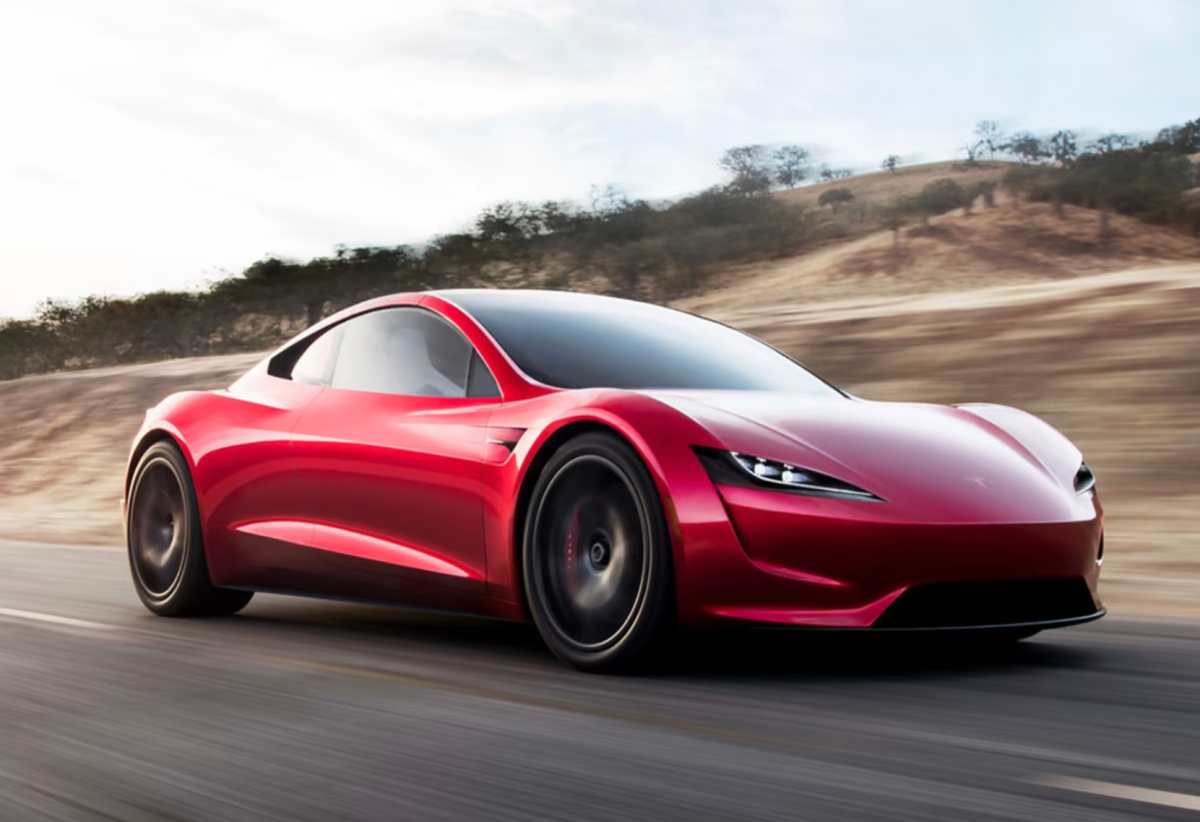
Key Takeaways:
- Tesla’s second-generation Roadster is poised for a major reveal on October 1st, teased with a “Go for launch” message and a “10.01” date.
- The unveiling is expected to highlight the car’s most ambitious feature: optional cold gas thrusters, developed with SpaceX, hinting at unprecedented performance capabilities, potentially including limited “flight.”
- After years of delays since its 2017 announcement and a reported design overhaul, the Roadster’s reveal marks a critical step, though production is still projected 12-18 months afterward.
Tesla Roadster Set for October Reveal, Thrusters Hint at “Flight” Capabilities
The wait for what could redefine the supercar landscape is nearing its end. Tesla has officially teased the highly anticipated reveal of its second-generation Roadster, hinting at an imminent unveiling on October 1st. With a cryptic “Go for launch” message and a date graphic, the electric vehicle giant is building immense hype around a car that has been nearly seven years in the making, promising not just speed, but a potential paradigm shift in automotive performance.
“Go for Launch”: The October 1st Tease
The latest news dropped via an X (formerly Twitter) post from Tesla, signaling that the Roadster’s moment in the spotlight is finally approaching. The post, featuring a stark “10.01” graphic, has sent ripples through the automotive and tech communities. This isn’t just a date; it’s a promise to showcase a vehicle that has long existed more in concept and speculation than in concrete form. More intriguingly, the visual cues in the graphic strongly suggest the inclusion of the much-touted cold gas thrusters—an ambitious engineering feat born from the synergy between Tesla and Elon Musk’s other groundbreaking venture, SpaceX.
Go for launchpic.twitter.com/2d1hV37S2q
— Tesla (@Tesla)September 29, 2023
Beyond Speed: The Thruster Vision
When first unveiled in November 2017, the second-generation Roadster already boasted eye-watering specifications: a 0-60 mph sprint in 1.9 seconds, a top speed exceeding 250 mph, and a staggering 620-mile range. These figures alone were enough to shake the foundations of the hypercar world. However, Musk’s subsequent pronouncements added an audacious layer: a “SpaceX Package” offering cold gas thrusters. These optional thrusters, purportedly integrated discreetly around the vehicle, are designed to dramatically enhance acceleration, braking, and cornering, potentially enabling the car to “hover” or perform short “hops” – a concept that borders on science fiction. The October reveal is expected to shed light on how these thrusters will be implemented and what their real-world capabilities will be, pushing the boundaries of what’s considered possible for a road-legal vehicle.
A History of High Hopes and Hurdles
The journey of the new Roadster has been anything but smooth. Since its initial reveal, the production timeline has been repeatedly pushed back, much to the frustration of early reservation holders who placed a hefty $50,000 deposit. This prolonged development even became the subject of a public spat between Elon Musk and OpenAI CEO Sam Altman, who lamented the “7.5 years” he had waited, only for Musk to counter that Altman had been refunded. Such anecdotes highlight the significant challenges in bringing such an ambitious project to fruition, especially one that aims to redefine multiple performance metrics simultaneously.
Adding to the intrigue, recent reports from sources like The Information suggested that the original 2017 design had been completely scrapped in favor of a fresh, unrevealed iteration. This implies a significant rework of the vehicle’s aesthetics and engineering, underscoring Tesla’s commitment to delivering a truly revolutionary product, even if it means substantial delays. The October reveal, therefore, isn’t just about showing off a car; it’s about unveiling the culmination of years of revised designs, engineering hurdles, and unyielding ambition.
Navigating the Hypercar Horizon
When the Roadster was first announced, its performance claims put it in a league of its own. In the intervening years, the electric hypercar landscape has matured, with formidable contenders emerging. Vehicles like the Rimac Nevera have already shattered acceleration records, demonstrating the raw power of electric drivetrains. Lucid Motors has pushed boundaries with the Lucid Air Sapphire, showcasing luxury and performance. The Roadster’s return to the public eye comes at a time when the competition is stiffer, and consumer expectations for an electric hypercar are higher. Tesla will need to deliver not just on its original promises, but potentially exceed them to truly reclaim its pole position at the pinnacle of EV performance.
Anticipation vs. Production Reality
While the October 1st reveal is undoubtedly a major milestone, Elon Musk has already cautioned that even after the grand unveiling, the Roadster won’t enter full production for another 12 to 18 months. This caveat serves as a reminder of Tesla’s historical tendency to announce ambitious products far in advance of their market availability. For eager enthusiasts and potential buyers, the reveal will offer a tangible glimpse into the future, but the true test will be Tesla’s ability to transition from a breathtaking concept to a mass-produced, road-legal marvel that lives up to its unprecedented claims and meets its updated production timelines.
Bottom Line
The second-generation Tesla Roadster represents more than just a new car; it’s a statement about the future of transportation and the relentless pursuit of innovation. With its promised thrusters and unmatched performance figures, it embodies Elon Musk’s vision to push technological boundaries. The October 1st reveal will undoubtedly capture global attention, but the Roadster’s ultimate legacy will hinge not just on its initial spectacle, but on Tesla’s ability to deliver a production vehicle that truly revolutionizes the automotive world, proving that even the most ambitious dreams can eventually take flight.
Source:{feed_title}