
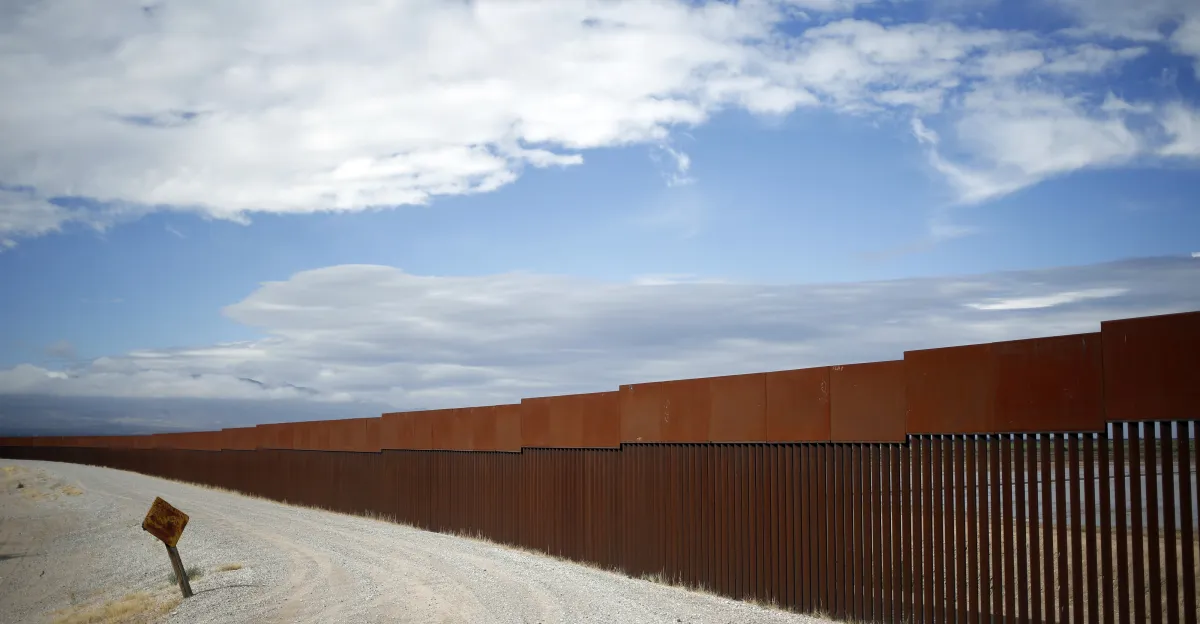
The American armed forces unintentionally downed an unmanned aerial vehicle (UAV) owned by Customs and Border Protection near the Mexico-US border in Fort Hancock, Texas, as per accounts fromReutersandThe New York Times. This incident, occurring on Thursday, reportedly prompted the Federal Aviation Administration to restrict the airspace where the military discharged its anti-drone laser weapon.
This represents the second instance this month where authorities have imposed flight restrictions near the US-Mexico border due to an occurrence involving a counter-UAS laser. On February 11th, as *The New York Times* reported at the time, officials closed airspace around the El Paso International Airport for several hours after the CBP discharged an anti-drone laser without prior consultation with the FAA. Even though Transportation Secretary Sean Duffy declared in a statement that the FAA and the Defense Department had moved to “address a cartel drone incursion,” it was later understood to be merely a party balloon.
Now, the FAA, CBP, and the Pentagon have informed *Reuters* that the military “utilized counter-unmanned aircraft system authorities to neutralize a seemingly threatening unmanned aerial system operating within military airspace,” further stating that the event “occurred at a considerable distance from residential zones and there were no commercial aircraft in the vicinity.” The *Times* indicates that this latest occurrence supposedly resulted in a more confined flight restriction and was likewise executed without the FAA’s consent.
In a combined declaration, Representatives Bennie Thompson (D-MS), André Carson (D-IN), and Rick Larsen (D-WA) — prominent Democrats serving on committees responsible for homeland security, aviation, and transportation oversight — conveyed strong displeasure regarding the occurrence. The statement articulated, “Months ago, we cautioned that the White House’s choice to bypass a bipartisan, tri-committee legislative proposal aimed at properly training C-UAS [Counter-Unmanned Aerial Systems] operators and resolving the coordination deficit among the Pentagon, DHS, and the FAA was an ill-conceived notion. Presently, we are observing the repercussions of this ineptitude.”
{content}
Source:{feed_title}