
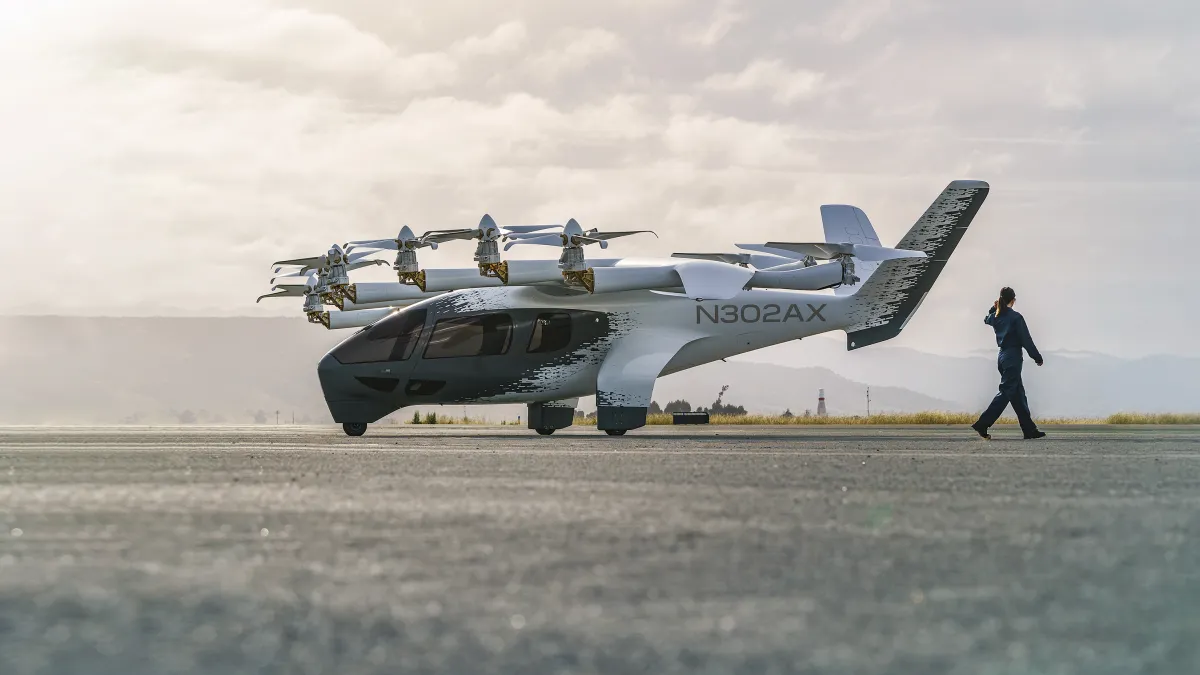
Three years after settling a trade secret lawsuit, electric aircraft company Archer Aviation now owns its former rival, Wisk Aero.
Key Takeaways
- Rivalry to Acquisition:Archer Aviation has acquired Wisk Aero, its former legal adversary, from aerospace giant Boeing, marking a surprising turn after a bitter trade secret lawsuit that settled just two years prior.
- Strategic Consolidation:The deal sees Boeing taking a significant ~16.5% ownership stake in Archer, signaling a strategic consolidation in the nascent electric vertical takeoff and landing (eVTOL) sector and a powerful vote of confidence in Archer’s future trajectory.
- Enhanced Capabilities for Archer:Beyond Wisk’s pioneering autonomous eVTOL technology, Archer gains SkyGrid’s critical digital airspace management software and drone maker Insitu, significantly bolstering its capabilities across urban air mobility, autonomy, and crucial defense applications.
From Courtroom to Collaboration: Archer Aviation Acquires Former Rival Wisk Aero in Landmark Deal
In a move that dramatically redefines the landscape of the electric vertical takeoff and landing (eVTOL) sector, Archer Aviation has announced its acquisition of Wisk Aero, its erstwhile legal adversary, from Boeing. This unexpected turn of events, coming barely three years after the two companies settled a contentious trade secret lawsuit, underscores a profound shift from bitter rivalry to strategic consolidation within the burgeoning advanced air mobility industry. The deal not only resolves a storied dispute but also creates a more formidable entity in the global race for electric air travel.
The Unfolding Deal: Boeing’s Strategic Pivot
Under the terms of the agreement, Boeing will divest Wisk Aero, alongside two other key subsidiaries – SkyGrid, a sophisticated digital airspace and air traffic management software company, and Insitu, a seasoned drone manufacturer – to Archer. In exchange for these assets, Boeing will receive newly issued Archer shares equivalent to 19.75% of Archer’s shares outstanding immediately prior to closing. This transaction is anticipated to result in Boeing holding approximately a 16.5% stake in Archer post-deal, according to a recent regulatory filing and sources familiar with the matter.
This strategic exchange signals a calculated evolution in Boeing’s approach to the nascent eVTOL market. Instead of directly owning and operating an eVTOL developer like Wisk, which requires immense capital and the navigation of complex certification pathways, the aerospace giant is opting for a significant stake in a leading pure-play eVTOL company. This allows Boeing to leverage Archer’s agility and market momentum, benefiting from the sector’s growth while strategically de-risking its direct involvement in eVTOL aircraft development. For Archer, the acquisition brings not just a competitor’s technology but also crucial ancillary services that will be vital for future operations.
A History of Rivalry and Reconciliation
The Bitter Beginnings: “Brazen Theft” Allegations
The acquisition marks the capstone of a relationship once characterized by intense acrimony. In April 2021, Wisk initiated a high-profile lawsuit against Archer, accusing the then-nascent startup of “brazen theft” of confidential information and intellectual property. Such trade secret disputes are unfortunately not uncommon in rapidly innovating sectors, where the fierce race to market often leads to legal battles over proprietary designs, manufacturing processes, and crucial technological breakthroughs. The allegations created significant headwinds for Archer in its early days, casting a shadow of uncertainty over its development efforts and future prospects.
From Courtroom to Collaboration: The Unusual Settlement
The legal wrangling between the two eVTOL hopefuls endured for two arduous years before culminating in an unusual settlement in 2023. This agreement not only extinguished Wisk’s original lawsuit and Archer’s counter-suit for $1 billion in damages but also surprisingly laid the groundwork for future collaboration. Under the terms, Archer committed to making Wisk the exclusive provider of its autonomous technology for future aircraft. Furthermore, Archer extended Wisk an option to purchase up to 13,176,636 shares of common stock at a symbolic price of $0.01 per share. This settlement, initially perceived as a mere truce, now appears to have been a strategic prelude to a full merger, underscoring the companies’ eventual recognition of the profound mutual benefits of synergy over prolonged conflict and costly litigation.
Wisk’s Odyssey: From Google’s Moonshot to Boeing’s Bet
Visionary Roots with Kittyhawk
Wisk Aero traces its origins back to Kittyhawk, an ambitious electric aviation startup that emerged from the visionary minds of Sebastian Thrun, co-founder of Alphabet’s X “moonshot factory,” and was notably backed by Google co-founder Larry Page. Kittyhawk was an audacious endeavor, exploring various electric aircraft programs including the single-seater Flyer and the more advanced, quieter, and fully autonomous Heaviside. While Kittyhawk itself eventually shut down in September 2022 due to the immense challenges of commercializing such groundbreaking technology, its legacy, particularly through the Cora program, was destined to live on and shape the future of air mobility.
The Cora Legacy and Boeing’s Deep Investment
Cora, a two-person, autonomous flying taxi, represented Kittyhawk’s most promising venture. In late 2019, Cora was spun off into a joint venture with Boeing, subsequently rebranded as Wisk. This partnership was formed with the explicit goal of developing and commercializing self-flying air taxis, leveraging Boeing’s immense aerospace expertise, regulatory experience, and formidable financial muscle. Boeing poured significant capital into the effort, including a substantial $450 million investment in early 2022, signaling its deep commitment to leading the autonomous eVTOL space. By 2023, Wisk had become a fully-owned subsidiary of Boeing. However, the complexities of developing a certified autonomous aircraft for passenger transport, coupled with the unique challenges of integrating a fast-paced startup culture into a large corporate structure, likely informed Boeing’s eventual decision to pivot its strategy from direct ownership to a more strategic equity partnership.
Archer’s Ascent: Diversification and Midnight’s Progress
Beyond Air Taxis: A Strategic Pivot to Defense
Founded in 2018, the California-based Archer has rapidly expanded its eVTOL program beyond its initial vision for an urban air taxi network. Recognizing the broad applicability and significant funding opportunities for its technology, Archer strategically diversified into the defense sector a couple of years ago. This pivot is evident in its robust fundraising efforts, including a substantial $430 million round in December 2024 specifically to fund its new Archer Defense program, followed by another impressive $300 million raised in 2025 from institutional investors like BlackRock and Wellington. The company has also forged an exclusive deal with weapons manufacturer Anduril, aiming to jointly develop a hybrid gas-and-electric-powered VTOL aircraft for critical defense applications, highlighting the immense potential of eVTOL technology for military logistics, reconnaissance, and rapid personnel transport in challenging environments.
Midnight’s Momentum and Operational Readiness
Archer, which successfully went public in 2021 through a merger with a blank-check company (SPAC), continues to make significant strides with its all-electric Midnight aircraft. Just this month, the company celebrated a crucial milestone with the completion of a piloted round-trip flight between Salinas Municipal Airport and Monterey Regional Airport. This achievement is a vital step as Archer gears up to begin commercial operations later this year under the White House’s eVTOL Integration Pilot Program, demonstrating its progress towards critical FAA certification and eventual deployment. The consistent advancement of its core aircraft program, alongside its strategic diversification, positions Archer for a multi-faceted future in advanced air mobility.
Strategic Implications and Market Outlook
This acquisition represents a significant consolidation in the often-fragmented eVTOL market. For Archer, gaining Wisk’s deep expertise in autonomous flight systems, meticulously developed over years with substantial investment from Google and Boeing, is an invaluable strategic asset. The addition of SkyGrid’s advanced air traffic management capabilities is equally critical, providing Archer with an essential piece of the puzzle for safely and efficiently integrating eVTOLs into existing, complex airspace. Insitu’s established drone manufacturing prowess could further diversify Archer’s offerings, particularly within its burgeoning defense segment, potentially creating new revenue streams and operational synergies. For Boeing, the move allows it to streamline its eVTOL strategy, shifting from direct, capital-intensive development to a strategic equity partnership, while offloading the complexities and financial burden of autonomous flight certification to a dedicated pure-play entity. This deal could well set a precedent for further consolidation as the eVTOL industry matures and the race to commercialization intensifies, favoring well-capitalized and technologically integrated players.
Bottom Line
Archer Aviation’s acquisition of Wisk Aero from Boeing is far more than a simple corporate transaction; it’s a profound narrative of competition evolving into collaboration, underscoring the immense pressures and strategic necessities shaping the future of advanced air mobility. By integrating Wisk’s pioneering autonomous legacy, SkyGrid’s indispensable digital infrastructure, and Insitu’s proven drone expertise, Archer significantly strengthens its technological foundation, expands its market reach into both urban air mobility and defense, and solidifies its position as a frontrunner in the global race to bring electric air travel to fruition. This deal not only reshapes Archer’s trajectory but also signals a pivotal moment for the entire eVTOL industry, moving closer to a future where electric flight is a commercial reality rather than a distant dream.
When you purchase through links in our articles, we may earn a small commission. This doesn’t affect our editorial independence.
{content}
Source:{feed_title}