
Bharat Semi, an Indian semiconductor startup, has raised $24 million in seed funding to develop AI-enabled image sensors, as it seeks to win customers in the United States and elsewhere.
The investment comes as the nearly five-year-old, pre-revenue startup says it has secured design wins with U.S. defense technology company General Atomics and India’s Kaynes Semicon. Its image sensors, however, remain under development, with the startup targeting its initial commercial production in 2027.
India has committed billions of dollars to build up a domestic semiconductor industry, with a hope to become an alternative manufacturing hub as U.S. companies look to diversify supply chains beyond China. The country, however, has yet to establish itself as a major chip manufacturing hub. Meanwhile, the AI boom is also giving Indian startups such as Bharat Semi an opportunity to develop specialized chips for global markets.
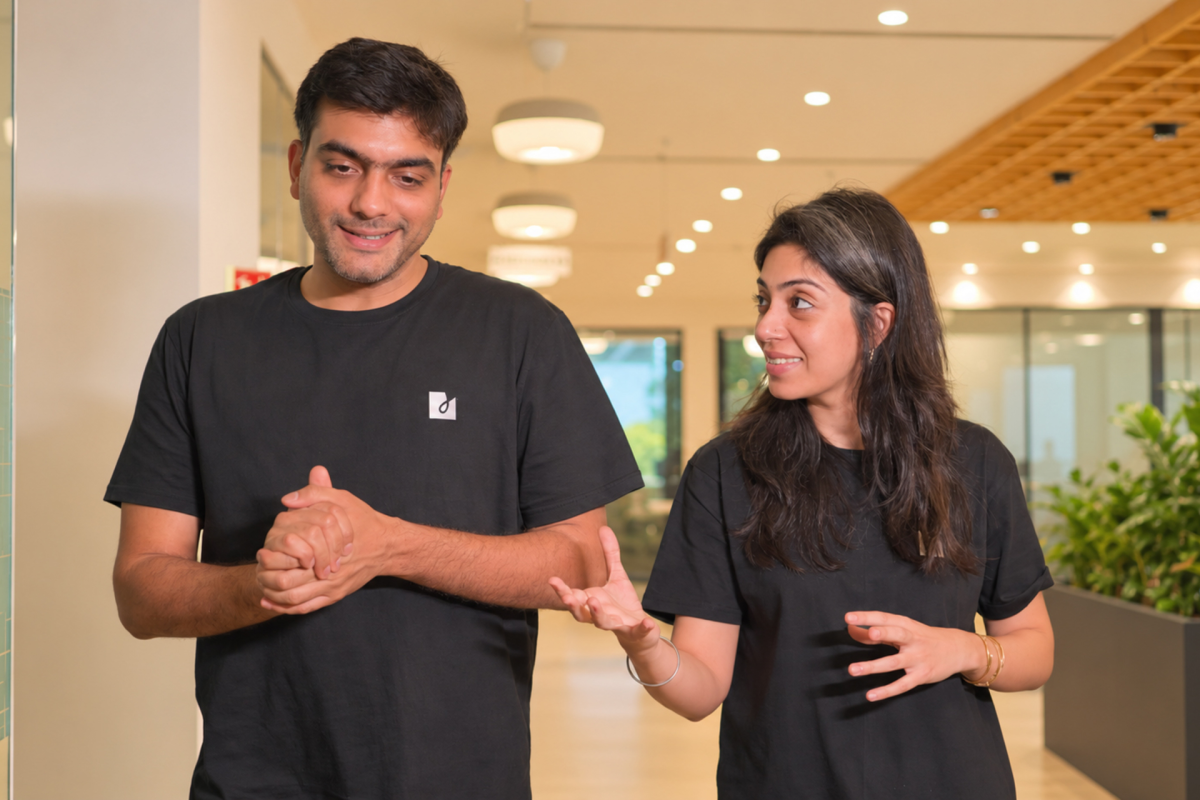
The New Delhi-based startup is developing programmable image sensors that combine image capture, processing, and AI capabilities on a single chip, reducing the need to send visual data to separate processors. The move could cut system costs by at least 70% compared with conventional setups that use a separate image sensor, image signal processor, and a system-on-chip, co-founder Vrinda Kapoor (pictured above, right) said in an interview.
“Our aim here is to move from sensors to sense-making solutions,” Kapoor told TechCrunch.
Kapoor, a South Park Commons fellow who earlier worked in healthcare technology, co-founded Bharat Semi in late 2021 with Vinayak Dalmia (pictured above, left), the startup’s managing director, who previously worked at McKinsey and in private equity. Its chief technology officer, Boyd Fowler, previously held the same role at image-sensor maker OmniVision.
Bharat Semi is targeting smart homes, industrial automation, surveillance, and aerospace. Without disclosing specifics, Kapoor pointed to air conditioners that could detect when a room is empty and adjust automatically and drones that could process visual information — even with the absence of more expensive computing hardware elsewhere in the system.
The startup’s first-generation sensors are already in prototyping, while its second-generation sensors, which will incorporate more advanced AI capabilities, are expected to reach the prototype stage by mid-2027, Kapoor said. Moreover, the startup plans to get those newer sensors into customers’ hands by the end of 2027.
The all-equity seed round was led by Info Edge Group, South Park Commons, and Indus Bridge Ventures, with participation from Valour Capital, Micromax, Gaingels, and individual investors. Bharat Semi, Kapoor said, plans to use the funding to expand its engineering team, complete product development, and bring its sensors to market.
Bharat Semi has about 75 employees across India and the U.S., including 10 to 12 in its American operations, which span engineering and business development in Santa Clara. The startup plans to increase its U.S. headcount to around 20 by mid-2027, Kapoor said. It has also begun hiring engineers in Europe.
“It’s a story of can we build a global technology company out of India,” Kapoor said.
In 2024, Bharat Semi announced plans for a semiconductor fabrication project in India involving a technology partnership with the U.S. Space Force. The initiative, Kapoor said, remains in development and the startup is working to identify domestic partners that would build and operate the facility.
The project is separate from Bharat Semi’s image-sensor business, Kapoor added. The startup plans to remain fabless, outsourcing chip manufacturing while focusing on semiconductor design and software. The new funding will not be used to finance the proposed fabrication facility.
Key Takeaways
- Significant Seed Funding:Indian startup Bharat Semi secured $24 million in seed funding, signaling strong investor confidence in its vision to develop AI-enabled image sensors for global markets despite being pre-revenue.
- Innovative Integrated AI:The company’s core technology integrates image capture, processing, and AI capabilities onto a single chip, promising substantial system cost reductions (up to 70%) and enabling “sense-making solutions” across diverse applications.
- Strategic Global Ambition:With early design wins in the U.S. defense sector and a growing international team, Bharat Semi aims to leverage India’s emerging semiconductor ecosystem and the global AI boom to establish itself as a worldwide leader in specialized chip design.
Bharat Semi Secures $24M Seed to Power AI-Enabled Vision, Targets Global Markets
In a significant boost for India’s burgeoning deep tech landscape, Bharat Semi, an ambitious Indian semiconductor startup, has successfully closed a $24 million all-equity seed funding round. This substantial investment is earmarked for the development of its groundbreaking AI-enabled image sensors, designed to capture, process, and make sense of visual data more efficiently than ever before. The funding underscores a growing belief in the startup’s potential to carve out a niche in a global market increasingly hungry for specialized AI hardware, with immediate ambitions set on winning customers across the United States and other international territories.
Backing a Vision: The Investment and Its Strategic Implications
The $24 million seed round, led by prominent investors Info Edge Group, South Park Commons, and Indus Bridge Ventures, with additional participation from Valour Capital, Micromax, Gaingels, and individual investors, is a powerful endorsement for a company that, while nearly five years old, remains pre-revenue. Such a substantial seed infusion at this stage speaks volumes about investor confidence in Bharat Semi’s technology and its leadership team. The capital infusion is critical for accelerating the startup’s aggressive product roadmap, allowing it to expand its formidable engineering team, finalize product development, and prepare its innovative sensors for a targeted commercial launch in 2027.
Adding to this vote of confidence are early design wins already secured with U.S. defense technology powerhouse General Atomics and India’s own Kaynes Semicon. These preliminary commitments, even as the sensors are still under development, highlight the perceived value and potential of Bharat Semi’s technology in critical and demanding sectors. Such early traction provides not just financial stability but also significant validation and market credibility, crucial for a deep tech venture aiming for a global footprint.
Redefining Vision: The Power of Integrated AI Sensors
At the heart of Bharat Semi’s offering is a revolutionary approach to image sensing. The New Delhi-based startup is developing programmable image sensors that masterfully combine image capture, processing, and sophisticated AI capabilities directly onto a single silicon chip. This innovative integration dramatically reduces the traditional dependency on sending raw visual data to separate, often bulky and power-intensive, external processors. Co-founder Vrinda Kapoor elucidates the company’s core philosophy: “Our aim here is to move from sensors to sense-making solutions.”
This “sense-making” capability translates into tangible benefits, most notably a projected system cost reduction of at least 70% compared to conventional setups. Today’s systems typically rely on a discrete image sensor, a separate image signal processor, and an additional system-on-chip (SoC) to handle visual data. By consolidating these functions, Bharat Semi’s integrated chip not only slashes hardware costs but also simplifies system design, reduces power consumption, and potentially shrinks the overall footprint—making advanced visual intelligence accessible to a wider array of applications.
Strategic Markets and Early Adoption Signals
Bharat Semi has cast a wide net across high-growth sectors, targeting smart homes, industrial automation, sophisticated surveillance systems, and the demanding aerospace industry. Kapoor provides illustrative examples of how their technology can transform these domains: imagine air conditioning units that intelligently detect when a room is empty and adjust automatically, or drones capable of processing complex visual information on the fly without the need for expensive, heavy computing hardware elsewhere in the system. These use cases underscore the potential for pervasive, efficient, and intelligent vision systems.
The aforementioned design wins with General Atomics and Kaynes Semicon are particularly telling. Securing a partnership with a U.S. defense technology giant like General Atomics signifies the robustness and reliability expected of Bharat Semi’s nascent technology, even at the development stage. Similarly, collaborating with Kaynes Semicon, a prominent player in India’s electronics manufacturing services, positions Bharat Semi strategically within its domestic market, fostering local integration and supply chain strengthening.
Foundational Expertise: A Global Leadership Team
The leadership behind Bharat Semi brings a formidable blend of technical prowess, strategic insight, and entrepreneurial drive. Vrinda Kapoor, a South Park Commons fellow with a background in healthcare technology, co-founded the venture in late 2021. Alongside her is Managing Director Vinayak Dalmia, whose experience spans management consulting at McKinsey and private equity. Crucially, the team is bolstered by Chief Technology Officer Boyd Fowler, who previously held the same pivotal role at the renowned image-sensor maker OmniVision. This collective experience provides a solid foundation for navigating the complex challenges of semiconductor design and market entry, reinforcing Kapoor’s vision: “It’s a story of can we build a global technology company out of India.”
India’s Semiconductor Ambition Meets Global AI Opportunity
Bharat Semi’s rise is deeply intertwined with India’s ambitious national drive to establish itself as a significant player in the global semiconductor industry. The Indian government has committed billions of dollars to cultivate a domestic chip manufacturing ecosystem, hoping to present a viable alternative manufacturing hub as U.S. companies and other global players seek to diversify their supply chains beyond China. While India is still in the nascent stages of becoming a major chip manufacturing hub, this national impetus creates a fertile ground for design-focused startups like Bharat Semi.
Simultaneously, the global explosion of artificial intelligence presents an unparalleled opportunity for startups capable of developing specialized, efficient AI chips. Bharat Semi is strategically positioned to capitalize on this boom, offering bespoke solutions that can power the next generation of AI-enabled devices across various industries, transcending geographical boundaries and supply chain complexities.
Roadmap to Commercialization and Global Expansion
The company’s product development is progressing rapidly. Its first-generation sensors are already undergoing prototyping, a critical step towards refining the technology. Looking ahead, Bharat Semi anticipates its second-generation sensors, which will integrate even more advanced AI capabilities, to reach the prototype stage by mid-2027. The ultimate goal is to get these cutting-edge sensors into customers’ hands by the end of 2027, marking their full commercial debut.
To support this ambitious roadmap, Bharat Semi maintains a robust global presence. With approximately 75 employees spread across India and the U.S., its American operations, comprising 10 to 12 individuals, focus on crucial engineering and business development roles from their Santa Clara base. The startup plans to expand its U.S. headcount to around 20 by mid-2027 and has already initiated hiring efforts for engineers in Europe, solidifying its commitment to building a truly international enterprise.
Distinguishing Fabless Design from Fabrication Aspirations
It’s important to clarify Bharat Semi’s operational strategy concerning manufacturing. The startup explicitly states its intention to remain a fabless company for its image-sensor business, outsourcing chip manufacturing to specialized foundries while concentrating its core expertise on semiconductor design and software innovation. This allows the company to focus its resources on its intellectual property and market differentiation without the immense capital expenditure and operational complexities associated with owning and operating a fabrication facility.
However, Bharat Semi is also involved in a separate, significant initiative. In 2024, the company announced plans for a semiconductor fabrication project in India, involving a technology partnership with the U.S. Space Force. Kapoor confirmed that this ambitious project remains in development, with the startup actively working to identify domestic partners for the construction and operation of the facility. She emphasized that the newly secured $24 million seed funding is strictly allocated to the image-sensor business and will not be diverted to finance the proposed fabrication facility, clearly delineating the two distinct ventures.
Bottom Line
Bharat Semi represents a compelling narrative of Indian innovation poised for global impact. With substantial seed funding, a seasoned leadership team, and a truly innovative AI-enabled image sensor technology, the startup is well-positioned to disrupt multiple industries by making advanced visual intelligence more affordable and accessible. While the journey to commercial production in 2027 presents inherent challenges for a pre-revenue deep tech venture, the early design wins and strategic alignment with India’s national semiconductor ambitions suggest a strong trajectory. If Bharat Semi can successfully execute its product roadmap and leverage its global talent base, it stands a strong chance of solidifying India’s reputation as a hub for cutting-edge semiconductor design and becoming a key player in the future of AI-powered vision.
When you purchase through links in our articles, we may earn a small commission. This doesn’t affect our editorial independence.
{content}
Source:{feed_title}