
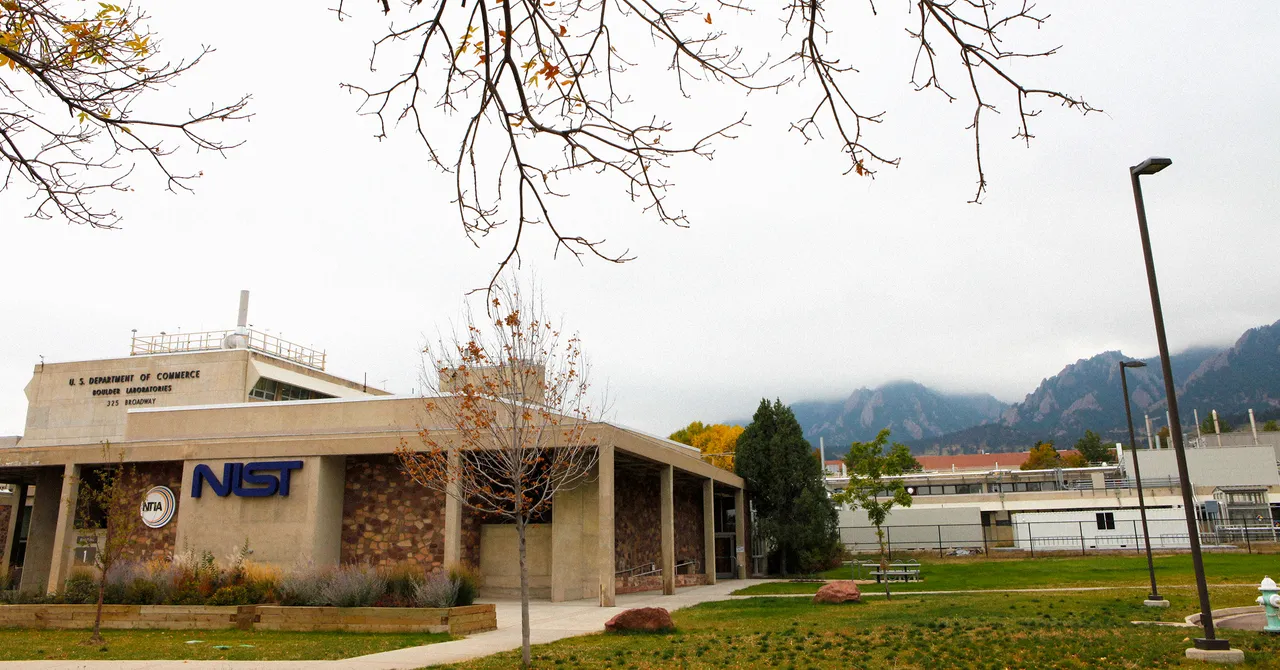
One of theUnited States government’s foremost scientific investigation facilities is implementing measures that might alienate international researchers, a development that legislators and insiders inform WIRED could deprive the nation of crucial specialized knowledge and undermine the institution’s trustworthiness.
The National Institute of Standards and Technology (NIST) plays a pivotal role in establishing the foundational structures for diverse fields, ranging from digital security to chip fabrication. Among NIST’s current undertakings are the formulation of directives for safeguarding artificial intelligence platforms and pinpointing health risks associated with air filtration devices and protective gear for firefighters. A significant number of the institution’s thousands of personnel, encompassing postdoctoral scholars, external vendors, and visiting academics, are recruited globally due to their distinct specialized knowledge.
“For several weeks, unverified reports of harsh new policies have circulated extensively, while my team’s requests for information from NIST have received no response,” stated Zoe Lofgren, the principal Democratic member of the House Committee on Science, Space, and Technology, in correspondence dispatched Thursday to Craig Burkhardt, NIST’s interim director. April McClain Delaney, a Democratic colleague on the same committee, also endorsed the communication.
Lofgren’s letter indicated that while her personnel had become aware of various unconfirmed modifications, they had verified via anonymous contacts that the Trump administration “has initiated actions to restrict the capacity of international scientists to perform their duties at NIST.”
This communication from Congress comes after a February 12 report by the Boulder Reporting Lab, which stated that foreign graduate students and post-doctoral scholars would henceforth be capped at three years at NIST, even though numerous individuals require between five and seven years to finalize their projects.
An individual working at NIST informed WIRED that certain initiatives to engage international personnel via the agency’s Professional Research and Experience Program have recently been discontinued due to ambiguity surrounding their ability to clear the updated security clearances. This employee, who requested not to be identified as they lacked authorization to address the press, noted that the agency has not yet broadly disclosed the nature of these new obstacles or its rationale for deeming them necessary.
Thursday saw the Colorado Sun report that “non-citizens” had their after-hours entry privileges to a NIST laboratory revoked last month and might face a complete prohibition from the premises in the near future.
Jennifer Huergo, a NIST representative, conveyed to WIRED that the suggested modifications intend to safeguard American scientific endeavors from illicit appropriation and misuse, reiterating a comparable declaration made earlier this week to various news organizations. Huergo opted not to disclose who is required to sanction the proposition for its completion or when a determination would be reached. Furthermore, she did not promptly reply to an inquiry regarding the correspondence from the legislators.
Thwarting the pilfering of significant American intellectual assets by international rivals has consistently been a shared objective across political parties, and NIST has been one of the entities that has faced Congressional examination in recent years concerning the sufficiency of its vetting processes and safety protocols. Only last month, Republican legislators reiterated demands for implementing limitations to prohibit Chinese citizens from employment at or collaboration with national laboratories managed by the Department of Energy.
Nonetheless, Lofgren’s correspondence asserts that the reported limitations imposed on non-American scientists at NIST exceed “what is justifiable and suitable to safeguard research integrity.” The communication requests full disclosure regarding new regulations by February 26 and a suspension of their implementation “until Congress has the opportunity to deliberate on the absolute necessity of these alterations.”
The prospective diminution of research expertise at NIST would augment a succession of other Trump administration directives which certain prominent figures in the American technology sector have cautioned will disrupt the livelihoods of immigrant scholars already residing in the US and impede economic advancement. Increases in charges for H-1B technology visas, the rescission of thousands of student permits, and the execution of legally questionable large-scale expulsions collectively risk compelling individuals keen on contributing to science and technology inquiry in the US to seek opportunities abroad. Moreover, the Trump administration has publicized intentions to curtail post-academic professional development for foreign students.
{content}
Source:{feed_title}