
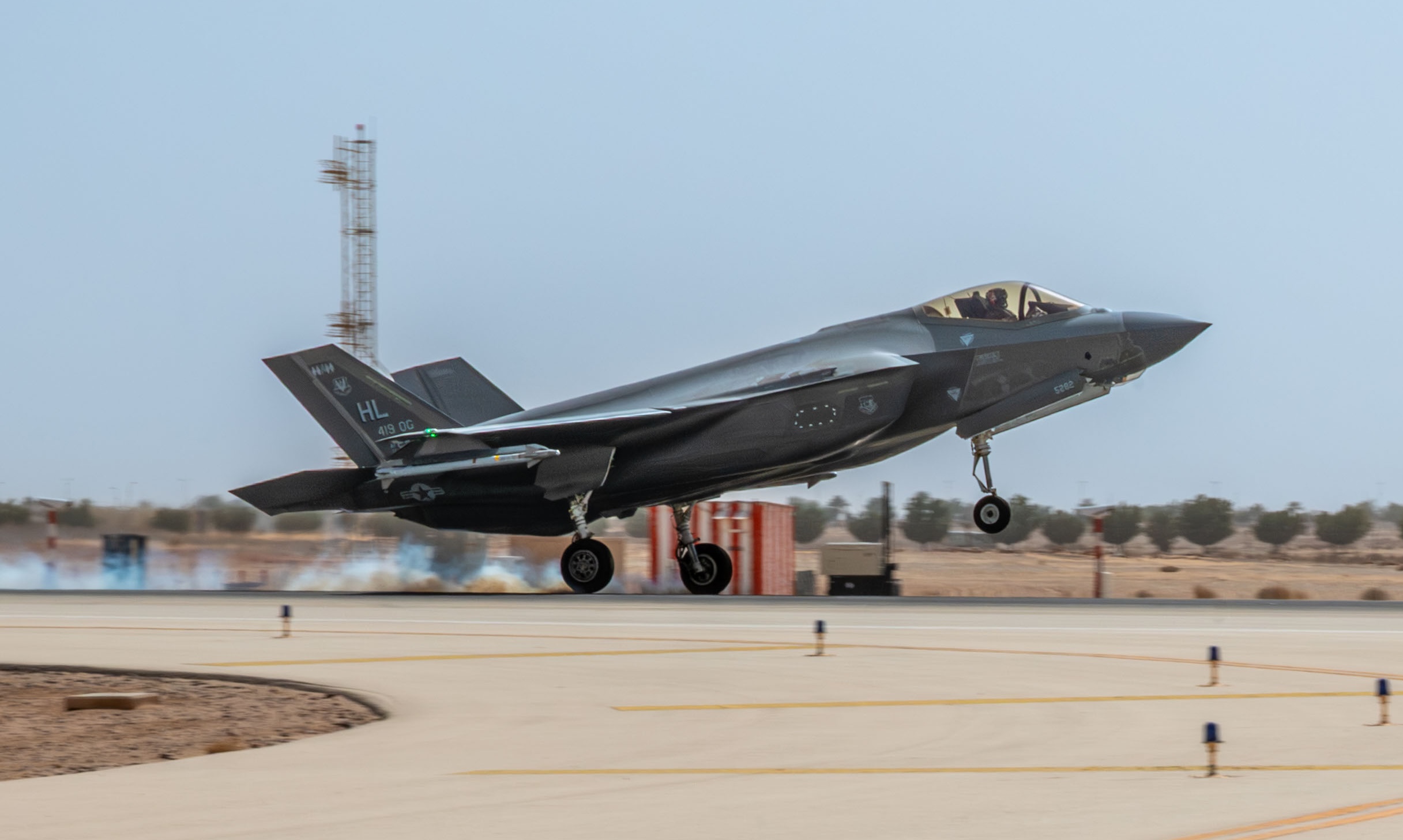
More than a dozen U.S. Air Force personnel from the 388th Fighter Wing were recently honored with some of the service’s highest awards for their actions during combat operations in the Middle East in 2025. The decorations recognize their bravery and exceptional service during two distinct, high-stakes military campaigns: Operation Midnight Hammer, targeting Iranian nuclear facilities, and Operation Rough Rider, aimed at Houthi rebel forces in Yemen.
A total of 18 individuals, comprising pilots, aircraft maintainers, and support personnel, received six Distinguished Flying Crosses (DFC) and 15 Bronze Star Medals (BSM). The majority of these awards were presented on May 21 at a ceremony held at Hill Air Force Base, Utah, the home base of the 388th Fighter Wing, which operates the F-35A Lightning II stealth fighter jets.
While the Air Force has maintained a degree of discretion regarding the precise details of the Airmen’s roles and the specific actions that led to these decorations, the awards themselves signify acts of profound courage and meritorious service. The Distinguished Flying Cross is awarded for heroism or extraordinary achievement while participating in aerial flight and stands as the military’s fourth-highest award for heroism. The Bronze Star Medal is bestowed upon individuals for heroic or meritorious achievement or service in a combat zone against an armed enemy.
According to a spokesperson for the 388th Fighter Wing, the Distinguished Flying Crosses, primarily awarded to F-35 pilots, were given for missions conducted during both Operation Midnight Hammer and Operation Rough Rider, reflecting a broad scope of operational involvement.
Operation Rough Rider: Confronting Houthi Threats in Yemen
The wing’s 34th Expeditionary Fighter Squadron rapidly deployed to the Middle East in late March 2025 to participate in Operation Rough Rider, a campaign against the Houthi rebel group in Yemen. The squadron’s F-35s were operational and flying missions within 24 hours of their arrival, demonstrating the agility and rapid deployment capabilities of modern airpower.
The 52-day campaign, which concluded with a ceasefire in May 2025, was characterized by significant threats from Houthi forces. During this period, Houthi surface-to-air missiles were responsible for downing more than half a dozen MQ-9 Reaper drones. Additionally, the campaign saw critical near-misses involving U.S. fighter jets. Two F-16 pilots were awarded Silver Stars for successfully evading six Houthi surface-to-air missiles while on a mission to protect B-2 Spirit stealth bombers targeting Houthi ballistic missile sites. U.S. officials familiar with the operations reported other instances of American fighter jets encountering Houthi missile threats during the campaign.
The 388th Fighter Wing’s F-35s played a crucial role in strikes that neutralized Houthi air defense systems, command and control facilities, weapons storage sites, and ballistic missile capabilities. Notably, F-35A jets from the squadron achieved the first recorded kills of one-way attack drones for this specific model, highlighting the aircraft’s versatility in countering asymmetric threats.
Operation Midnight Hammer: Strikes on Iranian Nuclear Sites
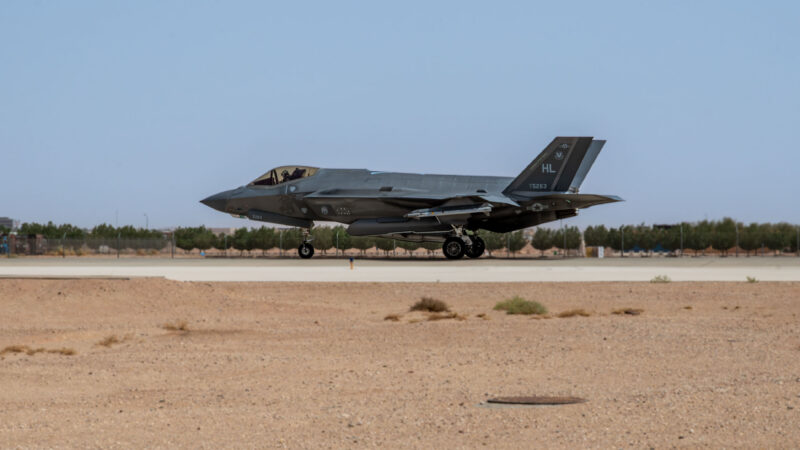
Operation Midnight Hammer, conducted on June 22, 2025, involved a highly sensitive mission targeting Iranian nuclear sites at Fordow and Natanz. F-35s from the 34th Expeditionary Fighter Squadron made history by being the first American aircraft to enter Iranian airspace during this operation. Their primary task was to suppress enemy air defenses, clearing a path for seven B-2 Spirit stealth bombers that delivered 14 GBU-57 Massive Ordnance Penetrator bombs against the heavily fortified facilities.
Lt. Col. Aaron Osborne, commander of the squadron, reflected on the mission’s intensity, stating, “We employed weapons to great effect against surface-to-air missile sites… while they were trying to target us with some very high-end systems and they were just unable to. It was cool to see the jet detect and defeat things—to watch it do exactly what it was designed to do.” An unnamed weapons officer from the 34th Expeditionary Fighter Squadron served as the “overall mission commander” for this critical operation.
Following the successful strikes, the F-35s from Hill Air Force Base were also the last American jets to exit Iranian airspace. U.S. military officials confirmed that the American aircraft did not encounter enemy fire during the mission. However, U.S. forces across the region prepared for potential Iranian retaliation, operating under heightened alert conditions, anticipating ballistic missile or drone attacks. Colonel Osborne described the post-strike environment as “wild,” with personnel and aircraft dispersed and preparations made for casualties and medical evacuations. Iran subsequently launched retaliatory strikes against Al Udeid Air Base in Qatar.
The Midnight Hammer operation was a complex, multi-component effort involving approximately 125 aircraft. Alongside the F-35s and B-2s, F-22 Raptors and F-16 Fighting Falcons were part of the strike package. F-16 pilots from the 20th Fighter Wing at Shaw Air Force Base, South Carolina, and Airmen from the 92nd Air Refueling Wing at Fairchild Air Force Base, Washington, have also received Distinguished Flying Crosses for their contributions to Operation Midnight Hammer. Beyond their direct strike and escort roles, the F-35s from the 388th Fighter Wing also provided crucial air cover for U.S. Navy ships operating in the region.
Recognition for a Cohesive Team Effort
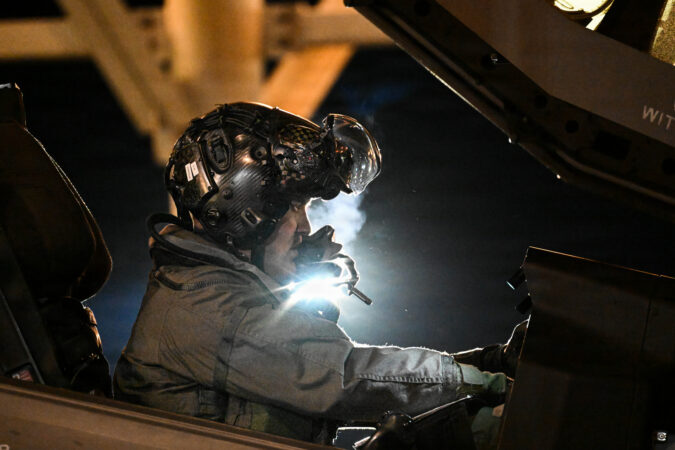
Among the 15 Bronze Stars awarded, three pilots from the 388th Fighter Wing received both a Distinguished Flying Cross and a Bronze Star. The remaining Bronze Stars were presented to other pilots, maintainers, and support personnel, with most recipients being enlisted members. The wing spokesperson clarified that maintainers and support personnel earned their Bronze Stars for “enabling critical attack missions during Operation Rough Rider and supporting Operation Midnight Hammer.” Their contributions included deploying to and operating from undisclosed forward locations and successfully functioning under the constant threat of enemy attack.
The 34th Fighter Squadron has previously been recognized for its excellence, receiving the Raytheon Trophy as the top fighter squadron in the Air Force for its deployments to the Middle East and earlier actions in the Indo-Pacific region. Col. Christopher Hubbard, acting commander of the 388th Fighter Wing, underscored the collective nature of these achievements at the awards ceremony: “As we pin these medals on their chests, we realize their bravery and sacrifice, but also that it takes an entire team to enable their achievements.”
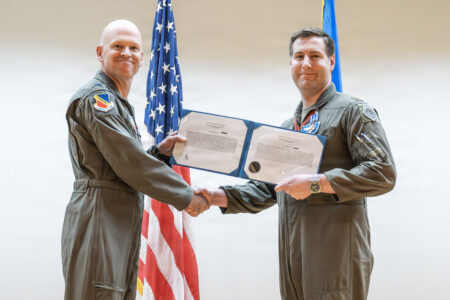
Col. Christipher Hubbard, acting 388th Fighter Wing commander presents the Distinguished Flying Cross to Maj. Alexander Cox during a ceremony at Hill Air Force Base, Utah, May 21, 2026. Cox also received a Bronze Star. Both decorations were awarded for actions during a 2025 deployment
Why This Matters
The recognition of these 18 Air Force personnel underscores several critical aspects of modern warfare and international relations. Firstly, it highlights the continued necessity of conventional military capabilities, particularly advanced airpower, in addressing both state-sponsored threats and non-state actor aggression. The operations in Yemen demonstrate the challenges posed by groups like the Houthis, who possess increasingly sophisticated weaponry capable of threatening advanced military assets. The F-35’s role in intercepting drones and suppressing air defenses illustrates its adaptability in contested environments.
Secondly, Operation Midnight Hammer represents a significant and highly sensitive military action against a sovereign nation’s nuclear program. The successful penetration of Iranian airspace and the precision strike on critical nuclear facilities, without engaging in direct combat with Iranian forces, showcases the U.S. military’s advanced stealth technology and strategic projection capabilities. The subsequent bracing for retaliation and the actual Iranian response against a U.S. base in Qatar illustrate the delicate balance and inherent risks in such high-stakes operations, emphasizing the broader geopolitical implications of any action involving Iran’s nuclear ambitions.
Thirdly, the diverse range of awards—from pilots earning Distinguished Flying Crosses for direct combat heroism to maintainers and support personnel receiving Bronze Stars for enabling critical missions under threat—reinforces the principle that modern military success is a comprehensive team effort. It acknowledges the often-unseen but vital contributions of every link in the chain, from strategic planning and logistics to aircraft readiness and direct engagement. This collective recognition boosts morale and validates the training and dedication of military personnel across all roles.
Finally, these events serve as a potent demonstration of U.S. commitment to protecting its interests and those of its allies in the Middle East, a region perpetually characterized by instability. The deployment and successful execution of complex air operations, often on short notice, signal Washington’s willingness and capability to project power and enforce strategic objectives. For international observers, these actions provide insights into the operational readiness of U.S. forces, the effectiveness of its cutting-edge military hardware like the F-35A, and the evolving nature of air warfare in the 21st century, where stealth, precision, and rapid deployment are paramount.

Col. Christopher Hubbard, acting 388th Fighter Wing commander, presents the Bronze Star to Tech. Sgt. Dale Hart during a ceremony at Hill Air Force Base, Utah, May 21, 2026. Hart was decorated for his actions during a 2025 deployment to the United States Central Command area of responsibility. (U.S. Air Force photo by Cynthia Griggs)

Col. Christopher Hubbard, acting 388th Fighter Wing commander, presents the Bronze Star to Master Sgt. Ronald Wolfe during a ceremony at Hill Air Force Base, Utah, May 21, 2026. Wolfe was decorated for his actions during a 2025 deployment to the United States Central Command area of responsibility. (U.S. Air Force photo by Cynthia Griggs)

Col. Christopher Hubbard, acting 388th Fighter Wing commander, presents the Bronze Star to Master Sgt. Hannah Livingston during a ceremony at Hill Air Force Base, Utah, May 21, 2026. Livingston was decorated for her actions during a 2025 deployment to the United States Central Command area of responsibility. (U.S. Air Force photo by Cynthia Griggs)

Col. Christopher Hubbard, acting 388th Fighter Wing commander, presents the Bronze Star to Maj. Alexander Cox during a ceremony at Hill Air Force Base, Utah, May 21, 2026. Cox also received a Distinguished Flying Cross. Both decorations were awarded for actions during a 2025 deployment to the United States Central Command area of responsibility, including participation in Operation Midnight Hammer. (U.S. Air Force photo by Cynthia Griggs)

Col. Christopher Hubbard, acting 388th Fighter Wing commander, presents the Bronze Star to Lt. Col. Aaron Osborne during a ceremony at Hill Air Force Base, Utah, May 21, 2026. Osborne also received a Distinguished Flying Cross. Both decorations were awarded for actions during a 2025 deployment to the United States Central Command area of responsibility, including participation in Operation Midnight Hammer. (U.S. Air Force photo by Cynthia Griggs)

Col. Christopher Hubbard, acting 388th Fighter Wing commander, presents the Bronze Star to Lt. Col. Melissa Glindmeyer during a ceremony at Hill Air Force Base, Utah, May 21, 2026. Glindmeyer was decorated for her actions during a 2025 deployment to the United States Central Command area of responsibility, including participation in Operation Midnight Hammer. (U.S. Air Force photo by Cynthia Griggs)
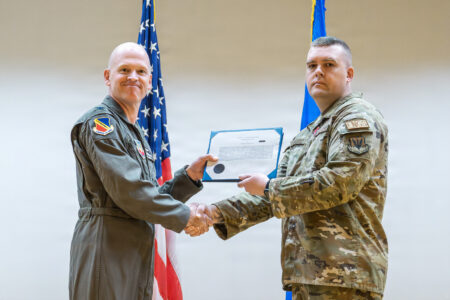
Col. Christopher Hubbard, acting 388th Fighter Wing commander, presents the Bronze Star to Master Sgt. Nathan Varnagatas during a ceremony at Hill Air Force Base, Utah, May 21, 2026. Varnagatas was decorated for his actions during a 2025 deployment to the United States Central Command area of responsibility. (U.S. Air Force photo by Cynthia Griggs)
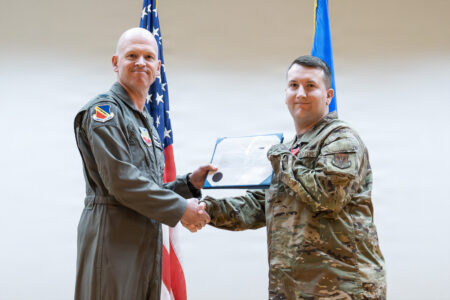
Col. Christopher Hubbard, acting 388th Fighter Wing commander, presents the Bronze Star to Master Sgt. Damian Lasalle during a ceremony at Hill Air Force Base, Utah, May 21, 2026. Lasalle was decorated for his actions during a 2025 deployment to the United States Central Command area of responsibility. (U.S. Air Force photo by Cynthia Griggs)
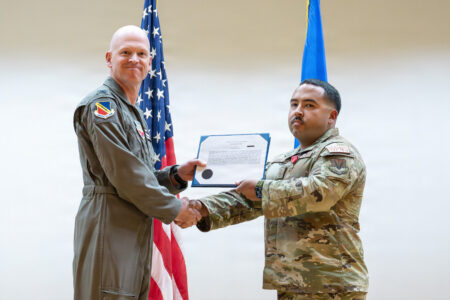
Col. Christopher Hubbard, acting 388th Fighter Wing commander, presents the Bronze Star to Master Sgt. Eric Llaguno during a ceremony at Hill Air Force Base, Utah, May 21, 2026. Llaguno was decorated for his actions during a 2025 deployment to the United States Central Command area of responsibility. (U.S. Air Force photo by Cynthia Griggs)
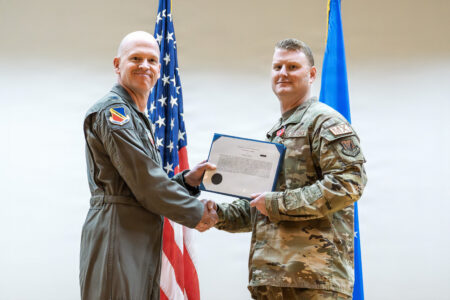
Col. Christopher Hubbard, acting 388th Fighter Wing commander, presents the Bronze Star to Senior Master Sgt. Vincent Traitz during a ceremony at Hill Air Force Base, Utah, May 21, 2026. Traitz was decorated for his actions during a 2025 deployment to the United States Central Command area of responsibility. (U.S. Air Force photo by Cynthia Griggs)
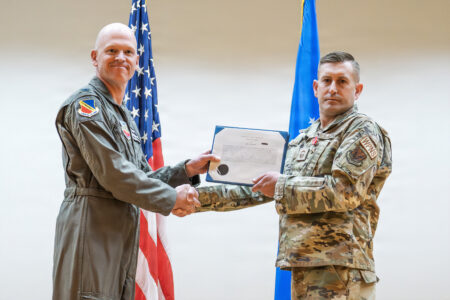
Col. Christopher Hubbard, acting 388th Fighter Wing commander, presents the Bronze Star to Senior Master Sgt. Bryan Bradbury during a ceremony at Hill Air Force Base, Utah, May 21, 2026. Bradbury was decorated for his actions during a 2025 deployment to the United States Central Command area of responsibility. (U.S. Air Force photo by Cynthia Griggs)
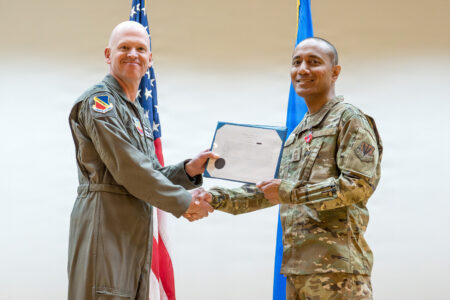
Col. Christopher Hubbard, acting 388th Fighter Wing commander, presents the Bronze Star to Chief Master Sgt. Matthew Iuli during a ceremony at Hill Air Force Base, Utah, May 21, 2026. Iuli was decorated for his actions during a 2025 deployment to the United States Central Command area of responsibility. (U.S. Air Force photo by Cynthia Griggs)
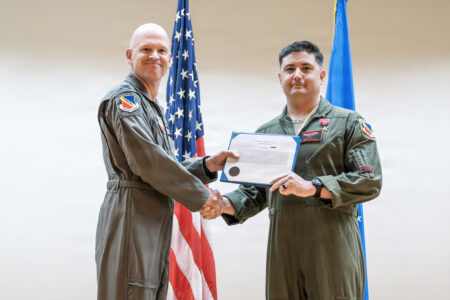
Col. Christopher Hubbard, acting 388th Fighter Wing commander, presents the Bronze Star to Maj. Brian Kelly during a ceremony at Hill Air Force Base, Utah, May 21, 2026. Kelly was decorated for his actions during a 2025 deployment to the United States Central Command area of responsibility, including participation in Operation Midnight Hammer. (U.S. Air Force photo by Cynthia Griggs)
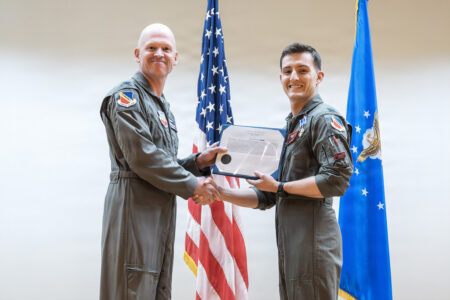
Col. Christopher Hubbard, acting 388th Fighter Wing commander presents the Distinguished Flying Cross to Capt. Christopher Patti during a ceremony at Hill Air Force Base, Utah, May 21, 2026. Patti was awarded the medal for actions during a 2025 deployment to the United States Central Command area of responsibility, including participation in Operation Midnight Hammer. (U.S. Air Force photo by Cynthia Griggs)
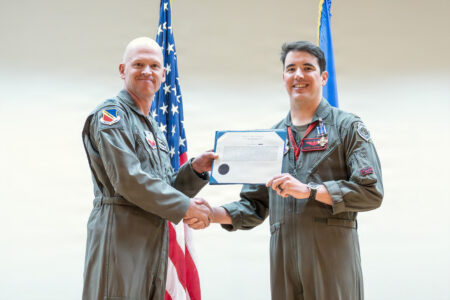
Col. Christopher Hubbard, acting 388th Fighter Wing commander presents the Distinguished Flying Cross to Maj. Scott Lafferty during a ceremony at Hill Air Force Base, Utah, May 21, 2026. Lafferty also received a Bronze Star. Both decorations were awarded for actions during a 2025 deployment to the United States Central Command area of responsibility, including participation in Operation Midnight Hammer. (U.S. Air Force photo by Cynthia Griggs)