
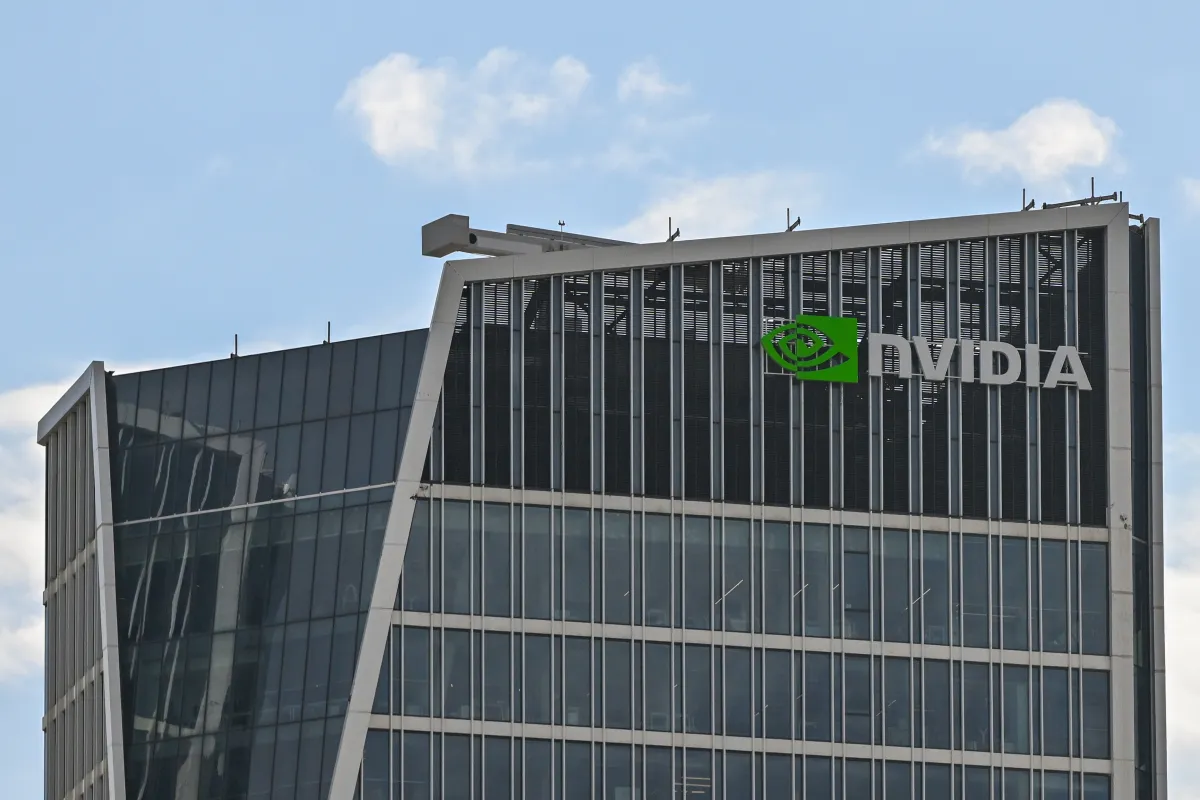
Jensen Huang’s unexpected resignation from Nvidia has sent ripples of concern through the global tech industry, particularly in Israel, which Huang famously dubbed the company’s “second home.” This leadership transition at one of the world’s most influential semiconductor giants raises critical questions about Nvidia’s future strategic direction, its commitment to key international R&D hubs, and the evolving competitive landscape in the burgeoning artificial intelligence sector.
### Key Takeaways
* **Israel’s Economic Anxiety:** Jensen Huang’s departure sparks worry in Israel, a critical R&D hub for Nvidia, threatening potential shifts in investment and strategic focus for the 6,000 local employees and the broader tech economy.
* **AI Dominance Under Scrutiny:** The leadership change challenges Nvidia’s perceived path to AI monopoly, potentially opening a crucial window for competitors to innovate and capture market share with alternative chip architectures and software solutions.
* **The Founder’s Imprint vs. Corporate Evolution:** Huang’s visionary, hands-on leadership built Nvidia’s current empire, and his successor faces the daunting task of maintaining momentum while potentially adopting a more diversified approach, influencing both internal dynamics and external partnerships.
The news of Jensen Huang’s departure from the helm of Nvidia has triggered immediate anxiety, particularly in Israel, a nation deeply intertwined with the semiconductor powerhouse. Huang, the charismatic co-founder and CEO, not only steered Nvidia to its dominant position in AI but also personally cultivated a robust presence in the Israeli tech ecosystem, referring to it as the company’s “second home” just last year. This strong bond, built on strategic acquisitions and significant investments, now faces an uncertain future as the company navigates its first major leadership transition.
Israel’s tech sector is a global hotbed of innovation, hosting substantial R&D operations for giants like Intel and Microsoft, alongside a thriving landscape of homegrown startups. However, Nvidia’s unique stronghold on the artificial intelligence domain, primarily due to the indispensable role of its GPUs in training and deploying large language models (LLMs), has positioned it as a cornerstone of the Israeli economic forecast. The country’s technology community is now abuzz with speculation on how this leadership reshuffle might impact Nvidia’s local commitments and, by extension, Israel’s standing in the global AI race.
The Israeli Nexus: A “Second Home” in Flux
Jensen Huang’s personal vision and strategic acumen were instrumental in cementing Nvidia’s deep ties with Israel. A pivotal moment was the 2019 acquisition of Israeli chipmaker Mellanox for a staggering $6.9 billion. This wasn’t merely a financial transaction; Mellanox, renowned for its high-performance InfiniBand and Ethernet interconnect solutions, became the bedrock for Nvidia’s largest R&D facility outside of the United States. This strategic move integrated Israeli engineering prowess directly into Nvidia’s core hardware and software development, particularly for its data center and AI acceleration initiatives.
Beyond the Mellanox integration, Huang demonstrated unwavering commitment by announcing plans for a multibillion-dollar campus in northern Israel, signaling a long-term investment in the nation’s talent and infrastructure. This level of dedication fostered immense goodwill and a sense of partnership within the local tech community. As Israeli repeat cybersecurity entrepreneur Pavel Gurvich noted, “Jensen brought Nvidia to Israel with the acquisition of Mellanox, so there is a strong positive sentiment towards Nvidia and Jensen in Israel’s tech community.” This sentiment underscores the profound impact Huang’s direct involvement had on the perception and reality of Nvidia’s presence.
Currently, Nvidia directly employs over 6,000 individuals in Israel, making it a significant contributor to the nation’s high-tech employment. The larger question looming over this community is whether Nvidia, under new leadership, will maintain the same level of strategic commitment and investment in Israel. Such deep R&D roots are not easily transplanted, but a change in executive priorities could lead to a slowdown in expansion, a shift in focus, or even a gradual reduction in the growth trajectory that Israel has come to expect. The line of succession is therefore being watched with bated breath, not just by competitors but also by the thousands of Israeli professionals whose livelihoods and national economic prospects are intertwined with Nvidia’s future decisions.
The Leadership Void: Succession and Strategic Shifts
Huang’s leadership was characterized by a rare blend of visionary insight and hands-on operational control, giving him an almost unparalleled “grip” on both Nvidia’s internal direction and its influence across the broader tech industry. His successor, regardless of their caliber, will inevitably operate within a different paradigm, likely with a more distributed decision-making process and potentially less individual sway over the entire ecosystem. This transition from a founder-led, highly centralized model to a more conventional corporate structure presents both challenges and opportunities for Nvidia.
The immediate aftermath of Huang’s resignation has placed interim CEO Colette Kress in the spotlight. As Nvidia’s CFO, Kress has long been an integral part of the executive team, and a 2023 interview, now circulating widely on X (formerly Twitter), revealed her strong operational connection to Israel. In that interview, Kress declared that she typically started her day “with Israel meetings, and only then continue[d] to California.” This anecdote offers a glimmer of hope to the Israeli tech community, suggesting that Nvidia’s commitment might be embedded deeper within its operational DNA than solely tied to Huang’s persona.
While Kress’s interim role might not be permanent, the rumor mill is already churning out names for the long-term CEO position. Notably, two Israelis, Apple’s Johny Srouji, a revered chip architect, and Nvidia’s own Michael Kagan, its current CTO, have been floated as potential candidates. While they may not top the still-tentative list, their inclusion highlights the depth of talent within the Israeli tech diaspora and its significant contribution to the global semiconductor landscape. A successor from within or with strong ties to existing strategies might ensure greater continuity, whereas an outsider could signal a more radical strategic pivot, impacting everything from R&D priorities to market expansion.
AI’s Shifting Sands: Competitors and Innovation
Under Jensen Huang’s stewardship, Nvidia leveraged its GPU technology and the CUDA programming model to establish a near-monopoly in the burgeoning AI industry. The company aggressively invested its substantial cash reserves across the AI spectrum, funding both promising startups and its own next-generation chips and platforms. This strategy, driven by Huang’s foresight, transformed Nvidia from a graphics card maker into the undisputed architect of the AI era, making its hardware indispensable for training and inferencing complex LLMs and other demanding AI workloads.
Huang’s departure, however, is unlikely to dismantle Nvidia’s technological superiority or its robust ecosystem overnight. As Adi Levanon, a founder and managing partner at Selah Ventures, observed, “[Huang’s] departure doesn’t dismantle Nvidia’s technology or ecosystem, but it could give competitors more room to shape what comes next.” This “room” is precisely what rivals like AMD, Intel, and a growing cohort of AI-specific chip developers have been eagerly awaiting. With companies globally deploying increasingly demanding AI agents into their workflows, there’s been a surge of interest and venture capital flowing into developers of AI-specific chips and inference software designed to compete directly with Nvidia’s offerings.
Yanai Oron, a general partner at Vertex Ventures Israel, articulated the potential dynamics: “slower decisions at Nvidia could give competitors an opening, but if that uncertainty also slows AI spending, they could end up with a bigger share of a smaller opportunity.” This highlights a delicate balance: while a leadership transition might introduce a period of internal realignment or slower strategic moves at Nvidia, it also coincides with a broader market maturation where customers might seek diversified solutions. These challengers now have a crucial “window to prove a different approach delivers better economics; a leadership change alone won’t win them the business,” as Levanon emphasized. This period could accelerate the development of alternative architectures, open-source AI software stacks, and more specialized hardware, potentially leading to a more diversified and competitive AI hardware landscape in the long run.
Beyond the Helm: Enduring Strengths and Future Trajectories
While Jensen Huang’s presence has been synonymous with Nvidia’s meteoric rise, the company’s fundamental strengths extend beyond any single individual. Its deep intellectual property, expansive patent portfolio, established customer base, and a vast network of highly skilled engineers and researchers form a formidable foundation. The CUDA ecosystem, in particular, remains a powerful moat, having cultivated a developer community that has invested years in building applications optimized for Nvidia’s architecture. This inertia ensures that demand for Nvidia’s products is unlikely to fade away simply due to a change in leadership, as investors generally believe.
However, the long-term trajectory may see subtle but significant shifts. A new CEO might prioritize different growth vectors, re-evaluate acquisition strategies, or foster a more collaborative approach to industry standards. This transition, therefore, represents less of an existential crisis and more of an evolution for Nvidia. The AI industry itself is maturing, moving beyond the initial phase of foundational model training to widespread deployment and inference. This shift creates opportunities for specialized hardware and software that might challenge the general-purpose GPU paradigm, making the timing of Huang’s departure particularly resonant. The coming years will reveal how Nvidia adapts to this new chapter, both internally and in its critical international partnerships.
Bottom Line
Jensen Huang’s resignation marks the end of an era for Nvidia, sending a palpable tremor through both Israel’s vital tech ecosystem and the global AI industry. While the company’s underlying technological prowess and market position remain robust, the leadership transition introduces a period of strategic re-evaluation and potential diversification. This shift presents a unique opening for competitors and could foster a more dynamic, less centralized future for AI hardware and software development, ultimately shaping the next wave of innovation in artificial intelligence.
When you purchase through links in our articles, we may earn a small commission. This doesn’t affect our editorial independence.
{content}
Source:{feed_title}