
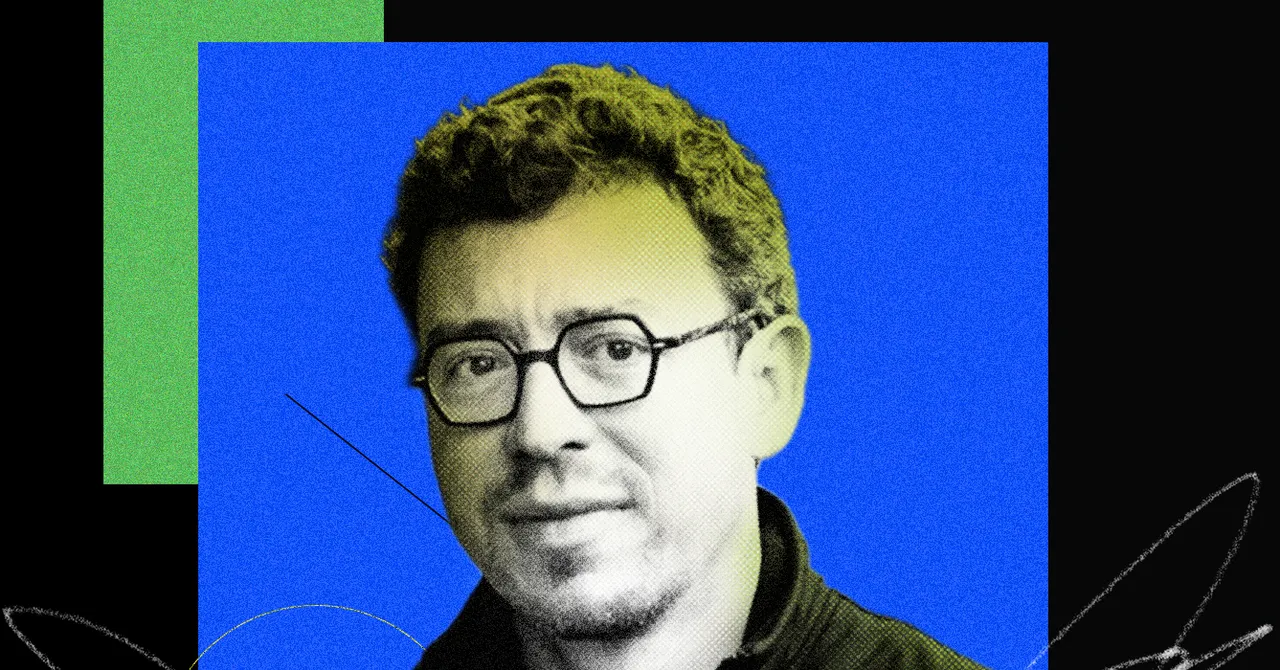
Luis von Ahnmight have retreated to a seaside resort long ago. Widely recognized as the chief executive of the educational application Duolingo, von Ahn devised the captcha in the early 2000s – those exasperating digital challenges compelling individuals to verify they aren’t automated programs. Nevertheless, subsequent to divesting his innovation to Google in 2009, von Ahn promptly embarked on his subsequent undertaking: an enterprise stemming from his upbringing in Guatemala, which has since become one of the globe’s foremost educational platforms.
Von Ahn’s mother, a physician, allocated all her surplus earnings to enroll him in private schooling, thereby exposing him to scholastic prospects largely inaccessible to most local children. This, consequently, molded his perception of learning in unambiguous ways. He saw it not as a powerful tool for social parity but as an influence that frequently perpetuates disparity unless an intervention occurs. As he reveals to me in this week’s Major Interview, this served as the impetus for his establishment of Duolingo over ten years prior, with the ambition of rendering premium education both gratis and extensively accessible. Currently, the enterprise caters to over 130 million users globally, ranging from migrants acquiring novel tongues to renowned personalities such as George Clooney.
While social disparity might have motivated von Ahn, his firm now finds itself at the core of a distinct discourse: Artificial Intelligence. With AI swiftly transforming learning methods, corporate operations, and how employees assess their value, I pondered its influence on Duolingo’s internal processes, growth strategies, and prospective enduring viability. If AI possesses the capability to translate virtually anything across various media, effortlessly mimic dialogue, create instructional blueprints, and tailor teaching … is there still a global requirement for Duolingo?
Von Ahn expresses an unambiguous perspective: He asserts that Duolingo is not only presently leveraging generative AI, but individuals will persist in enjoying the chance to acquire fresh knowledge via its game-like, encouraging methodology. During our discussion, he addresses the development of a purpose-driven enterprise amidst financial market limitations, his indifference towards declines in the company’s stock valuation, and Duolingo’s capacity to maintain user engagement in learning in manners beyond AI’s reach.
This discussion has undergone modifications for conciseness and transparency.
KATIE DRUMMOND: Luis von Ahn, a warm reception to The Grand Interview.
LUIS VON AHN:I appreciate being invited.
We customarily commence these dialogues with a handful of brief inquiries, akin to a mental preparation. Are you prepared?
Certainly.
Which language do you intensely desire to master, yet haven’t found the occasion for?
Swedish. I am currently studying it, but I must enhance my proficiency. My spouse is Swedish.
That’s a compelling rationale. You ought to prioritize it.
I’m engaged with it.
Which profession, in your opinion, should AI unequivocally avoid?
Numerous occupations. I believe any role where human inspiration is requisite, such as educators. Humans require inspiration. It’s somewhat challenging to derive inspiration from AI.
I concur. I believe AI struggles somewhat with providing inspiration.
You were 28 years old when you were awarded the MacArthur “genius” fellowship. What became of the funds?
I deposited it into a financial institution. I was exceedingly pleased to have obtained it. I am immensely proud. However, yes, I essentially banked it. Ultimately, those funds likely contributed to establishing Duolingo.
Which language possesses the most absurd grammatical regulations?
Finnish and Hungarian are quite challenging to acquire and feature peculiar rules. Yet, broadly speaking, I am uncertain if the issue lies in their absurdity. Typically, languages significantly divergent from one’s mother tongue merely appear ludicrous, seem odd.
{content}
Source:{feed_title}