
Key Takeaways:
Home AI Appliances are Imminent:Cerebras CEO Andrew Feldman predicts a future “not very far away” where personalized AI agents will reside locally in our homes, offering services from calendar management to making purchases.
Local-First, Cloud-Enhanced Intelligence:These future AI assistants will blend on-device processing for privacy and speed with cloud connectivity for broader capabilities, similar to how modern smartphones operate.
Infrastructure Powers Innovation:Feldman, whose company builds advanced AI chips, emphasizes his role in creating the foundational platforms that enable other entrepreneurs to develop groundbreaking, consumer-facing AI applications, focusing on “new possibilities” beyond mere automation.
The Dawn of Domestic AI: Cerebras CEO Foresees a Future Where Every Home Has Its Own Intelligent Appliance
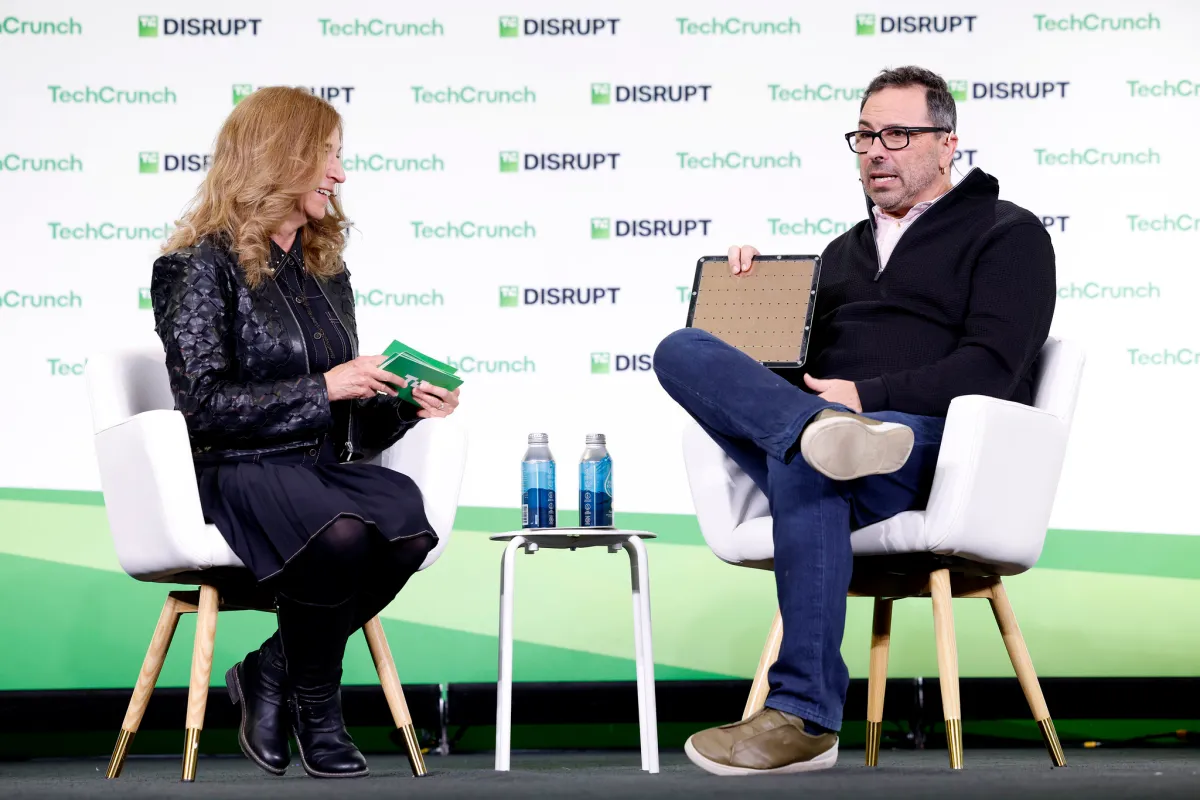
TechCrunch Disrupt 2026, San Francisco– Imagine an AI that intimately knows your routines, manages your schedule, and even makes purchases on your behalf, all while operating within the secure confines of your home. This isn’t a distant sci-fi fantasy, but a near-term reality, according to Andrew Feldman, CEO and co-founder of Cerebras Systems. Speaking to a packed audience at TechCrunch Disrupt 2026 on Tuesday, Feldman confidently declared that the era of the personal AI appliance is “actually, I don’t think that’s very far away.”
Feldman’s vision arrives at a pivotal moment for artificial intelligence. After years of development in enterprise and cloud environments, AI is rapidly permeating the consumer landscape. He highlighted recent breakthroughs in consumer AI agents, citing Meta’s Muse and the burgeoning startup Instinct, now a $10 billion valuation success story, as prime examples of how intelligent systems are beginning to integrate seamlessly into everyday user experiences. These agents, while often cloud-dependent, are laying the groundwork for what Feldman envisions as the ultimate home companion.
The Architecture of Personal AI: Local Power, Cloud Reach
The Cerebras chief elaborated on the operational blueprint for these future home AI appliances. They won’t be entirely self-contained, nor will they be mere conduits to a distant cloud server. Instead, Feldman posits a hybrid model: “Just like your cell phone, they’ll do some work on device and some work going back to the cloud.” This ‘local-first’ approach is crucial. On-device processing offers inherent advantages in speed, responsiveness, and perhaps most importantly, privacy. Sensitive personal data, learning from daily interactions, could remain largely within the home’s “security perimeter,” fostering a level of trust currently challenging for purely cloud-based AI systems.
Yet, the cloud component remains vital. It will provide access to vast knowledge bases, complex computational power, and real-time updates that would be impractical for a local device alone. This intelligent partitioning of tasks ensures both optimal performance and robust data protection.
Feldman painted a vivid picture of these personalized agents: “But I think they will get to know you very well, and you will have a security perimeter around them. And they will certainly have access to credit cards and be able to buy things for you.” This level of integration suggests an assistant capable of anticipating needs, proactively managing household logistics, and streamlining countless tasks that currently consume our time and mental energy. From ordering groceries when supplies run low, to booking appointments, or even suggesting personalized entertainment, the promise is a significant uplift in convenience and quality of life. “I think they will make a meaningful impact in making our lives better,” he affirmed.
Echoes of Innovation: From PCs to Pocket AI
The notion of a powerful, dedicated computing device in every home is not new. The personal computer revolution of the late 20th century, followed by the mobile computing boom of the 21st, reshaped societies and economies. Feldman’s prediction of a home AI appliance draws clear parallels to these seismic shifts. Just as the PC moved computation from mainframes to desktops, and smartphones put unparalleled power in our pockets, these AI appliances represent the next logical step: intelligent autonomy embedded directly into our living spaces.
The current wave of consumer AI agents, like Meta’s Muse and Instinct, serves as a crucial evolutionary bridge. While perhaps not yet “appliances” in the dedicated hardware sense, they demonstrate user willingness to integrate AI into daily digital interactions. They learn preferences, automate simple tasks, and provide personalized content, building the societal comfort and expectation for more sophisticated, localized AI companions. The transition from virtual assistants on phones to dedicated, always-on home AI units appears less a leap and more a natural progression, enabled by advancements in specialized AI hardware.
A CEO’s Personal Experiment: AI Beyond Automation
Feldman isn’t just an evangelist for future AI; he’s a daily user and an advocate for its transformative potential. He revealed his own reliance on “a collection of agents” to manage his demanding schedule. These intelligent assistants “sweep his calendar,” ensuring optimal time allocation, and “pull up information about the people he’s going to have a call with,” providing crucial context for meetings. This personal adoption underscores the immediate utility of AI, even in its current nascent form.
However, Feldman’s excitement extends far beyond merely automating existing tasks. While AI is already proving adept at handling manual chores – from drafting emails to summarizing documents – he is most intrigued by the “new possibilities” it unlocks. These are capabilities that weren’t feasible or even conceivable before the advent of advanced AI. He hinted at a future where AI doesn’t just make our existing lives easier, but fundamentally changeswhat we can achieve.
The Unsung Heroes: Building the Foundation
As CEO of Cerebras Systems, a company renowned for its massive AI chips designed for cutting-edge deep learning, Feldman’s perspective is uniquely informed by the hardware realities powering the AI revolution. His vision of home AI, therefore, carries significant weight, representing not just a consumer trend but a fundamental shift in computing architecture.
Interestingly, Feldman doesn’t aspire to build the next consumer-facing AI phenomenon himself. His passion lies in the foundational technology. “One of the reasons I love being in infrastructure is because I don’t need the consumer-facing idea,” he explained. “I like building the platforms that other people’s ideas take flight on.” This strategic position as an infrastructure provider is critical. Without the powerful, efficient, and specialized hardware that companies like Cerebras develop, the ambitious dreams of personalized, local AI would remain just that – dreams. He empowers the next generation of innovators to imagine and build the actual applications that will define the domestic AI landscape.
Navigating the Horizon: Challenges and Opportunities
While the prospect of a home AI appliance promises unprecedented convenience, it also brings a host of considerations. Issues of trust, data governance, algorithmic bias, and the economic implications of automation will require careful navigation. The energy consumption of powerful AI, even localized, remains a factor, as does the inherent complexity of integrating sophisticated AI into the average household. However, the opportunities for societal benefit — from enhancing elder care and education to boosting productivity and personal well-being — are immense. The stage is set for a revolution that promises to redefine our relationship with technology and our homes.
Bottom Line:
Andrew Feldman’s bold prediction isn’t just a vision; it’s a testament to the accelerating pace of AI innovation. As specialized hardware continues to advance and consumer AI agents grow more sophisticated, the dream of a personal, secure, and profoundly impactful AI appliance in every home moves from speculative fiction to an impending reality, poised to fundamentally reshape daily life and unlock unprecedented human potential.