
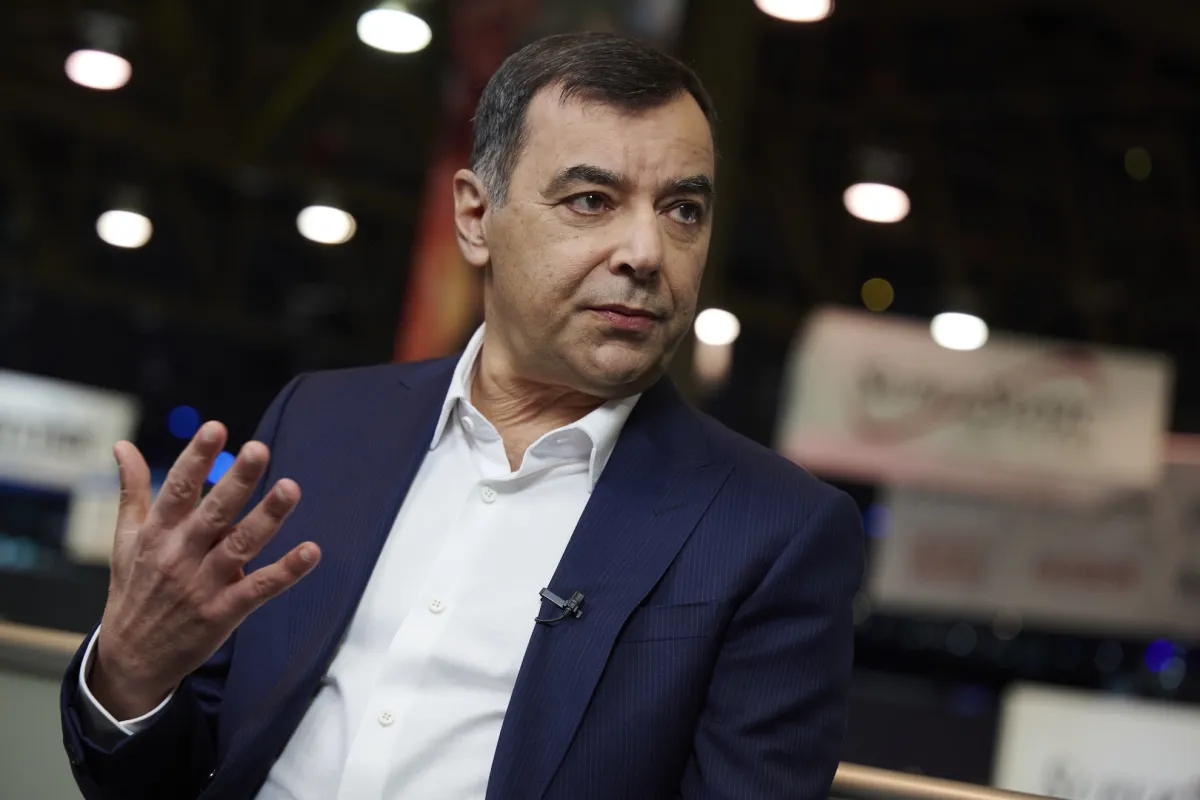
Mobileye founder and CEO Amnon Shashua plans to step down from the top leadership post after nearly three decades, just as the company pushes into robotaxis and humanoid robots.
**Key Takeaways:**
* **End of an Era:** Mobileye founder Amnon Shashua is stepping down, marking a significant leadership transition after nearly 30 years at the helm of the pioneering automotive vision company.
* **Strategic Diversification:** Shashua’s departure comes as Mobileye aggressively expands beyond its traditional role as a chip supplier into full-stack autonomous driving systems, robotaxi operations, and even humanoid robotics.
* **Pivotal Growth Phase:** The next CEO will inherit a company at a critical juncture, tasked with navigating ambitious new ventures like “Mobileye 3.0” and solidifying its position in the rapidly evolving AI and mobility landscape.
A Visionary’s Farewell: Mobileye Founder Amnon Shashua to Step Down Amidst Bold New Ventures
After nearly three decades of pioneering computer vision and spearheading the global adoption of advanced driver-assistance systems (ADAS), Mobileye founder and CEO Amnon Shashua is set to relinquish his leadership role. The transition comes at a pivotal moment for the Israeli tech giant, as it embarks on an ambitious journey into robotaxis, humanoid robots, and a broader vision for automotive artificial intelligence.
Shashua, the intellectual architect behind Mobileye’s foundational technology, will remain CEO until a suitable replacement is hired, according to a regulatory filing released Thursday. This succession planning initiates a new chapter for a company that has not only redefined automotive safety but is now aiming to reshape the future of mobility and robotics.
The Legacy of a Visionary: From Academia to Automotive Powerhouse
Mobileye’s genesis is rooted in the academic research of Professor Amnon Shashua at Hebrew University in Israel. What began as an exploration into computer vision and machine learning quickly evolved into a commercial enterprise with a singular focus: making roads safer. The company carved out a niche by developing sophisticated camera-based systems and proprietary EyeQ chips that could interpret road conditions, detect obstacles, and warn drivers of impending collisions. This technology became the bedrock of modern ADAS features, from automatic emergency braking to lane-keeping assistance, fundamentally transforming vehicle safety standards across the globe.
Under Shashua’s leadership, Mobileye grew from a startup into an industry behemoth. Its innovative approach led to the largest IPO in Israel’s history before it caught the attention of Silicon Valley giant Intel. In 2017, Intel acquired Mobileye for a staggering $15.3 billion, a move that underscored the increasing importance of automotive technology and Intel’s ambition to become a dominant player in the autonomous driving sector. While integrated into Intel for several years, Mobileye’s distinct identity and strategic focus remained largely intact. In 2022, Intel spun Mobileye back out as a publicly traded company, though it remains Intel’s largest shareholder, signaling continued strategic alignment while granting Mobileye greater operational autonomy to pursue its aggressive growth agenda.
Beyond the Chip: Mobileye’s Evolution into Full-Stack Autonomy
While Mobileye built its empire on supplying computer vision chips and software to automakers, Shashua has strategically steered the company far beyond its original mandate. Recognizing the accelerating shift towards full autonomous driving, Mobileye began developing comprehensive systems that handle the entire spectrum of self-driving capabilities. This strategic pivot transformed Mobileye from a component supplier into a solutions provider, now offering an end-to-end autonomous driving platform that car manufacturers can integrate.
This evolution is evident in its partnerships, such as the one with Volkswagen and its MOIA ride-sharing subsidiary, where Mobileye supplies the autonomous driving stack for their future robotaxi fleets. This move represents a significant leap, positioning Mobileye not just as a technology enabler but as a key architect of future mobility services. The shift signals a bolder, more integrated approach to the autonomous vehicle market, where Mobileye seeks to capture a larger share of the value chain.
Mobileye 3.0: The Robotic Frontier and the Race for Robotaxis
The most recent and perhaps most audacious expansions under Shashua’s tenure fall under what he terms “Mobileye 3.0” – the company’s next phase focused on robotics and advanced automotive AI. This vision took a tangible form in January with the acquisition of Shashua’s own humanoid robotics startup, Mentee Robotics, for a substantial $900 million. This acquisition is not merely an investment in a new technology but a strategic fusion, aiming to leverage Mobileye’s deep expertise in computer vision, AI, and navigation for the development of general-purpose humanoid robots.
The rationale behind integrating humanoid robotics into Mobileye’s portfolio is multifaceted. The sophisticated perception, mapping, and decision-making capabilities honed over decades in autonomous vehicles are highly transferable to robotics operating in complex, unstructured human environments. Shashua envisions a future where Mobileye’s AI powers not just self-driving cars but also robotic assistants, logistics robots, and potentially even personal androids. This diversification positions Mobileye at the nexus of several burgeoning technological frontiers, aiming to become a leader in both vehicular and embodied AI.
Concurrent with its robotics push, Mobileye is also accelerating its entry into the operational side of autonomous mobility. In June, the company announced plans to launch its own robotaxi service in a major U.S. city by 2027. This ambitious undertaking signifies a direct challenge to established players and burgeoning startups in the autonomous ride-hailing space. By moving beyond its supplier status to become an operator, Mobileye aims to demonstrate the full potential of its technology, control the user experience, and capture a larger slice of the lucrative mobility-as-a-service market. This dual strategy – developing the underlying AI and operating the services – underscores Mobileye’s aggressive intent to be a dominant force in the autonomous future.
The Search for a Successor: Navigating a New Era
The search for Amnon Shashua’s successor will undoubtedly be one of the most closely watched executive appointments in the tech industry. The incoming CEO will face the immense challenge and opportunity of stepping into the shoes of a founder who has shaped the company’s DNA for nearly 30 years. They will need to possess not only strong leadership and operational acumen but also a profound understanding of cutting-edge AI, robotics, and the complexities of the global automotive market.
The new leader will be tasked with executing “Mobileye 3.0,” integrating the Mentee Robotics acquisition, scaling the robotaxi service, and maintaining Mobileye’s technological edge in ADAS and autonomous driving. This transition period, while potentially unsettling, also offers a chance for fresh perspectives and renewed strategic vigor as Mobileye continues its journey from a vision chip pioneer to a diversified AI and mobility solutions powerhouse.
Bottom Line
Amnon Shashua’s decision to step down marks the end of an extraordinary era for Mobileye, but it ushers in a new phase of ambitious expansion and strategic diversification. His legacy is etched into the very fabric of modern automotive safety and the burgeoning autonomous vehicle industry. The next CEO will inherit a company poised at the forefront of AI and robotics, with a mandate to transform not just how we drive, but how we interact with technology in our daily lives. As Mobileye accelerates its foray into humanoid robots and its own robotaxi services, the success of this transition will dictate whether it can solidify its position as a true titan of the next technological revolution.
{content}
Source:{feed_title}