
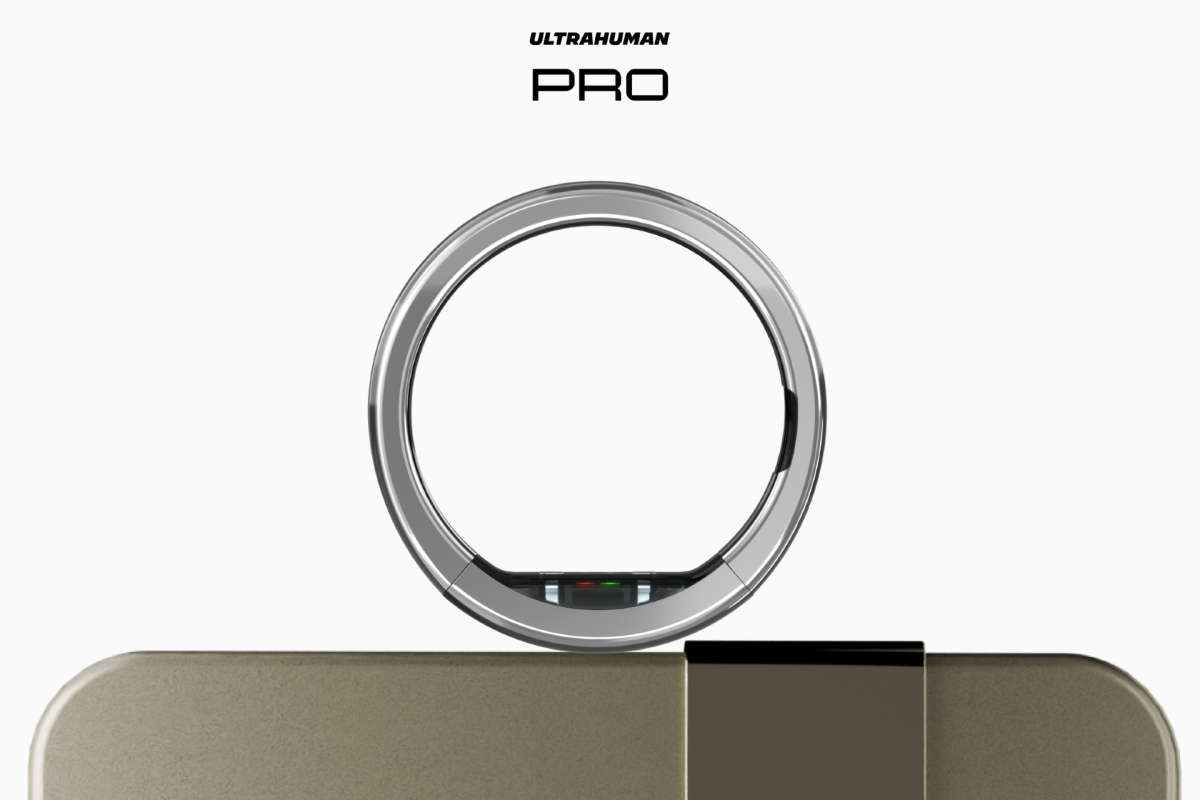
On Friday, Ultrahuman introduced a novel intelligent ring, boasting extended battery longevity and a re-imagined physical structure. This move comes as the Bengaluru-based wearable manufacturer endeavors to revitalize its U.S. operations, which faced disruption last year due to a patent dispute with its competitor, Oura.
The Ring Pro, Ultrahuman’s latest iteration of its smart ring, provides up to 15 days of power autonomy — a notable increase from the four to six days offered by the Ring Air — and carries a price tag of $479. It will be open for advance reservations globally, with the exception of the U.S., and deliveries are slated to commence in March.
Ultrahuman’s American commercial activities were hampered in October 2025 after the U.S. International Trade Commission — a federal body overseeing trade disagreements — sided with Oura in a proprietary rights conflict. This ruling prevented the startup from bringing in fresh ring inventory into the nation, though current retail merchandise continued to be available for purchase. The impact was substantial. The U.S. market comprised approximately 45% of Ultrahuman’s nearly 700,000 everyday users worldwide, as stated by co-founder and CEO Mohit Kumar.
Furthermore, in August 2025, Ultrahuman lodged a distinct patent infringement lawsuit against Oura in the Delhi High Court, where the matter is still awaiting resolution.
To circumvent Oura’s patent, Ultrahuman engineered the Ring Pro with a revised configuration, Kumar shared with TechCrunch. He also noted that the gadget has been presented to the U.S. Customs and Border Protection for authorization to verify its lawful importation into the country.
Despite the interruption in the U.S., Ultrahuman is currently performing at a projected annual income pace of about $150 million, Kumar disclosed. The company declared $64 million in operational income for the fiscal period concluding March 2025. The startup remains profitable post-tax, yet profit margins are anticipated to shrink owing to legal expenses, duties, and the re-engineering endeavor, he added.
In conjunction with the new ring, Ultrahuman launched Jade, an instantaneous “biointelligence” framework that scrutinizes user health data across its various devices and offerings to produce tailored understandings and suggestions.
Techcrunch event
Boston, MA
|
June 9, 2026
Kumar explained that Jade is conceived to transcend backward-looking health overviews, moving towards real-time, practical advice.
“Most AI instruments nowadays retrospectively analyze your data,” he stated. “Jade is engineered to respond to your health instantaneously and highlight measures users can undertake.”
Kumar affirmed that Jade will be accessible for every Ultrahuman user, including those utilizing the previous Ring Air, and presently needs no subscription.
The Ring Pro incorporates a re-engineered cardiac rhythm detection system for enhanced signal fidelity during slumber and a novel dual-core processor to boost data precision and integrated processing. The gadget can retain up to 250 days of health information and has a mass of approximately 5% to 6% more than the Ring Air, which was introduced in July 2023 at $349.
Ultrahuman has also presented a Pro Charger, featuring up to 45 days of battery life, designed to facilitate portable recharging and permit quicker software revisions and troubleshooting via direct housing linkage. Furthermore, the charger accommodates cordless power transfer through Qi, the identical protocol adopted by the majority of contemporary mobile phones.

Women now comprise about 68% of Ultrahuman’s user demographic, an increase from approximately 65% twelve months prior, Kumar disclosed, indicating a robust uptake of the startup’s women’s health functionalities.
Ultrahuman also provides membership-dependent services throughout its wider wellness ecosystem, encompassing a guidance and recuperation regimen named PowerPlugs, the Blood Vision metabolic assessment, Ultrahuman Home, and an ongoing blood sugar tracking service. Subscriptions generate about 16% of Ultrahuman’s income, while Blood Vision constitutes roughly 5% to 6% of the enterprise, Kumar noted.
Ultrahuman’s primary expansion territories comprise the UK, Canada, Australia, and India, Kumar conveyed to TechCrunch, with the latter adding about 8% to 9% of total income following recent outlays in domestic client assistance.
Worldwide smart ring deliveries experienced an almost 80% increase annually in 2025, propelled by an appetite for small, portable devices featuring sophisticated sleep monitoring and extended power duration, according to Anshika Jain, a senior analyst at Counterpoint Research. Oura maintains its leadership, holding over two-thirds of the market, while Ultrahuman occupies the second spot.
Jain further stated that forthcoming leaders in this segment will be characterized by sensor precision, artificial intelligence-powered understandings, and flawless system compatibility.
Distinct IDC data revealed global smart ring shipments increasing about 30% annually in Q3 2025, reaching nearly 1 million units, partially fueled by a desire for display-free activity monitors, said Navkendar Singh, associate vice president at IDC India. Ultrahuman secured roughly 25% of the market within that timeframe, per IDC.
Established in 2019, Ultrahuman has garnered about $55 million until now and lists Alpha Wave Incubation, Blume Ventures, Steadview Capital, and Nexus Venture Partners among its financiers.
Ultrahuman, Kumar mentioned, is developing extra manufacturing capability to meet requirements for the Ring Pro over the forthcoming period.
{content}
Source:{feed_title}