
Key Takeaways:
- Rethinking AI Intelligence:Runway is challenging the industry’s language-centric approach, betting instead that the next frontier of AI will emerge from video and world models that learn how the world *works*, not just how humans describe it.
- Unconventional Path, Ambitious Vision:Founded by NYU film school graduates from diverse international backgrounds, Runway eschews typical Silicon Valley pedigree, yet has achieved a $5.3 billion valuation and significant ARR, leveraging its video generation expertise into the far more ambitious realm of world models.
- From Filmmaking to Scientific Discovery:What started as a mission to democratize filmmaking with AI has evolved into a quest to build scientific infrastructure capable of accelerating progress in fields like robotics, drug discovery, and even anti-aging research, by creating digital twins of the universe.
In an AI landscape largely dominated by large language models, a New York-based startup named Runway is charting a dramatically different course. While giants like OpenAI and Anthropic pour resources into refining intelligence built from text, Runway, with its unconventional origins and bold vision, is making a profound bet: the future of AI lies in understanding the world through video and interactive simulations. This isn’t just an academic distinction; it’s a strategic pivot with implications that could ripple from Hollywood soundstages to the most advanced scientific laboratories.
The Unconventional Path to AI Innovation
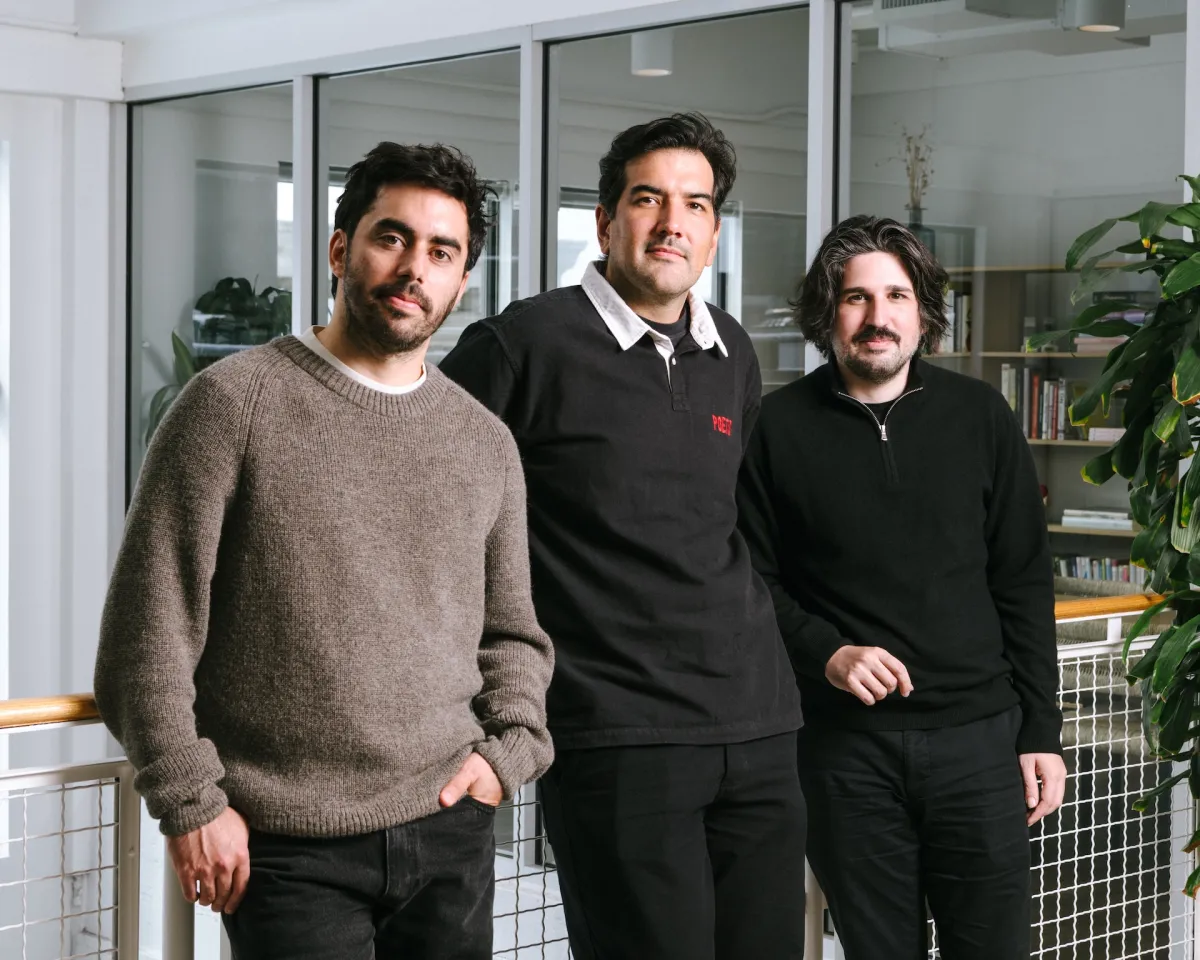
Runway doesn’t fit the typical Silicon Valley mold. Its three founders — two from Chile, Cristóbal Valenzuela and Alejandro Matamala-Ortiz, and one from Greece, Anastasis Germanidis — didn’t emerge from Stanford’s hallowed halls or Google’s illustrious alumni network. They met at NYU’s Tisch School of the Arts, specifically within its Interactive Telecommunications Program (ITP), a graduate program Valenzuela aptly described as an “art school for engineers.” This unique blend of artistic sensibility and technical prowess would become the bedrock of their company, built far from the California tech hub, in the vibrant ecosystem of New York City.
Each founder brought a diverse background. Germanidis, drawn to programming as an 11-year-old in Athens, initially pursued neuroscience and film before returning to computer science. Valenzuela, from Santiago, studied economics before pivoting to film and software. Matamala-Ortiz, also from Santiago, honed his skills in advertising and design. Their shared aspiration to be filmmakers at various points in their lives ultimately coalesced into Runway’s initial mission: to use AI to make everyone a filmmaker. This passion for creative expression, combined with a deep technical curiosity, set the stage for an evolution far beyond their initial scope.
Beyond Language: The World Model Bet
For years, the prevailing wisdom in AI has been that intelligence is rooted in language, a premise that has fueled the development of large language models like ChatGPT. Runway, however, alongside a growing cohort of innovators, believes this approach is inherently limited. Co-Founder and co-CEO Anastasis Germanidis argues that training models directly on observational data from the world, rather than solely on human-generated text, is the true next frontier of AI.
“We’re basically bound by our own understanding of reality,” Germanidis told TechCrunch from Runway’s sunlight-filled headquarters. “Language models are trained on the entire internet, on message boards and social media, on textbooks — distilling the existing human knowledge. But to get beyond that, we need to leverage less biased data.” This “less biased data” comes in the form of video, sensory inputs, and raw observations of how the physical world operates. Runway’s core thesis is that by building “world models” – AI systems that can simulate environments well enough to predict their behavior – AI can learn the fundamental physics and interactions of reality itself.
This distinction, while sounding academic, carries immense practical implications. The companies that crack world models first, Germanidis contends, won’t necessarily be those that perfected language. Instead, they will be the ones who empower AI to truly *understand* cause and effect, dynamics, and relationships within a simulated environment, paving the way for AI that can interact with and manipulate the real world in unprecedented ways.
From Creative Tools to Scientific Infrastructure
Founded in 2018, Runway built its initial reputation on pioneering video-generation models, including its impressive Gen-4.5, and a suite of AI tools that transform text prompts into editable, cinematic content. This technology quickly gained traction, powering production workflows for filmmakers and ad agencies. Runway has secured deals with major media players like Lionsgate and AMC Networks, and its tools have even found their way into acclaimed films such as the Oscar-winning “Everything Everywhere All At Once.” This success has propelled Runway to a valuation of $5.3 billion, with one founder reporting an impressive $40 million in annual recurring revenue added in the second quarter of 2026.
However, for Runway, video generation was always a stepping stone. In a significant leap, the startup expanded beyond its core offering, launching its first dedicated world model in December and planning another for this year. This move signifies a deeper commitment to its ultimate vision. As Chief Innovation Officer Alejandro Matamala-Ortiz notes, the process of developing advanced video models revealed their potential to “understand how the world works, and if you scale them, they can be useful for many other different things.”
These “other things” extend far beyond creative arts. Germanidis envisions world models as foundational scientific infrastructure. By training a single model on an increasingly vast array of sensory data and observations, Runway aims to create a working digital twin of the universe – a simulated reality where experiments can be run at speeds impossible in traditional labs. “Much of the scientific process is just waiting on results,” he points out. “If you could compress that waiting, you could compress progress itself.” This ambitious goal translates into near-term use cases in interactive entertainment, gaming, and critical robotics training. Last year, Runway even launched a robotics unit, which Germanidis confirms has already yielded real-world testing and deployments.
The ultimate moonshot for Runway’s technology, given sufficient time and resources, is biological world models and pioneering anti-aging research. This profound ambition underscores the founders’ belief that by truly understanding and simulating reality, AI can tackle humanity’s most intractable problems, from drug discovery and climate modeling to extending human health and lifespan. To support this expansive vision, the company has grown to 155 workers spread across offices in New York, London, San Francisco, Seattle, Tel Aviv, and its most recent addition, Tokyo.
The High-Stakes Race for General Intelligence
Runway isn’t alone in its pursuit of turning physics-aware video models into comprehensive world models. The landscape is dotted with competitors like startups Luma and World Labs, both on a similar trajectory. Crucially, tech giants like Google have also signaled their intent, pointing their own Genie world model in the same direction. The race for true general AI, capable of solving humanity’s hardest problems, is intensely competitive, with deep-pocketed and highly respected players vying for leadership.
Whether Runway can successfully translate its early dominance in AI video generation into a leading position in the world models arena is far from settled. While it was among the first to achieve impressive results in video synthesis, the challenge of building truly robust and comprehensive world models is an entirely different magnitude. This battle pits Runway against not only Google but also formidable figures like former Meta chief scientist Yann LeCun and AI’s ‘godmother’ Fei-Fei Li, all of whom are chasing similar, profound goals. The stakes are extraordinarily high, for Runway and for the future trajectory of AI itself.
Bottom Line
Runway represents a fascinating and potentially transformative counter-narrative in the AI saga. By prioritizing an understanding of the physical world over the nuances of human language, this unconventional startup is making a multi-billion-dollar bet on a fundamentally different path to general intelligence. Should its vision of world models as scientific infrastructure materialize, the impact will be profound, accelerating discovery across countless fields. However, the journey is fraught with formidable competition and immense technical hurdles. Runway’s story is a testament to the power of a bold vision, but the ultimate success of its moonshot will determine whether its unique pedigree truly reshapes the future of AI.
Runway’s Audacious Bet: Can a Challenger Redefine AI’s Future Against Giants?
In the high-stakes arena of artificial intelligence, Runway is making a bold wager on “world models” – a paradigm shift promising generalized reasoning from video intelligence. But as they race towards this frontier, they confront an uphill battle for crucial resources and a gauntlet of tech giants.
Key Takeaways
- Unproven Bet:The leap from video intelligence to generalized reasoning via world models remains unproven, requiring immense resources and a breakthrough that no one has yet achieved.
- Compute Crunch:Runway’s ambition is constrained by access to dedicated, large-scale compute clusters, which experts deem essential for training frontier models and matching the capabilities of well-funded incumbents.
- Maverick Advantage:Despite significant funding disparities with competitors like Google and OpenAI, Runway leverages a “scrappy,” non-Bay Area culture and an “anti-rules” philosophy to foster rapid innovation and challenge established norms.
The World Model Dream: A Leap of Faith or Visionary Path?
Runway, an AI powerhouse known for its video generation capabilities, is placing its future on the development of “world models.” This ambitious vision posits that AI can learn a comprehensive understanding of the physical world directly from video data, potentially leading to generalized reasoning capabilities far beyond current AI systems. However, the path to this future is fraught with skepticism.
Kian Katanforoosh, CEO of AI skills benchmarking company Workera and a lecturer at Stanford, articulates this uncertainty directly: “No one has yet proven the jump between video intelligence and generalized reasoning via world models.” While acknowledging that the impossibility hasn’t been definitively established, the lack of a clear blueprint underscores the monumental challenge. For Runway to transform this speculative bet into a tangible reality, Katanforoosh emphasizes one paramount requirement: resources, with compute power leading the charge.
The Compute Chasm: A Bottleneck for Frontier AI
Building foundational AI models, especially those as complex as world models, demands an astronomical amount of computational power. This isn’t merely about having access to GPUs; it’s about securing dedicated cluster access – a guaranteed, large-scale pool of compute resources that can be continuously leveraged for intensive training. Runway currently holds deals with CoreWeave and Nvidia, but the company remains tight-lipped about whether they possess this critical dedicated cluster access.
Katanforoosh’s question resonates with industry experts: “How are you going to build a foundational model without a cluster? I don’t think anybody can do that.” This highlights a fundamental bottleneck. Without guaranteed compute, the iterative, resource-intensive process of training and refining frontier AI models becomes incredibly difficult, if not impossible, placing Runway at a distinct disadvantage against rivals who command vast computational infrastructures.
Funding Wars: Against Immediate Rivals and Trillion-Dollar Titans
Runway’s financial backing, while substantial, pales in comparison to the industry’s behemoths. To date, the company has raised $860 million, including a $315 million round earlier this year with strategic partners like AMD Ventures and Nvidia. This figure places them roughly in line with immediate competitors such as Luma AI, which has secured $900 million, and World Labs, boasting $1.29 billion, according to PitchBook data. These sums reflect the intense capital requirements of the generative AI space.
However, the true scale of the challenge emerges when comparing Runway to incumbents. OpenAI, a direct competitor in some areas, has raised an estimated $175 billion according to CEO Sam Altman. Even more formidable is Google, whose parent company Alphabet is valued at a staggering $4.86 trillion. Google poses Runway’s most significant threat, not only due to its immense resources but also its direct competitive products. Google’s Veo model directly challenges Runway’s core video generation business, while its ambitious Genie world model targets the exact long-term territory Runway is striving to conquer. This financial and product disparity casts a long shadow over Runway’s ambitious trajectory.
Beyond the Billions: The Sora Lesson & ElevenLabs Hope
While resources are undeniably crucial, they don’t guarantee success. Katanforoosh points to OpenAI’s ill-fated video platform, Sora, as a cautionary tale. Shuttered in March, Sora reportedly burned approximately $1 million per day in compute costs while generating a mere $2.1 million in revenue, according to some estimates. This stark example underscores that even with a deep war chest, a product must find market fit and demonstrate sustainable economics. “Resources alone don’t guarantee survival. They don’t guarantee it for Runway either,” Katanforoosh observes.
Yet, Katanforoosh isn’t ready to write Runway off entirely. He draws a compelling parallel to AI audio startup ElevenLabs, which has managed to outperform both OpenAI and Google on their own benchmarks, despite lacking the immense resources and established pedigree of either giant. This suggests a potential playbook for Runway: focus on superior innovation, efficiency, and a differentiated approach to overcome the resource deficit. Runway’s founders are keen to adopt a similar strategy.
Runway’s Unconventional Edge: Scrappy Culture, Anti-Rules Ethos
Runway’s co-CEO, Valenzuela, believes the company’s lack of “Bay Area standardization” provides a crucial competitive advantage. He argues that by operating outside the traditional Silicon Valley ecosystem, they benefit from a greater diversity of thought. Furthermore, this distance from the “war chests” readily available to many Bay Area startups forced Runway to be inherently scrappier, prioritizing early revenue generation out of necessity rather than insulation from market pressures. This crucible of early self-sufficiency has forged a resilient and agile company.
Michelle Kwon, Runway’s chief operating officer, affirms this perspective, stating that the company isn’t in a rush to raise more funds, even as compute demands naturally increase with scale. This deliberate approach speaks to their confidence in their current operational efficiency and revenue generation capabilities. Early investor Michael Dempsey, managing partner at Compound, praises this distinctive culture, telling TechCrunch, “Their background has led them to be early, to be right more often than not, and to build a culture that moves incredibly quickly.”
The “Anti-Establishment” Ethos: Challenging Tech’s Made-Up Rules
At the heart of Runway’s unconventional culture lies Valenzuela’s personal philosophy, deeply influenced by his reading habits. He finds inspiration in the Chilean poet Nicanor Parra, whom he describes as the antithesis of the more formal, academic Pablo Neruda. Parra’s view that poetry belongs to the people, free from rigid rules, profoundly shapes Valenzuela’s approach to technology and business. “Rules are just rules they invented,” Valenzuela asserts, echoing Parra’s sentiment.
This philosophy is a driving force behind Runway’s operations. “They say Silicon Valley is here and that’s where the startups are. Why? Those are just made up rules. Scrub them all and start again,” Valenzuela declares. This rebellious spirit encourages Runway to challenge established norms, both technological and geographical, fostering an environment where innovation isn’t constrained by conventional wisdom or the gravitational pull of established tech hubs. It’s a conviction that allows them to pursue a world model vision, even if it defies the current “rules” of AI development.
Bottom Line
Runway is charting an ambitious course towards a future powered by world models, facing daunting challenges in compute resources and the formidable competition of tech titans. While the financial disparities are undeniable and the “world model” promise remains unproven, Runway’s unconventional, “scrappy” culture and a leadership philosophy that actively challenges established rules could be its most potent weapons. In a landscape where resources alone don’t guarantee victory, Runway’s ability to innovate rapidly and carve its own path might just be the key to turning its audacious bet into a breakthrough reality.
When you purchase through links in our articles, we may earn a small commission. This doesn’t affect our editorial independence.
Source:{feed_title}