
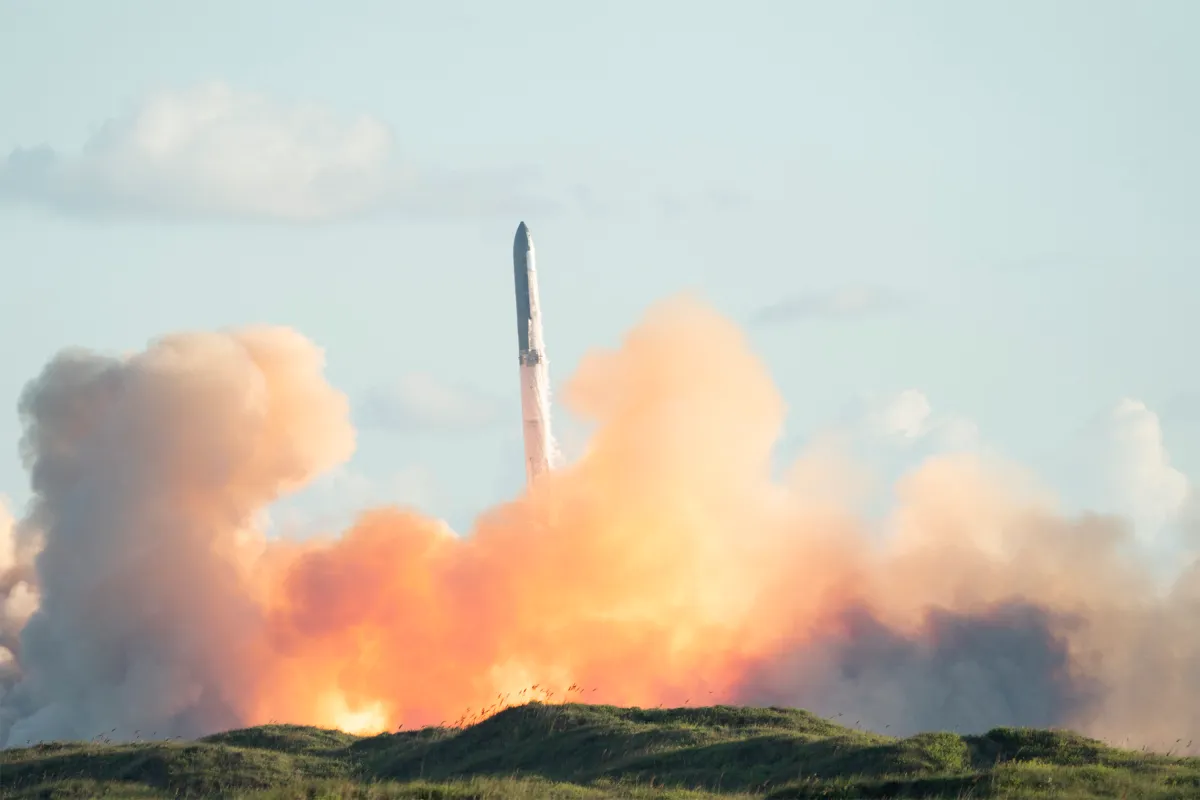
SpaceX has allegedly submitted private documentation for an initial public offering, through which the firm aims to secure $75 billion at a $1.75 trillion appraisal. Furthermore, according to CEO Elon Musk, space-based data hubs will constitute a crucial component of SpaceX’s future endeavors.
During the most recent installment of TechCrunch’s Equity podcast, Kirsten Korosec, Sean O’Kane, and I deliberated upon Musk’s concept, alongside other enterprises chasing comparable objectives.
Substantial technological advancement and enormous financial outlay will be necessary to materialize space-based data hubs. However, as Sean observed, given the “resistance emerging around the nation to data centers overall,” prominent leaders such as Musk and Jeff Bezos might be contemplating, “The technical hurdle could be of lesser magnitude than the societal impediment on this planet.”
Peruse an excerpt of our discussion, condensed for conciseness and comprehensibility, further down.
Sean:This has been a tendency — I would say a swiftly emerging development — over the past six to twelve months, and we observe various instances of it. There’s SpaceX; I feel that, in certain respects, Elon Musk was a bit slow to adopt this trend. For now, let’s disregard the precise workings and the practicability of space-based data centers. We could address that shortly, but —
Kirsten:We have an excellent article we’ll reference in the episode description, by the way. One of our newest team members, Tim Fernholz, is exceptional. He details extensively the physical principles and limitations involved.
Sean:Indeed, I believe it represents a truly fascinating technical conundrum. It’s a quite compelling scientific puzzle. It’s an intriguing celestial mechanics challenge. Nevertheless, it’s something that evidently numerous enterprises and individuals are going to endeavor to pursue. SpaceX will be engaged in this, presenting a variation on what they’re already developing with regard to their Starlink network.
TechCrunch gathering
San Francisco, CA
|
October 13-15, 2026
There’s a new venture originating from Y Combinator, initially known as Starcloud, that was among the pioneers attempting to establish a substantial enterprise concerning this. It recently secured $170 million this week, an amount that propelled them to unicorn standing.
Jeff Bezos is likewise aiming for this. This represents a subsequent iteration of the rivalry we’ve observed unfolding between Starlink and Amazon’s Leo satellite network, and Blue Origin also has its own satellite network becoming operational in the upcoming few years.
Consequently, a plethora of such developments will be occurring, and it appears it wasn’t occurring a year prior. I know the way Elon Musk presents it is — we are aware he is averse to bureaucracy; he has also constructed a data center in Memphis. Perhaps now he understands the obstacles and hazards one must undertake to circumvent those bureaucratic impediments.
Considerable resistance is emerging nationwide to data centers overall. Proponents argue, “We have the capability to utilize outer space, so let’s simply endeavor to implement it aloft.” The technical difficulty could be less formidable than the societal issue on our home world.
Kirsten:And it also generates enthusiasm, doesn’t it? If an enterprise is on the verge of a public offering and they’re developing celestial data facilities, this is something people can anticipate favorably and disregard the limitations. It projects the image of a company working on something neither antiquated nor obsolete, but rather something that heralds what’s to come. And it’s indeed a shrewd tactic when you consider it.
Anthony:While Elon Musk isn’t unique in this regard, he seems remarkably adept at asserting, “Refrain from evaluating my companies solely on their current profitability; rather, appraise them by these ambitious prospects I can articulate regarding future developments.”
And reverting to a statement Sean was making, I believe a compelling aspect involves considering: How does this align with the larger-scale data facility deployment? How does it integrate with the resistance and the notion that people are unlikely to construct as many data centers as desired?
I don’t believe any of us are technical experts capable of genuinely evaluating the feasibility of these proposals. It certainly possesses a hint of utopianism, but even when they unveil these plans, it appears to be merely a minuscule fraction regarding processing power compared to their intended terrestrial expansion. Thus, it seems there’s no conceivable situation where this supplants numerous new terrestrial data centers. It’s simply an augmentation.
Sean:The final couple of observations I’ll highlight that are particularly prominent in my mind are, firstly, we’ve witnessed a certain retraction from data centers — not solely due to resistance, but perhaps because demand has lessened, correct? We observe considerable maneuvering among certain AI laboratories, discussing, “Perhaps we don’t need to lease this much from this company,” or similar sentiments. And if that becomes more accurate than it was half a year prior, would you abruptly forfeit all that impetus to do something as audacious as deploying data facilities in orbit? Assuming its functionality, that is.
Secondly, the concept of constructing these colossal space-based data hubs, with all these satellites that constitute the so-called “data center,” represents a commercial opportunity for SpaceX. And I believe this is distinctive for them in contrast to these other firms: They are predominantly a rocket launch provider, even though they accrue substantial income from Starlink. They are the means by which these data centers reach orbit. They get to record that as income for SpaceX.
And so it morphs into a situation where, naturally [Musk] desires — regardless of its functionality, he would ultimately need to demonstrate it — but of course, he wishes to deploy an increasing number of satellites into orbit because it yields additional income for SpaceX. And that enhances SpaceX’s perception as a publicly traded entity. Then, one simply continues along this trajectory until he discovers another concept to present to shareholders.
{content}
Source:{feed_title}