
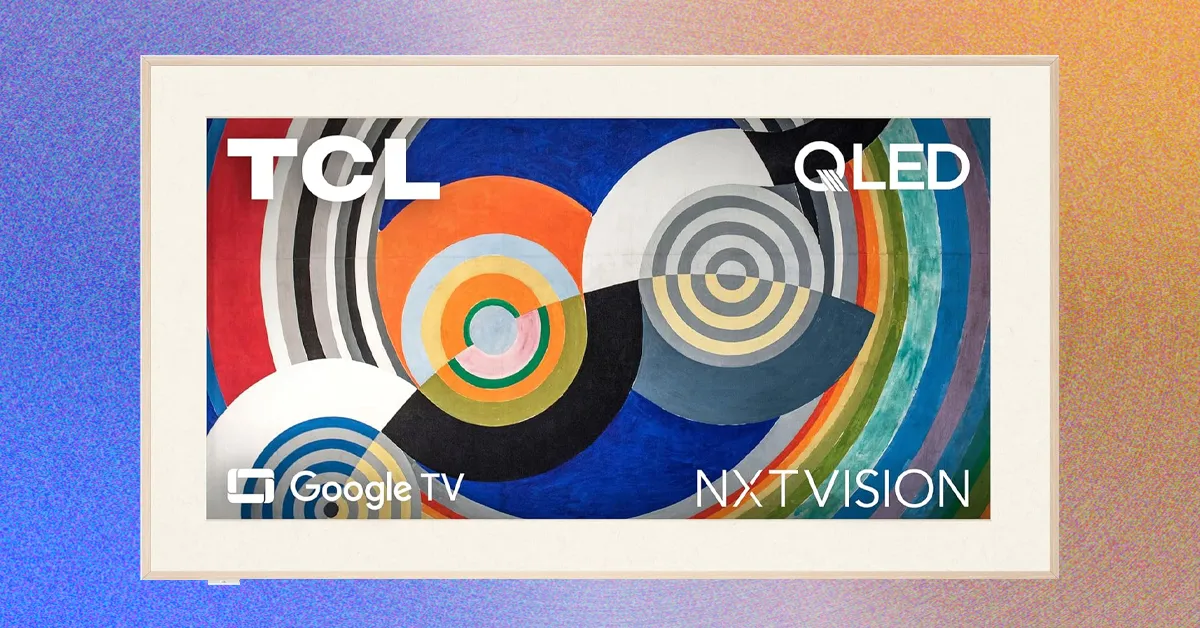
In my standard evaluation procedures, I observed that certain visuals and footage appeared rather bland, exhibiting inadequate contrast. For instance, a hazy dawn panorama featuring horses seemed faded when juxtaposed with the Frame Pro presenting the identical imagery. Furthermore, complexion hues consistently appeared excessively dull in nearly all evaluation footage.
I subsequently viewed the intricate temporal displacement filmMike & Nick & Nick & Alice, which possessed a visual quality nearly as indistinct asSisu. Initially, when transmitting content via Hulu from my iPad using Apple AirPlay, the broadcast continually faltered and halted. Given that I utilize a robust 600-Mbps fiber connection and a mesh network, the issue demonstrably wasn’t with my connectivity. Upon manually halting the stream for a brief period, it eventually functioned correctly. A preliminary sequence set within a residence verified my suspicion regarding the contrast issue: I struggled significantly to discern countenances. Additionally, I viewed a preview for the forthcomingHarry Potterseries on HBO, which unfortunately proved deficient in vividness.
Passing theCrimson Desert Test
Photograph: John Brandon
A single commendable attribute of the NXTVISION pertains specifically to its performance with electronic games. Presently, I am captivated by the gameCrimson Desert, a sentiment shared by a myriad of others. The game appeared luminous and vibrant on the TCL NXTVISION, owing to its Game Master mode. While engaged in play, users can summon an on-screen menu that automatically assists in calibrating color quality and enhances responsiveness by reducing lag. Abruptly, I perceived as if I were utilizing an OLED display exceeding a cost of $2,000. The NXTVISION accommodates a 144-Hz refresh rate, thereby synchronizing with the Frame Pro’s offering for personal computer enthusiasts.
What accounts for this discernible disparity? It is entirely attributable to the premium computing device I linked via HDMI. I employed an Acer Nitro 60, and combined with Game Master mode, the 144-Hz refresh rate, and the superior definition 4K quality of the game, the scenic mountain views appeared equally impressive (if not surpassing) those achieved with an identical connection method on the Frame Pro.
Nevertheless, my concluding assessment is hardly favorable. Given that the NXTVISION is anticipated to revert to $1,800 in April, it consequently becomes genuinely pricier than The Frame Pro, which stands at $1,600. The Hisense Class S7 CanvasTV, priced at merely $900 (at its regular price), boasts a non-reflective surface, a 144-Hz refresh rate ideal for gaming, and offers in excess of 1,000 art images. Considering the TCL NXTVISION does not perform remarkably well for streaming content, it is challenging to endorse when competitors present significantly superior artistic content.
{content}
Source:{feed_title}