
Meta and Snap rolled out new smart glasses last month, the latest sign that the industry is racing to put a camera and an AI assistant onto users’ faces. As the fast-growing market heats up, upstarts like Even Realities are muscling in on the giants.
Even Realities, a three-year-old Shenzhen-headquartered startup, has raised $150 million in a pre-Series B round led by Meituan and previous backer Tencent; the round valued the startup at $1 billion valuation. Founder and CEO Will Wang told TechCrunch that while rivals chase camera-equipped devices built around content capture and AI, his company is betting on display-first glasses that beam information straight into the wearer’s line of sight without giving up privacy.
Even’s earlier backers are mostly high-profile China names including Sequoia China.
Even was started by ex-Apple engineers in 2023. CEO Wang worked on the Apple Watch and iPhone; other co-founders came from tech, and two came from luxury eyewear companies, including Lindberg. The startup moved quickly, launching its first product, Even G1, in 2024 as what Wang calls the lightest waveguide smart glasses then on the market.
Even blew past its own 10,000-unit target to become the first company in the category to sell more than 10,000 pairs, according to the company CEO. It raised money faster than expected, and swelled from 30–40 staff in 2024 to 300–400 today.
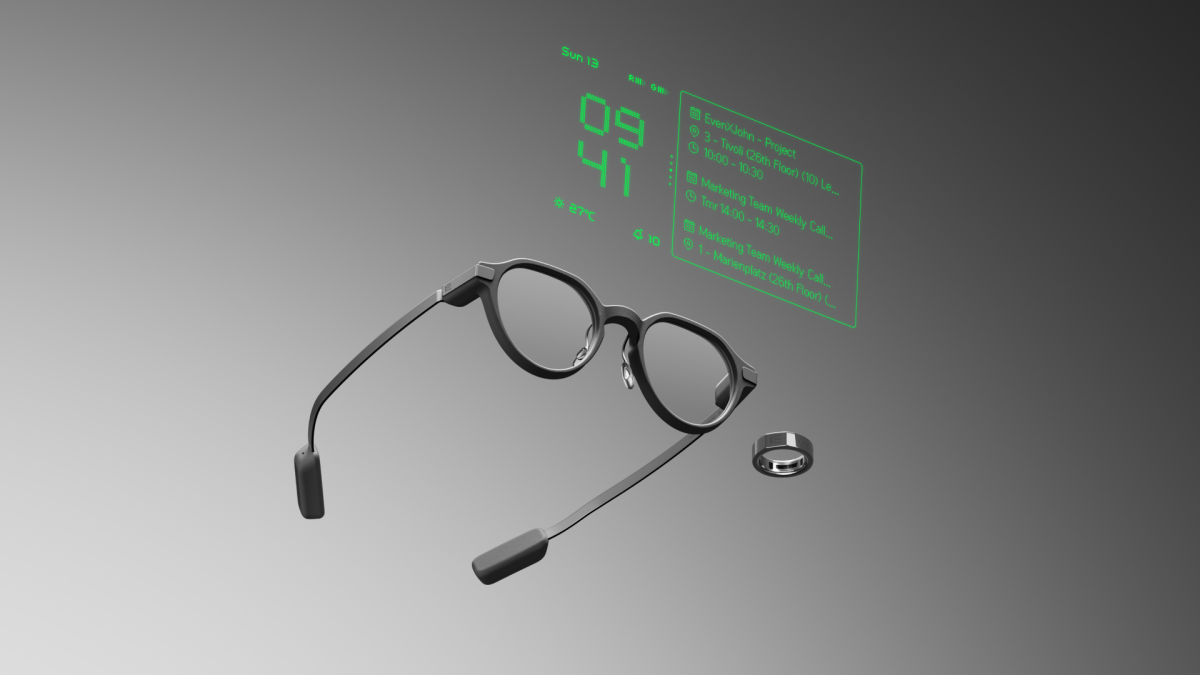
The startup’s latest flagship, Even G2, hit the market last November and skips the camera entirely. Instead, a heads-up display built into the frames feeds information to the wearer, controlled by a companion ring, the Even R1, that users tap and swipe to navigate.
Removing the camera is an important part of Even’s privacy philosophy, though not the entire story, Wang continued. Smart glasses, he said, are probably the most personal computing device people will ever wear. Worn on the face all day, they have to feel comfortable to both the wearer and those around them, so privacy is designed into both the hardware and the software. Voice features like translation transcribe audio into text rather than storing recordings; user data is encrypted, and the infrastructure is built to meet Europe’s strict privacy standards, Wang added.
Even’s power users lean hard on Conversate, a copilot that reads a conversation in real time, explaining unfamiliar jargon or feeding follow-ups on the fly, then syncing a summary to their phone.
Still, Even has invested most heavily in optics (the display and overall optical performance), which Wang says is what separates smart glasses from other consumer electronics.
“With a phone or a watch, the display is just a conventional OLED or LCD screen. Smart glasses are the first product category to rely on optical displays, which require an entirely different technology stack; you have to design the microchip, the optics, and the waveguide together. That’s where we’ve invested the most,” Wang said.
The company developed a proprietary optical technology called Even HAO, or Holistic Adaptive Optics, an end-to-end design that integrates the microchip, waveguide and prescription support from the start, rather than combining components designed separately.
More than half of Even’s users sit in the U.S. — its fastest-growing market — and so does the bulk of its developer community. The company doesn’t sell in China yet, even though it manufactures there across several factories; its main markets are the U.S., Japan, South Korea, the Middle East, and Europe. “The demand there is significant, so we want to make sure we’re prepared first,” Wang said.
Even sells near the top of the category on price and still moves real volume, making it a profitable player in the space, Wang said. “Most of our customers are male professionals between 30 and 50 years old. We ran a survey and found that about a third of our users are company executives,” he added. The frames retail for $599 before tax; prescription lenses or the ring tack on another $200–$300, pushing the average order to roughly $1,000.
This article has been updated with information on previous investors from the company.
When you purchase through links in our articles, we may earn a small commission. This doesn’=”wp-block-paragraph”>
* **A Billion-Dollar Bet on Privacy:** Shenzhen-based Even Realities secured $150 million in a pre-Series B round, valuing the smart glasses startup at $1 billion, positioning itself as a key challenger to tech giants with a distinct privacy-first, display-centric philosophy.
* **Optics Over Cameras:** Unlike rivals focusing on content capture via integrated cameras, Even Realities’ latest Even G2 model notably omits a camera, instead prioritizing proprietary “Holistic Adaptive Optics” (HAO) to beam information directly into the wearer’s line of sight while ensuring user comfort and data privacy.
* **Rapid Growth in Premium Markets:** Leveraging a team with ex-Apple and luxury eyewear expertise, Even Realities has achieved significant milestones, including selling over 10,000 units of its G1 model, rapid team expansion, and profitable sales in premium markets like the U.S., Japan, and Europe, targeting affluent professionals.
Even Realities Secures $1B Valuation, Challenges Smart Glasses Giants with a Privacy-First Vision
The race to integrate digital intelligence onto our faces is accelerating, with tech titans like Meta and Snap recently unveiling new smart glasses boasting cameras and AI assistants. Yet, amidst this crowded field, a Shenzhen-headquartered upstart, Even Realities, is not just muscling in on the giants but charting a fundamentally different course – one that prioritizes privacy and display technology over content capture.
Founded just three years ago, Even Realities has rapidly distinguished itself, culminating in a recent pre-Series B funding round that injected $150 million into the company, catapulting its valuation to a staggering $1 billion. This significant investment, led by Chinese tech behemoth Meituan and existing backer Tencent, underscores a growing confidence in Even’s unique approach. Founder and CEO Will Wang articulated his vision to TechCrunch: while competitors equip their devices for content capture and AI processing, Even Realities is steadfastly betting on display-first glasses designed to project information directly into the wearer’s line of sight, all while upholding a staunch commitment to personal privacy. Their roster of early high-profile investors, including Sequoia China, further solidifies their standing in the burgeoning smart glasses landscape.
A New Paradigm: Engineering Vision with Privacy by Design
Even Realities’ philosophy is perhaps best embodied in its latest flagship product, the Even G2, launched last November. In a bold move that starkly contrasts with many of its rivals, the G2 entirely skips the camera. Instead, it features a sophisticated heads-up display built directly into the frames, feeding information seamlessly to the wearer. Navigation and interaction are managed via a companion ring, the Even R1, which allows users to tap and swipe with intuitive control.
Wang explains that the deliberate omission of a camera is more than just a hardware choice; it’s a cornerstone of Even’s comprehensive privacy philosophy. He argues that smart glasses are destined to become the most personal computing device a person will ever wear. Given their constant presence on the face, these devices must instill comfort not only in the wearer but also in those around them. This conviction has led Even to design privacy into both the hardware and software from the ground up. Features like real-time voice translation transcribe audio into text without storing recordings, user data is robustly encrypted, and the entire infrastructure is meticulously engineered to comply with Europe’s stringent privacy standards, setting a new benchmark for responsible innovation in the space.
The Optics Advantage: Proprietary Technology Driving Immersion
At the heart of Even Realities’ technological prowess lies its profound investment in optics – the display and overall optical performance. Wang emphatically states that this is the critical differentiator separating smart glasses from conventional consumer electronics. Unlike phones or smartwatches, which rely on established OLED or LCD screens, smart glasses demand an entirely new technology stack. “You have to design the microchip, the optics, and the waveguide together,” Wang emphasized, highlighting the integrated complexity and innovation required. “That’s where we’ve invested the most.”
To meet this challenge, the company developed its proprietary optical technology: Even HAO, or Holistic Adaptive Optics. This end-to-end design approach ensures that the microchip, waveguide, and even prescription support are seamlessly integrated from the initial stages of development, rather than being cobbled together from disparate components. This holistic engineering is what enables Even to deliver crisp, clear visual information directly to the user without compromising the sleek design or lightweight comfort essential for all-day wear.
From Apple Pedigree to Global Ambition: The Even Realities Journey
Even Realities was founded in 2023 by a team boasting impressive pedigrees. CEO Will Wang himself is an alumnus of Apple, having contributed to the development of the Apple Watch and iPhone. Other co-founders brought diverse expertise from the tech sector, complemented by two individuals from luxury eyewear companies, including the renowned Lindberg. This blend of cutting-edge technology and sophisticated design acumen allowed the startup to move with remarkable agility.
Their first product, the Even G1, launched in 2024, quickly earned recognition as the lightest waveguide smart glasses on the market. The market response was overwhelming: Even blew past its ambitious 10,000-unit sales target, becoming the first company in its category to achieve such a milestone. This rapid success fueled faster-than-anticipated fundraising and propelled the company’s growth from a lean team of 30-40 staff in 2024 to a robust 300-400 employees today, reflecting its exponential expansion and market traction.
Premium Positioning and Strategic Market Penetration
Even Realities has adopted a strategic global market approach, focusing on regions with high demand for premium, innovative tech. While the company maintains its manufacturing operations across several factories in China, it has yet to launch sales in its home country. Instead, its primary markets include the U.S. (its fastest-growing market and home to the bulk of its developer community), Japan, South Korea, the Middle East, and Europe. Wang noted, “The demand there is significant, so we want to make sure we’re prepared first.”
The company’s products are positioned at the top end of the smart glasses category, yet they consistently move substantial volume, making Even a profitable player in a nascent market. The frames for the Even G2 retail for $599 before tax, with prescription lenses or the Even R1 control ring adding another $200-$300, pushing the average order value to approximately $1,000. Even’s target demographic reflects this premium positioning: a recent survey revealed that most customers are male professionals between 30 and 50 years old, with roughly a third identifying as company executives. These power users frequently leverage features like Conversate, an AI copilot that processes conversations in real-time, explaining jargon, suggesting follow-ups, and syncing summaries to their phones, underscoring the practical, professional utility of Even’s privacy-centric smart glasses.
The Bottom Line
Even Realities stands as a compelling outlier in the rapidly evolving smart glasses market. By deliberately sidestepping the camera-first approach favored by many competitors, and instead doubling down on privacy, proprietary optical technology, and practical utility, the Shenzhen-based startup has carved out a distinct and highly successful niche. Its billion-dollar valuation and rapid global expansion signal not just a triumph of engineering and strategy, but also a potent indicator that consumers and investors alike are eager for smart glasses that blend cutting-edge functionality with an unwavering respect for personal space and data. As the future of wearable computing unfolds, Even Realities’ display-first, privacy-driven philosophy offers a refreshing and potentially dominant vision for how technology can truly augment, rather than intrude upon, our daily lives.
Source:{feed_title}