
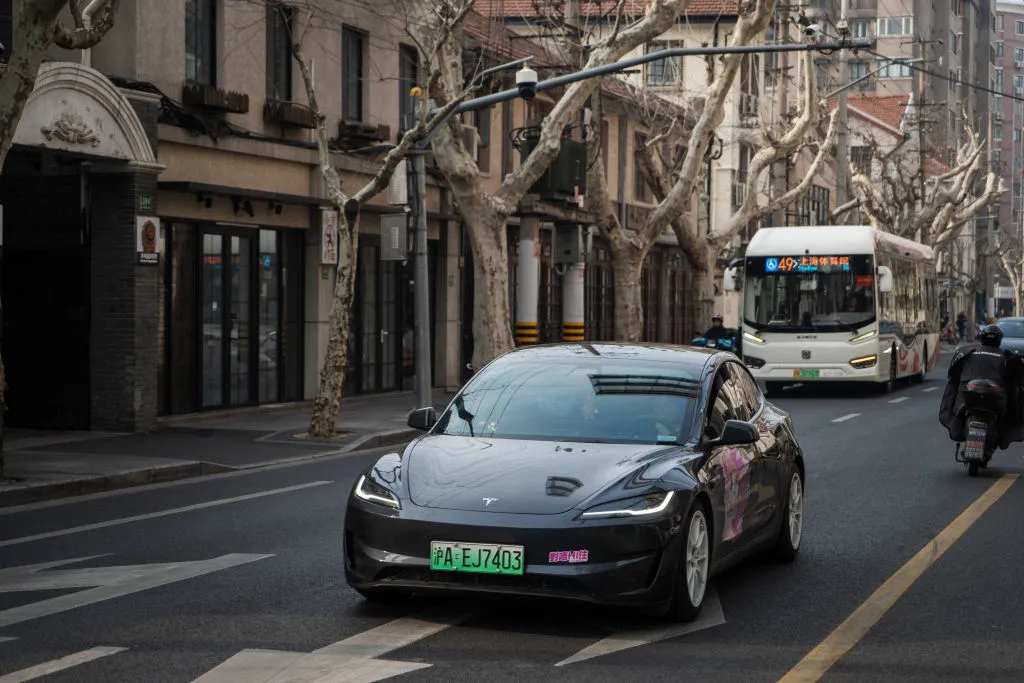
A fatal weekend crash in which a Tesla plowed through a brick home in Katy, Texas, killing a 76-year-old woman, set off alarm over the company’s self-driving technology, but by Monday afternoon, Tesla was fighting back against the framing.
The crash occurred Friday night when a Tesla Model 3 driven by Michael Butler left the road and slammed into the home of Martha Avila, who was airlifted to a hospital and later pronounced dead. Butler told Harris County sheriff’s deputies that the vehicle was on Autopilot at the time. That detail spread quickly, and by the weekend the story had become the centerpiece of long-running debate over Tesla’s Autopilot and Full Self-Driving features.
But Tesla, a company that famously dismantled its PR department years ago, broke from its usual silence Monday to push back.
Ashok Elluswamy, the director of Tesla’s Autopilot software and the first engineer hired for the Autopilot team back in 2014, took to X to offer a very different account of what the data showed. “In this case, the driver manually overrode self-driving by pressing the accelerator all the way to 100% of the accel pedal in this residential area,” he wrote. “They reached a speed of 73 mph during the crash, and had the accelerator pressed even after the crash.”
The implication is that whatever system may have been engaged, a human foot on the gas pedal at full throttle is responsible for what ensued, not the car.
Elon Musk amplified the point on his own X account soon after. “This [allegation] makes no sense. FSD drives slowly through neighborhood streets and this was a high speed crash!” he wrote.
Federal regulators are determined to come to their own conclusions, unsurprisingly. The National Highway Traffic Safety Administration said Monday it was opening a special crash investigation into the incident; it’s reportedly the latest in more than 40 such probes the agency has launched into Tesla crashes believed to involve advanced driver-assistance systems in recent years.
The Harris County Sheriff’s Office said it would present its findings to the local district attorney to determine whether criminal charges are warranted.
Whether the Autopilot system was truly active, overridden, or malfunctioning likely won’t be resolved until investigators finish combing through the vehicle’s data logs.
When you purchase through links in our articles, we may earn a small commission. This doesn’t affect our editorial independence.
{content}
Fatal Texas Crash Reignites Tesla Autopilot Debate: Company Fights Back with Data
Key Takeaways
- A tragic high-speed Tesla crash in Katy, Texas, killed a 76-year-old woman, with the driver claiming Autopilot was engaged.
- Tesla, breaking its usual silence, countered by releasing vehicle data suggesting the driver manually overrode the system, pressing the accelerator to 100% at 73 mph.
- Federal regulators (NHTSA) and local law enforcement have launched investigations, underscoring the ongoing scrutiny of advanced driver-assistance systems (ADAS) and the critical role of vehicle data logs.
Tragedy Strikes in Katy, Texas
The quiet community of Katy, Texas, was shattered last Friday night by a devastating incident involving a Tesla Model 3. Michael Butler, the vehicle’s driver, reportedly lost control, veering off the road and slamming into the home of 76-year-old Martha Avila. The impact was catastrophic, and Ms. Avila, despite being airlifted to a hospital, tragically succumbed to her injuries. In the immediate aftermath, Butler told Harris County sheriff’s deputies that the vehicle’s Autopilot feature was active at the time of the crash. This statement quickly circulated, casting a familiar shadow over Tesla’s advanced driver-assistance systems (ADAS) and reigniting a contentious, long-running public debate.
The Autopilot Dilemma: A Recurring Controversy
The term “Autopilot” has, for years, been a lightning rod for criticism and misunderstanding. While Tesla’s Autopilot and its more advanced sibling, Full Self-Driving (FSD), offer impressive capabilities for highway driving and urban navigation, they are not, despite their names, fully autonomous systems. Tesla explicitly states that drivers must remain attentive and ready to take over at all times. Yet, incidents like the one in Katy frequently lead to accusations of system failure or misleading branding, fueling public skepticism and regulatory concern.
This isn’t an isolated event. Federal agencies, particularly the National Highway Traffic Safety Administration (NHTSA), have launched numerous investigations into Tesla crashes where ADAS was believed to be a factor. The debate often boils down to human error versus technological malfunction: did the driver misuse the system, or did the technology fail to perform as expected? This latest tragedy in Katy quickly became the most recent flashpoint in this critical discussion, pushing the safety of semi-autonomous driving into the spotlight once more.
Tesla’s Swift and Uncharacteristic Response
For a company that famously disbanded its public relations department years ago, Tesla’s swift and direct response to the allegations was notably uncharacteristic. Typically, Tesla maintains a veil of silence, letting its technology and CEO Elon Musk’s social media presence speak for itself. However, the severity of this fatal crash and the immediate public outcry prompted a departure from this norm.
Leading the charge was Ashok Elluswamy, the director of Tesla’s Autopilot software and the first engineer to join the Autopilot team in 2014. Taking to X (formerly Twitter) on Monday, Elluswamy presented a starkly different narrative based on the vehicle’s internal data. His post asserted, “In this case, the driver manually overrode self-driving by pressing the accelerator all the way to 100% of the accel pedal in this residential area. They reached a speed of 73 mph during the crash, and had the accelerator pressed even after the crash.”
Elon Musk quickly amplified Elluswamy’s explanation on his own X account, reinforcing the point with his characteristic brevity: “This [allegation] makes no sense. FSD drives slowly through neighborhood streets and this was a high speed crash!” The implication from Tesla’s executives is clear: regardless of whether Autopilot was engaged, the critical factor in this tragedy was a human driver’s explicit and sustained input on the accelerator, driving at excessive speeds for a residential area.
Understanding ADAS: Autopilot vs. Driver Responsibility
To fully grasp the complexity of this situation, it’s crucial to differentiate between Tesla’s ADAS features and the inherent responsibility of the human driver. Autopilot, a standard feature in Teslas, includes Traffic-Aware Cruise Control and Autosteer. FSD, an optional upgrade, adds capabilities like Navigate on Autopilot, Auto Lane Change, Autopark, Summon, and Traffic Light and Stop Sign Control. Both systems are designed to assist, not replace, the driver. They require constant driver monitoring, with warnings and even disengagement if hands are not detected on the wheel.
Tesla’s data, as presented by Elluswamy, suggests a direct override of any potential speed or directional control the Autopilot system might have been attempting. Pressing the accelerator to 100% implies a deliberate action by the driver to command maximum speed, irrespective of the system’s status. This scenario highlights the ongoing challenge for ADAS manufacturers: how to ensure driver engagement and prevent misuse, especially when systems are perceived to be more capable than they truly are. The industry grapples with the ‘mode confusion’ phenomenon, where drivers mistakenly believe the car is fully autonomous.
Regulatory Spotlight and Legal Ramifications
Unsurprisingly, federal and local authorities are not taking Tesla’s explanation at face value. The National Highway Traffic Safety Administration (NHTSA) swiftly announced it was opening a special crash investigation into the Katy incident. This is far from NHTSA’s first rodeo; the agency has launched more than 40 such probes into Tesla crashes involving advanced driver-assistance systems in recent years, meticulously examining vehicle data, witness accounts, and crash dynamics to determine contributing factors.
The Harris County Sheriff’s Office is also pursuing its own investigation, focusing on criminal culpability. Their findings will be presented to the local district attorney, who will then decide whether criminal charges are warranted against Michael Butler. Depending on the outcome, such charges could range from vehicular manslaughter to reckless driving, carrying significant legal consequences. The question of whether the Autopilot system was genuinely active, whether it was successfully overridden by the driver, or if there was a malfunction, will hinge entirely on the comprehensive analysis of the vehicle’s intricate data logs. These logs provide a digital fingerprint of every command, sensor reading, and system status leading up to and during the moment of impact.
The Unanswered Questions and Future Implications
Until investigators complete their thorough review of the Tesla’s data and all other evidence, many critical questions will remain. What prompted the driver to claim Autopilot engagement? Was there an attempt to mitigate responsibility, or a genuine misunderstanding of the system’s status? The resolution of this case will not only determine the fate of Michael Butler but could also have broader implications for how ADAS technologies are regulated, marketed, and perceived by the public. It underscores the vital need for clear communication from automakers regarding system capabilities and limitations, and an unwavering commitment to driver education.
Bottom Line
The tragic Katy crash serves as a stark reminder of the complex interplay between advanced automotive technology and human responsibility. While Tesla’s data points to clear driver override and excessive speed, the incident has inevitably amplified calls for stricter oversight of ADAS. As investigations continue, this case will likely become another pivotal moment in the ongoing global conversation about semi-autonomous driving, shaping public trust and influencing the future regulatory landscape for a technology still very much in its nascent stages.
Source:{feed_title}