
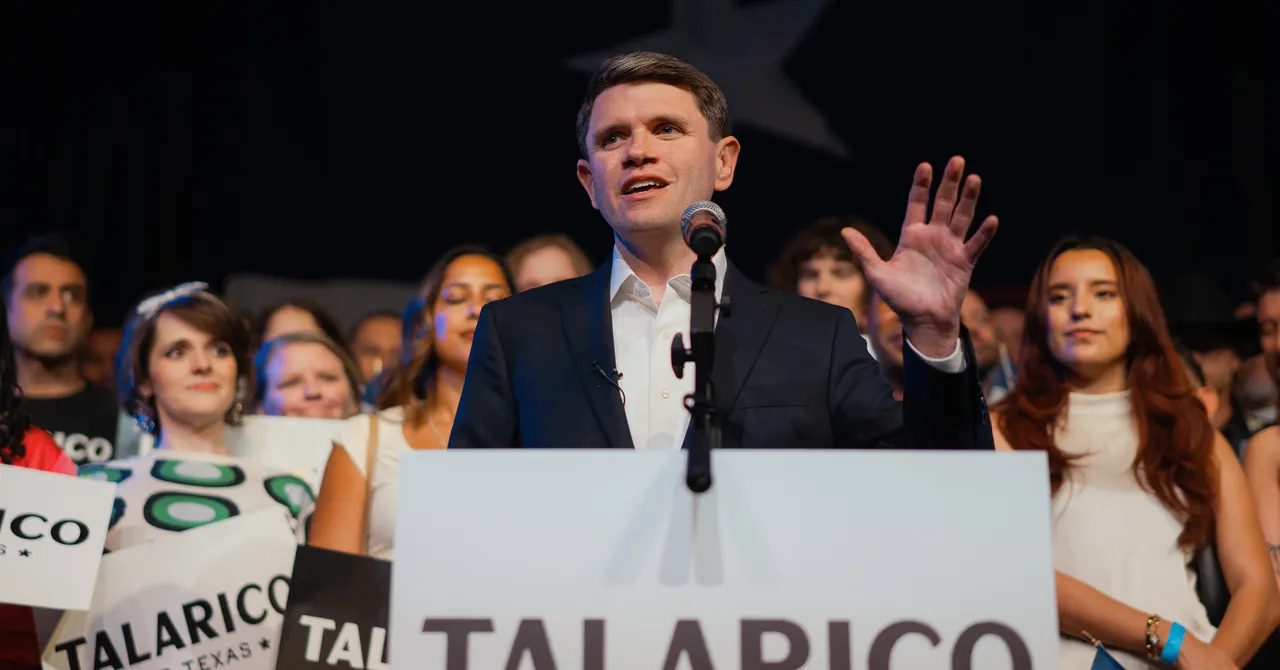
This past Tuesday,James Talarico, a 36-year-old Presbyterian divinity student and state legislator hailing from Austin, Texas, bested Congresswoman Jasmine Crockett in what emerged as one of the most keenly observed primary contests of the year to date.
Despite both contenders possessing vast social media audiences—with Talarico garnering 1.6 million and Crockett attracting 2.6 million followers on TikTok—the dialogue wasn’t solely propelled by the candidates themselves. Rather, it was the digital content producers surrounding them who provided a glimpse into the impending online battles across the midterms and, eventually, the 2028 presidential election.
The campaigns of Talarico and Crockett employed notably divergent digital approaches. Crockett forged her legislative identity through direct confrontation, achieving widespread online fame last year following her public criticism of Marjorie Taylor Greene’s “bleach-blonde, bad-built, butch body” and her stark instruction to Elon Musk to “fuck off.” Talarico’s online footprint more closely resembles a populist address disseminated via his personal social media channels. He extended these messages to less conventional venues, such as the Joe Rogan Experience, which, in turn, furnished him with innumerable viral segments.
However, predominantly, the provocative elements of these digitally-centric campaigns originated externally to the candidates. In January, the presenters of “Las Culturistas,” a podcast focused on pop culture and humor, ignited a torrent of censure subsequent to urging their audience against backing Crockett during an installment of their program. “Refrain from expending your funds on Jasmine Crockett; absolutely do not,” stated Matt Rogers, one of the presenters, then. The program encountered swift condemnation from its viewership and Crockett’s supporters, compelling the hosts to issue an apology.
This marked the initial incident in a succession of online disputes that escalated to a peak in February, when Morgan Thompson, a content producer situated in Dallas, alleged that Talarico had referred to Colin Allred, a former House legislator, as a “mediocre Black man.” The footage, disseminated to her nearly 200,000 TikTok adherents, rapidly achieved widespread popularity, transcending pro-Crockett online circles and permeating the general news media. In response to this assertion, the Talarico campaign labeled the remark a “distortion” of an unofficial discussion the candidate had with Thompson, wherein he had described Allred’s campaign methodology as “mediocre,” rather than Allred personally.
“I would never assail him [Allred] due to his racial background,” Talarico declared then. “Given his identity as a Black man in America, Congressman Allred has been compelled to exert double the effort to achieve his current standing. I comprehend how my criticisms of the Congressman’s electoral efforts might be construed considering this nation’s distressing history of racial prejudice, and I am profoundly concerned with the effect my statements have upon individuals.”
This incident brought to light a crucial inquiry among strategists as they approach the intensity of the 2026 midterm elections and the subsequent presidential contest: What function ought content producers to serve in electoral endeavors? And what is the optimal method for overseeing them? Although collaborating with content creators has grown standard practice in both Republican and Democratic political campaigns, these associations frequently lack precise definition and pose challenges to effective oversight.
“Numerous considerations confront the campaign personnel themselves, requiring their attention and contemplation,” remarks Kyle Tharp, author of the Chaotic Era newsletter, which centers on online political dynamics. “Should I position them within the press platforms at the assembly, or grant them prime VIP entry? Do I allocate a brief moment with the contender? Am I to vet their inquiries? Or do I simply permit them to extemporize and trust in a favorable outcome?”
President Donald Trump’s 2024 re-election endeavor significantly leveraged content producers and podcasters to engage younger, predominantly male constituents. Yet, a considerable number of those identical content creators have since distanced themselves from Trump over the past year. Prior to the 2024 election, Trump made an appearance on “Flagrant,” a widely-listened-to podcast presented by humorist Andrew Schulz. However, Schulz’s endorsement of Trump swiftly transformed into resentment. Last summer, Schulz voiced his disapproval regarding the administration’s reluctance to disclose documents pertaining to Justice Department probes into convicted sex offender Jeffrey Epstein. Subsequently, Schulz has consistently utilized his medium to express disapproval of the administration.
{content}
Source:{feed_title}