
We find ourselves amidst a significant drive to integrate generative AI into nearly every facet of existence, yet it remains simple to misunderstand its nature and operation. Further complicating matters is the fervent exaggeration with which both advocates and critics of generative AI discuss it, sounding akin to fanciful promotional material. The swift pace at which AI companies unveil new product versions can hinder comprehensive understanding of the broader industry landscape.
InThe AI Doc: Or How I Became an Apocaloptimist, codirectors Daniel Roher and Charlie Tyrell endeavor to grasp the current juncture in generative AI’s ascent to widespread recognition. The documentary showcases researchers, developers, and generative AI company CEOs—precisely the individuals one would hope a documentarian would interview concerning this technology’s origins and potential trajectory. Despite the impressive access secured byThe AI Doc‘s production crew, the film hardly endeavors to leverage it with efficacy.The AI Docboasts creative production and astute art direction, yet it falls short on depth and offers no genuinely profound insights into its topic. During an era where individuals could greatly benefit from a considered introduction to how generative AI is currently affecting their existence, this documentary proves inadequate.
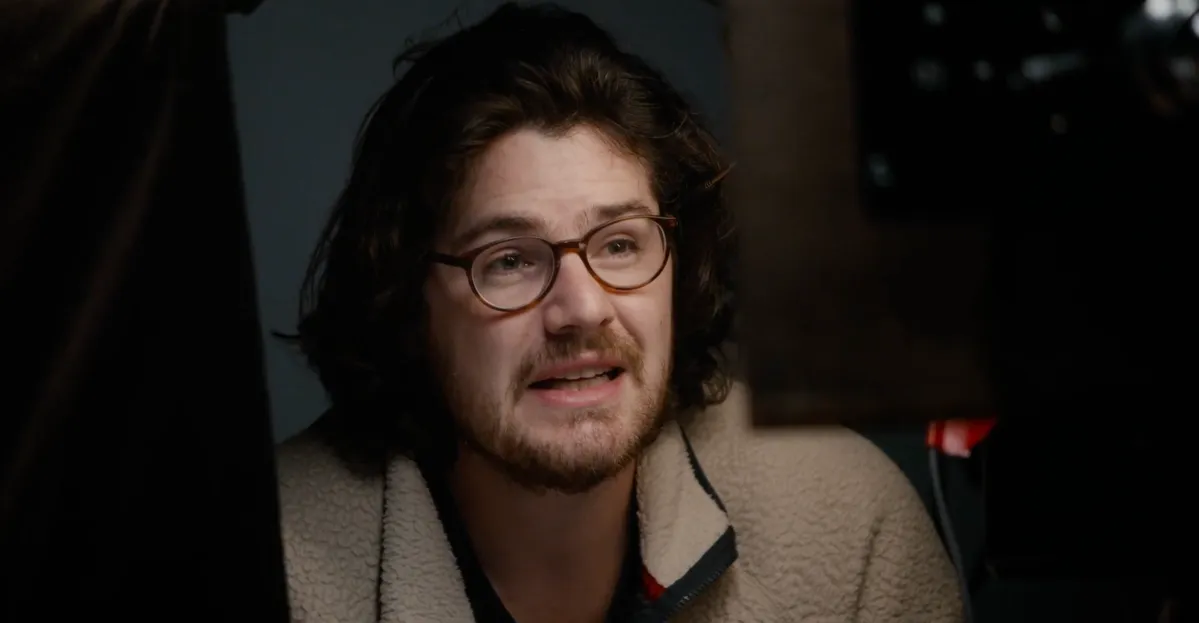
The AI Docconcurrently narrates the tale of one man’s (codirector Roher’s) overarching apprehension concerning generative AI’s societal repercussions. At the outset of the film, Roher (an Oscar winner in 2023 for his documentaryNavalny) presents himself as an individual lacking a firm understanding of the true nature of models such as ChatGPT, Claude, and Gemini. Nonetheless, he has encountered foreboding news reports suggesting generative AI might spawn sentient machines capable of human annihilation, a prospect that alarms him as he and his wife, Caroline Lindy, anticipate a child. Roher seeks to better comprehend this emerging technology, prompting him to ponder the sort of world his offspring will inhabit. Consequently, he embarks on a journey to converse with various specialists holding diverse viewpoints on AI.
The film’s framework comprises four segments charting the evolution of Roher’s sentiments as he engages with AI pessimists, accelerationists, scholars, and several of the sector’s most influential leaders. Roher commences by featuring skeptics such as Center for Humane Technology cofounders Tristan Harris and Aza Raskin, both of whom portray AI as an existential danger potentially instigating societal breakdown. An interviewee asserts the possibility of a robot rebellion culminating in humanity’s demise, and the documentary transitions to scenes fromThe TerminatorandThe Matrix. Furthermore, when Roher inquires about the imminence of an apocalyptic scenario, the film’s AI detractors frequently offer grim responses like “perhaps” and “likely.” Such alarmist fatalism represents a primary promotional tactic employed by AI companies to persuade the public of their products’ gravity.
Roher—who portrays himself as a somewhat naive proxy for the audience—appears to accept these assertions without question, particularly during instances when he directs the camera at himself to reflect sentimentally on the profound significance of his forthcoming paternity. Remarkably,The AI Docnever pauses to investigate how AI has disrupted facets of filmmaking, an area one might expect to trouble an artist/director such as Roher, given that his hand-drawn sketches and artworks are utilized throughout the film to visually represent his emotions. The absence of discussion regarding AI’s influence on Hollywood and the livelihoods of creative practitioners appears especially conspicuous, largely due to the film’s substantial dependence on animated segments created by the Toronto-based studio Stop Motion Department to elucidate its key arguments.
Roher’s pessimistic perspective on AI starts to transform as the documentary brings in optimists such as Anthropic president/cofounder Daniela Amodei and LinkedIn cofounder Reid Hoffman, who contend that this moment is, in fact, perfect for parenthood, as AI is poised to unveil a myriad of novel opportunities in a future ideal society, including readily available, personalized healthcare. It appears Roher endeavors to provide the audience with an “impartial” summary by juxtaposing these two factions of the AI discourse. However, by affording its alarmist and accelerationist proponents ample airtime to showcase AI’s most exaggerated potential consequences with minimal challenge, the film’s initial segment resembles an extended promotional piece for the technology rather than a balanced analytical work.
Image: Focus Features
The AI Docgains considerably more ground as it transitions to discussions with journalists, notably Karen Hao, and whistleblowers, such as Daniel Kokotajlo, who thoroughly explore how AI offerings mirror the organizations that develop them. While the documentary’s initial two sections portray generative AI as an almost mystical entity beyond complete comprehension, the third elucidates that many large language models are, in essence, advanced pattern recognition engines requiring vast datasets for training to operate. This third act also cursorily addresses some genuine detriments currently arising from the intense drive for AI. Nevertheless, due toThe AI Doc‘s rapid progression through each segment, some of its most acute insights concerning AI—such as how these corporations depend on harsh, undercompensated human labor to manage their datasets—do not receive the appropriate weight.
At a certain juncture, Roher concedes that all the dialogues he conducts will likely seem obsolete by the timeThe AI Docis made public, given the swift progress and implementation of AI. This holds particularly true when he converses with OpenAI chief Sam Altman and Anthropic CEO Dario Amodei. Roher could not have foreseen that his documentary would premiere at a period when Altman faces scrutiny for finalizing an agreement with the Department of Defense to supply models applicable for extensive domestic monitoring.
Roher, furthermore, was unable to foresee Amodei’s weeks-long contention with the Pentagon, stemming from Anthropic’s unwillingness to grant the government unfettered admittance to its advanced systems (and the deployment of its AI for an attack on Iran). Yet, for those viewing the documentary with current affairs knowledge, Roher’s gentle inquiries to these sector leaders concerning their future outlook appear superficial.
With corporations and administrations steadfastly integrating AI into nearly all domains, the populace requires more profound examinations of this innovation to equip them with a robust comprehension of its prospective advantages, as well as the methods by which it could be exploited to their detriment. Regrettably,The AI Docfails to meet the expected standards.
The AI Doc: Or How I Became an Apocaloptimistwill premiere in cinemas on March 27th.
{content}
Source:{feed_title}