
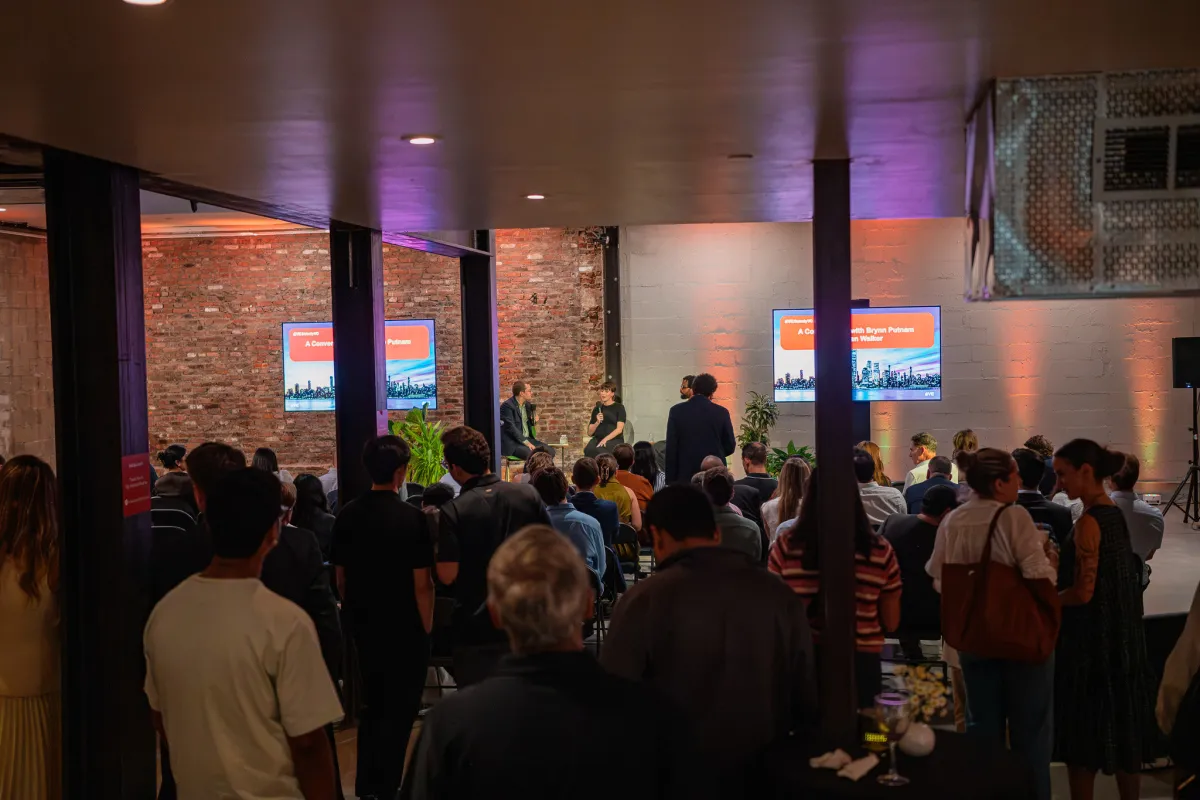
Key Takeaways:
- Seasoned Founders Pivot to Offline Connection:Tech pioneers like Brynn Putnam (Mirror) and Tristan Walker (Walker & Company) are leveraging their past successes to build new ventures centered on fostering real-world human interaction, moving away from purely digital solutions.
- Combating Modern Loneliness & Digital Fatigue:This shift is driven by a growing global loneliness epidemic, consumer preference for experiences over material goods, and a perceived erosion of community by technology and AI, leading to a desire for “phones-down” engagement.
- A Nascent Market with High Potential:While the “togetherness” economy is still nascent with relatively modest funding compared to traditional tech, the involvement of proven entrepreneurs suggests a significant, albeit challenging to scale, opportunity to address a fundamental societal need for connection.
The Unlikely Pivot: When Tech Visionaries Bet on Real-World Connection
Imagine building a company so compelling it gets snapped up by an industry giant, securing your place in the tech founder hall of fame. Brynn Putnam did it with Mirror, selling her connected-fitness sensation to Lululemon for a cool $500 million. Tristan Walker achieved similar success, selling his popular grooming brand, Walker & Company Brands, to Procter & Gamble. Most founders only dream of such exits. What’s truly surprising, however, is what these successful entrepreneurs are building next: ventures that intentionally pull people away from screens and into shared physical spaces.
Both Putnam and Walker, having experienced life inside larger corporate structures, have embarked on new entrepreneurial journeys. Putnam, hinting at a less-than-ideal tenure as a GM at Lululemon, is now building Board. Walker, after five years at P&G, launched Heirloom and Collaborative Holdings. While their previous ventures leveraged technology to bring services to individuals, their new enterprises share a singular, profound north star: bringing people together, offline, in the same room. It’s a bold departure from the dominant narrative of digital-first innovation, marking a conscious pivot toward the tangible and the communal.
Architects of Connection: Brynn Putnam’s Board and Tristan Walker’s Heirloom
Brynn Putnam’s Board: Bridging Generations with Play
Brynn Putnam’s latest creation, Board, is a 24-inch touchscreen table designed explicitly for group interaction. Unlike traditional gaming consoles that often isolate players with individual controllers and screens, Board recognizes physical game pieces and gestures, creating a shared, intuitive experience. Putnam, a mother of five in a blended family, conceived Board out of a personal need. Her previous venture, Mirror, was a reflection of her own life — a tool for personal fitness and self-improvement, using technology to work on “myself, my body, my fitness, my reflection.”
Board, by contrast, was built with the opposite intention. Faced with a household of wildly different ages and abilities, Putnam encountered a persistent problem: a lack of products that enabled everyone to play together seamlessly. Her driving question became: “How can we use tech to create a shared experience?” She emphasizes that this isn’t a “movement from digital to analog,” but rather, “how can we use tech to bring people together rather than take them apart.” By recognizing physical objects – a spaceship triggering an action, a knife performing a cut – Board eliminates the steep learning curves associated with complex controllers, allowing a child and a grandparent to engage in the same game with ease, fostering genuine intergenerational connection.
Tristan Walker’s Heirloom: Reclaiming Mastery and Community
Tristan Walker’s inspiration for Heirloom sprang from a deep-seated anxiety about the future of work and community in an AI-dominated world. Worried about AI “stealing knowledge work” and further isolating individuals, Walker sought to build something that would bring people back together. Heirloom is his answer: a venture focused on acquiring and scaling fine-craft trade schools, starting with a renowned leatherworking school in San Francisco. This isn’t just about preserving ancient crafts; it’s a strategic bet on restoring the lost art of transmitting mastery, encompassing skills like watchmaking and fragrance design, which America has, for decades, offshored and devalued.
Walker passionately argues that for too long, the chain from master to apprentice has been broken, with apprenticeships relegated to those who “couldn’t get into a four-year college.” He believes this trend is reversing, citing data that nearly half of Gen Z and Gen Alpha express no desire for a four-year degree. Notably, more than 50% of the capacity at Heirloom’s inaugural San Francisco location is filled not by career-changers or retirees, but by young tech workers seeking a “phones-down creative outlet.” Alongside Heirloom, Walker is also running Collaborative Holdings, a fund designed to support profitable, cash-flow-positive businesses, giving founders the autonomy to grow without the relentless pressure to chase traditional venture-style returns.
The Resurgent Human Need: Driving This Offline Revolution
The timing of this pivot towards tangible connection is anything but coincidental. The past few years have laid bare a profound societal challenge: loneliness. In June of last year, the World Health Organization’s Commission on Social Connection formally declared loneliness a defining global health challenge, estimating it affects one in six people worldwide and contributes to roughly 870,000 deaths annually. This stark reality underscores a deep-seated human need that technology, in its pursuit of efficiency and individual empowerment, has often overlooked or even exacerbated.
Beyond combating loneliness, there’s a tangible market shift fueling these ventures. A recent Harris Poll survey, sponsored by Marriott Bonvoy, revealed that two-thirds of Americans are now prioritizing experiences, such as travel, over material purchases. The same percentage lamented that retail shopping feels increasingly generic, with a pervasive sameness across brands and platforms. This collective yearning for authentic, memorable experiences and genuine human interaction presents a significant opportunity for entrepreneurs attuned to these evolving desires, offering a powerful antidote to digital fatigue and consumer apathy.
A Growing Ecosystem: Other Notable Founders in the Space
Putnam and Walker are not alone in this emerging space. A cluster of East Coast entrepreneurs, in particular, seems to be gravitating towards the “connection economy.” Among them are Andy Dunn, founder of Bonobos, and Audrey Gelman, known for The Wing.
Andy Dunn’s company, Pie, now five years old, has evolved significantly. Starting as a friend-matching app, it transitioned into an event-discovery tool, and now positions itself as a “social life operating system.” Its core offering revolves around “Community Homes” – permanent digital hubs designed for recurring social groups, whether they’re run clubs, book clubs, or watch parties. Pie recognizes that while connection starts online, its deepest manifestation is always offline.
Audrey Gelman, who previously built The Wing around the concept of bringing women together in physical co-working spaces (a venture that eventually folded amidst pandemic challenges and internal accusations), has found a new, more intimate path to foster connection. Her current project, The Six Bells Countryside Inn, is an 11-room guesthouse in the picturesque Hudson Valley. The inn hosts monthly murder-mystery dinners where actors are seeded among the guests, leading to a fictional fatality by dessert. The deliberate absurdity of the mystery has a remarkable effect: according to a New York Times feature, guests routinely linger in the bar past midnight, exchanging numbers and forging unexpected bonds with strangers, highlighting the power of a shared, immersive experience to spark genuine interaction.
The Business of Togetherness: Funding and Future Prospects
For now, the financial investments in these “togetherness” ventures remain relatively modest by venture capital standards. Brynn Putnam’s Board, three years in, has secured $35 million from VCs. Pie has raised $24 million, and Six Bells approximately $3.8 million. Heirloom, a newer entrant at 11 months old, has yet to disclose its funding. These figures, while substantial, are dwarfed by certain outliers in the broader “solving loneliness through physical space” category.
A notable exception is WeWork co-founder Adam Neumann, whose new residential real estate venture, Flow, has attracted over $450 million, largely from Andreessen Horowitz. Flow’s premise — addressing loneliness through thoughtfully designed communal living spaces — aligns thematically, but its scale of funding is in an entirely different league, overshadowing all the aforementioned ventures combined.
Indeed, the long-term viability and scalability of “togetherness” as a distinct investment category remain subjects of debate. Getting strangers to show up for each other, while undeniably beneficial for society, doesn’t possess the inherent, exponential scalability of shipping pure software. However, what sets these particular ventures apart is the caliber of their founders. Putnam, Walker, Dunn, and Gelman (and even Neumann) have all built successful, recognizable brands once before. This track record instills a critical level of confidence in investors, assuring them that these are individuals who understand how to build products and experiences that resonate with and attract customers. They’ve each demonstrated an uncanny ability to anticipate market shifts in the past.
The ultimate success of these new ventures will hinge on whether enough customers follow their lead into this new era of intentional, real-world connection. We will likely gain a clearer picture of this evolving landscape in the next year or two, as these companies mature and the market responds to their unique offerings.
Bottom Line
In an increasingly digital and often isolating world, a new wave of experienced tech founders is making a calculated and compelling bet: that the most valuable innovation might not be more screens or faster algorithms, but rather, the conscious creation of spaces and experiences that foster genuine human connection. While the path to massive venture returns in the “togetherness” economy may be less clear-cut than in traditional software, these entrepreneurs are tapping into a fundamental, widespread societal need. Their ability to attract significant capital and consumer interest suggests a profound shift is underway, one where the greatest disruption might come from bringing people closer, one shared experience at a time.
When you purchase through links in our articles, we may earn a small commission. This doesn’t affect our editorial independence.
Source:{feed_title}