
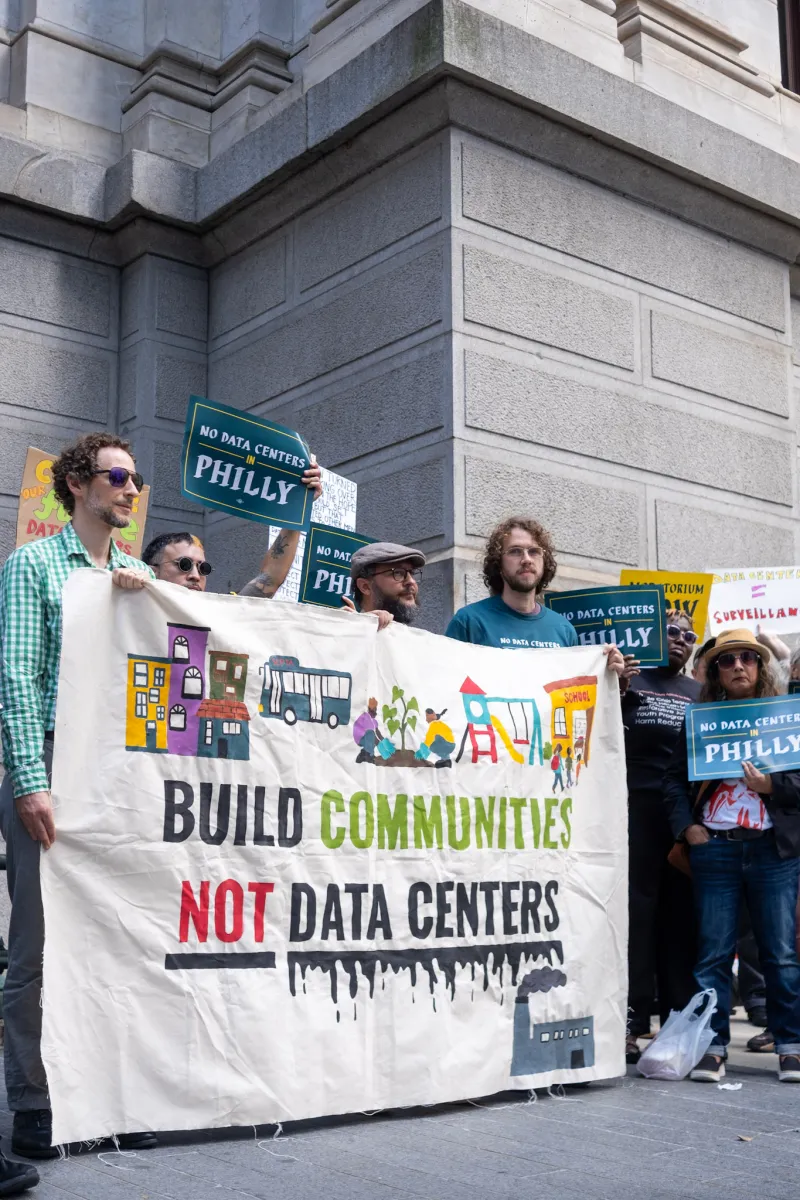
Tech’s transparency challenge takes center stage as industry giants respond to mounting public scrutiny.
Key Takeaways
- Transparency Takes Hold:Amazon and Microsoft are ditching Non-Disclosure Agreements (NDAs) in negotiations with local governments for data center projects, signaling a shift towards greater openness amidst community backlash.
- Communication Breakdown:The tech industry, particularly concerning AI and data centers, consistently struggles to articulate its value and benefits to the public, fostering mistrust and fueling opposition.
- Beyond Inevitability:The era of tech companies dictating an “inevitable future” is waning; communities and policymakers now demand clear justifications and a demonstrated case for new infrastructure and technological advancements.
The opaque nature of tech’s expansion into local communities has long been a flashpoint, particularly as massive data centers—the literal engines of our AI-driven future—proliferate. A recent move by Amazon to abandon Non-Disclosure Agreements (NDAs) in negotiations with local governments over data center projects marks a significant, albeit arguably overdue, step towards greater transparency. This decision, following a similar announcement from Microsoft earlier this year, highlights a growing acknowledgment within the industry that secrecy is no longer a viable strategy for community engagement.
This pivotal shift was a central topic of discussion on a recent episode of TechCrunch’s Equity podcast, featuring Sean O’Kane, Rebecca Bellan, and Anthony Ha. The panel delved into Amazon’s announcement, which was notably embedded within a broader blog post advocating for the community benefits of data centers. Their conversation unpacked the complexities of public perception, the efficacy of local resistance, and the overarching communication failures that continue to plague the tech sector.
The Transparency Shift: A First Step Towards Trust
Sean O’Kane highlighted the significance of Amazon’s decision to drop NDAs, even if it was “buried in the blog post and part of a larger story that Amazon’s clearly trying to tell.” For O’Kane, the practice of negotiating in secret lies “at the root of so many of the problems that the tech industry currently faces when it comes to AI broadly, but data centers in particular.” The public’s legitimate concerns regarding property values, electricity bills, and water usage often go unaddressed or are exacerbated by a lack of clear information.
The issue of secret negotiations isn’t new to the tech industry. O’Kane drew parallels to the mid-2010s, recalling Uber’s aggressive expansion tactics. He recounted a specific instance where Uber negotiated tax subsidies in a city outside Orlando to subsidize public transit rides, all under a veil of secrecy. “The whole thing was negotiated in secret. And not only that, which was frustrating on its face, but also, because of the secrecy, you could just see Uber getting really comfortable with asking for a lot of other stuff, too.” This historical precedent underscores why Amazon’s and Microsoft’s moves, while welcome, are seen as a necessary correction rather than a groundbreaking innovation. Anthony Ha echoed this sentiment, noting, “It’s noteworthy that Microsoft, earlier this year, made a similar announcement about not using NDAs… it does seem like a good first step.”
Community Resistance: More Than a Moratorium?
While the industry grapples with transparency, communities are increasingly pushing back. Data center moratoriums, temporary bans on new construction, are becoming more common across the U.S., including a recent one in San Francisco—an ironic development given its tech-centric identity. Rebecca Bellan, however, expressed skepticism about the long-term impact of these measures. She observed that many moratoriums are enacted for only “a year or two years.” Given that “these data centers aren’t coming online for the next two, three, four, five years,” due to various delays from zoning to funding, she questioned “just how much of an effect this political pushback is having on this.”
Anthony Ha offered a counter-perspective, drawing on the New York moratorium, which is tied to an environmental review process. He acknowledged the “wiggle room” inherent in such measures, often framed as a “need to take the time to study this” rather than outright rejection. Yet, Ha asserted, “you can tell that the people trying to build these data centers are worried, which is why you have these unhinged tweets from people like Trump or David Sacks.” The vociferous reactions from industry supporters suggest that the community resistance, regardless of its ultimate legislative outcome, is having a tangible impact and generating significant concern among developers.
The Communication Breakdown: Tech’s Biggest Hurdle
Beyond the specific issue of NDAs, the panel agreed that a more profound problem lies in the tech industry’s consistent failure to communicate effectively with the public. Sean O’Kane articulated this as a fundamental “communication problem” that “goes across the entire tech industry.” He criticized the industry’s approach in the “era of ‘going direct'” where “you don’t need to talk to the media, the media is dead.”
This self-imposed isolation has significant consequences. “We’ve seen, through a lot of the controversy and backlash to AI and data centers, that the industry just does a really poor job explaining itself,” O’Kane stated. The frustration within tech often stems from the belief that “most people can’t envision a world in which this stuff is useful for them.” However, O’Kane argued that this inability to envision is often a direct result of the industry’s own shortcomings: “And that’s because, a lot of time, the [technological] ability’s not there, and in part because they’re just not explaining it well.”
Beyond Inevitability: The Mandate to Justify
Anthony Ha expanded on this theme, observing a shift away from the “inevitable” narrative that once dominated tech discourse. For a long time, he noted, “it really felt like it was being pushed down our throats — this idea of, ‘This is inevitable, this AI-driven future, and get on board or you’re just going to be left behind.'” While technological progress undoubtedly continues, Ha sees “obstacles” emerging that force companies to change their approach.
“What I’ve really liked about that is this sense of ‘No, you actually have to make the case for it.’ You can’t just say, ‘This is the future, shut up.'” This marks a crucial evolution in the relationship between tech and society. No longer can disruptive technologies simply arrive with an expectation of unquestioning acceptance; they must now be actively justified and explained to the communities they impact.
Case Study: Tesla’s “Abundance” Paradox
To illustrate the communication gap, Sean O’Kane invoked Tesla’s vague “sustainable abundance” mission. He pointed out that a year after Tesla announced this ambitious vision, the company “still doesn’t have a very good definition of it.” Despite a multi-page PDF laying out the concept, even “Tesla’s biggest fans criticized Elon Musk and Tesla for how unspecific it was. It read like LLM nonsense.”
Anthony Ha found this particularly “shocking,” not just the lack of definition but the very promise of “remaking society” through “amazing abundance.” This, he suggested, speaks to the “strange our relationship to Tesla, and particularly the people who are invested and ride-or-die for Elon, [has become.] It’s not about, is this company going to sell a lot of cars? It’s about this vision for remaking society. Or at least, that’s what they’re being sold.” The Tesla example serves as a potent microcosm of the broader industry’s challenge: when grand visions lack clear articulation and tangible benefits for the average person, they risk alienating the very public they claim to serve.
Bottom Line
The recent decisions by Amazon and Microsoft to abandon NDAs in data center negotiations are more than mere procedural changes; they represent a tacit acknowledgment of the tech industry’s long-standing communication failures and the growing power of community resistance. While questions remain about the ultimate impact of local moratoriums, the message is clear: the era of tech operating in secretive silos is ending. For AI and data centers to truly integrate into society without constant friction, the industry must pivot from dictating an “inevitable future” to actively making a transparent, compelling case for its value, engaging communities as partners rather than passive recipients of progress. The future of tech hinges not just on innovation, but on its ability to clearly articulate its purpose and build genuine trust.
When you purchase through links in our articles, we may earn a small commission. This doesn’t affect our editorial independence.
{content}
Source:{feed_title}