
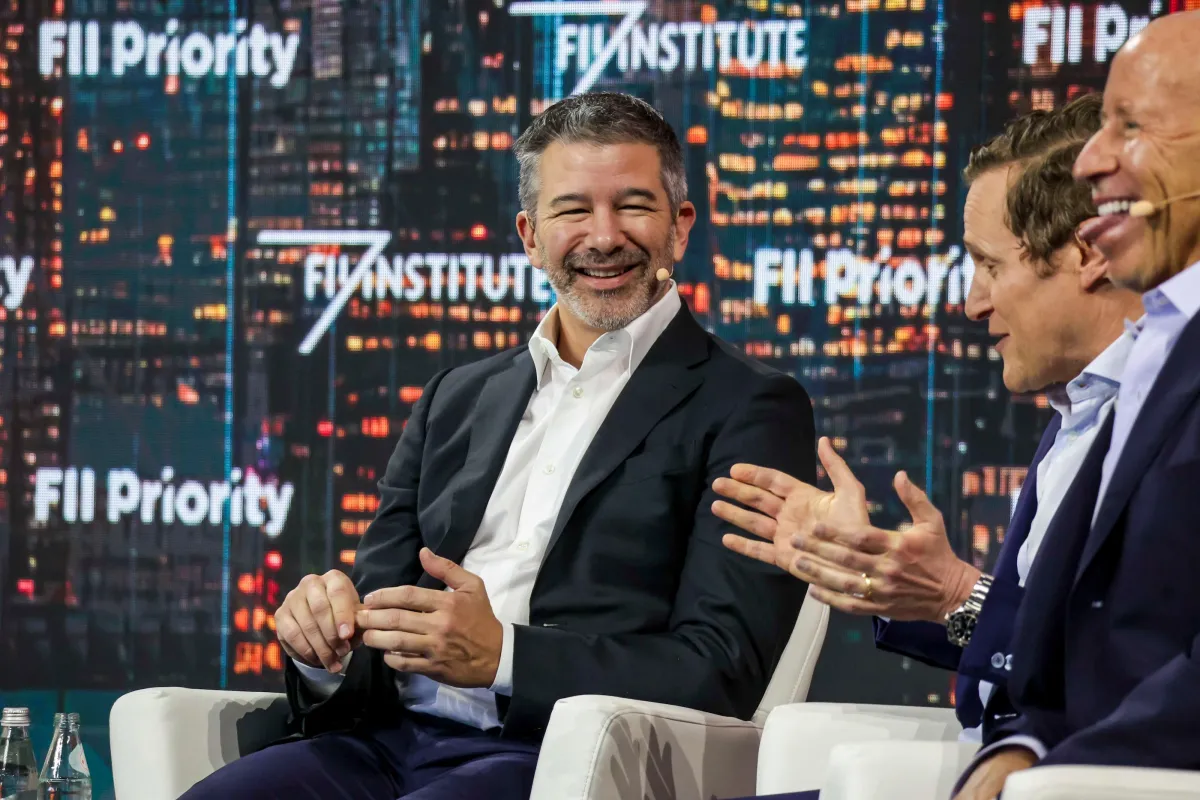
Travis Kalanick, the controversial co-founder of Uber, is once again assembling a formidable team of former Uber lieutenants at his burgeoning robotics and industrial AI startup, Atoms. The latest high-profile addition is Gautam Gupta, who served as Kalanick’s finance chief at Uber, now stepping in as Atoms’ Chief Financial Officer.
This strategic hire follows Atoms’ recent blockbuster $1.7 billion funding round, which even saw Uber itself participate as an investor. The move signals Kalanick’s determination to complete what he calls the “bits-to-atoms story arc,” aiming to revolutionize industries from mining to food and transportation.
Key Takeaways
- Kalanick Reunites Key Uber Allies:Gautam Gupta, former Uber CFO under Kalanick, is joining Atoms as CFO, continuing a trend of Kalanick bringing top ex-Uber talent into his new venture.
- Massive Funding Fuels Ambitious Vision:Atoms recently secured $1.7 billion in funding, including investment from Uber, empowering Kalanick to pursue his “bits-to-atoms” strategy in industrial AI and robotics across diverse sectors.
- A Second Act Defined by Unwavering Loyalty:Gupta’s decision, along with others, highlights a deep-seated belief in Kalanick’s vision and leadership, marking a high-stakes attempt to redefine his entrepreneurial legacy.
The Gathering of Kalanick’s Cohort
Just weeks after Atoms, previously known as CloudKitchens, announced a staggering $1.7 billion funding round, the company has confirmed the appointment of Gautam Gupta as its Chief Financial Officer. Gupta, a seasoned finance executive, spent over four intense years at Uber, serving as CFO directly under Kalanick until his departure in July 2017, shortly after Kalanick’s own resignation as CEO.
Gupta’s return to Kalanick’s orbit is far from an isolated incident. It underscores a clear pattern of Kalanick enlisting key figures from his contentious but ultimately transformative tenure at Uber. Earlier this year, Atoms acquired Pronto, a mining autonomy startup led by Anthony Levandowski, a former Uber (and Google) self-driving engineer who also had a significant, albeit controversial, history with Kalanick. A quick scan of LinkedIn profiles further reveals a growing number of former top Uber employees now working at Atoms, reinforcing the narrative that Kalanick is indeed “getting the Uber band back together.”
This trend is no accident, as Kalanick himself hinted when announcing the recent funding round. “On many levels, this round is a bit of unfinished business. Fuel to complete the bits-to-atoms story arc we started at Uber, continued at CloudKitchens, and will now finish at Atoms,” he wrote, openly connecting his past ventures with his grand plans for the future. The emotional and strategic implications of these reunions are profound, suggesting not just a professional partnership but a shared vision for disruption.
Atoms’ Grand Ambition and Massive War Chest
The sheer scale of Atoms’ recent funding round — $1.7 billion — speaks volumes about the investor confidence in Kalanick’s latest endeavor. What makes this even more remarkable is the involvement of Uber itself as an investor. This reunion, six years after the company pushed out its founder amid a swirl of scandals and accusations of widespread sexual harassment and discrimination, represents a significant symbolic and financial reconciliation. While Uber hasn’t disclosed its specific contribution, reports from The Information and TechCrunch indicate a substantial $100 million investment, signaling a belief in Kalanick’s ability to once again reshape industries.
Kalanick’s vision for Atoms is expansive, albeit articulated in broad strokes. He has indicated that the company will focus on transforming critical sectors like mining, food, and transportation. His public statements often lean towards the philosophical, describing his mission as wanting to “go up against the final boss, Nature and its fierce resistance to change.” This lofty ambition suggests a deep-seated desire to tackle fundamental, infrastructure-level challenges through advanced robotics and industrial AI, moving beyond the consumer-facing apps that defined Uber.
The transition from CloudKitchens, a network of ghost kitchens, to the more broadly defined “Atoms” signifies a strategic pivot and expansion. It hints at leveraging the operational complexities learned in food delivery logistics and applying them to a wider array of physical infrastructure challenges, embodying the “bits-to-atoms” concept—the idea of using digital intelligence to control and optimize physical assets and processes.
A CFO’s Unwavering Conviction
Gautam Gupta’s journey with Kalanick predates his official role at Uber. He first invested in the ride-sharing giant in 2012 while serving as a vice president at Goldman Sachs, eventually joining the company in 2013. His belief in Kalanick’s leadership is both long-standing and profound, as articulated in his recent social media posts confirming his new role at Atoms.
“[T]he single biggest reason I joined was — Travis. I believed he possessed a magical mix of genius and intensity that made me want to bet on the person, not the market,” Gupta wrote on Wednesday. He painted a vivid picture of Kalanick’s relentless drive: “First one in, last one out, every day. Breaking down walls of regulations, unions, city bureaucracies, etc. Had he not pioneered ridesharing, I don’t think anyone else had the fortitude to fight through one adversity after another to create a whole new market worth hundreds of billions out of nothing.”
This powerful endorsement underscores the deep loyalty and conviction Kalanick continues to inspire in those who have worked closely with him. Gupta’s commitment to Atoms is so strong that he is stepping down from his role at A*, the VC firm he co-founded in 2020 after three years at Opendoor. Notably, A* also invested in Atoms, with Gupta proudly stating it was the “largest investment in the history of our fund.” This personal and professional investment highlights the high stakes and immense potential Gupta sees in Kalanick’s latest venture.
The Path Ahead – Redefining a Legacy
With a vast war chest and a growing team of experienced, loyal lieutenants, Travis Kalanick’s Atoms is poised to make a significant impact. The focus on industrial AI and robotics in complex sectors like mining, food infrastructure, and transportation represents a pivot from consumer-facing tech to foundational industries. This shift implies tackling deeply entrenched challenges requiring not just technological prowess but also intense lobbying, regulatory navigation, and operational excellence – areas where Kalanick has historically shown both brilliance and controversy.
For Kalanick, Atoms is more than just another startup; it’s a meticulously crafted second act. It’s an opportunity to solidify a legacy defined by groundbreaking innovation, perhaps shedding some of the reputational baggage accumulated during his Uber years. The trust placed in him by investors, including his former company, and the unwavering loyalty of his returning team members, suggest that despite his past, Kalanick’s ability to attract capital and talent remains undiminished. The challenge now lies in translating philosophical ambition into tangible, transformative technologies that deliver on the “bits-to-atoms” promise.
Bottom Line
Travis Kalanick’s Atoms, fueled by a colossal $1.7 billion and bolstered by the return of key Uber lieutenants like CFO Gautam Gupta, is unequivocally signaling its intent to disrupt fundamental global industries through advanced robotics and industrial AI. This high-stakes second act not only aims to build a new empire but also offers Kalanick a unique opportunity to redefine his entrepreneurial narrative, leveraging deeply held loyalty and immense financial backing to tackle the world’s “fierce resistance to change.”
When you purchase through links in our articles, we may earn a small commission. This doesn’t affect our editorial independence.
{content}
Source:{feed_title}