
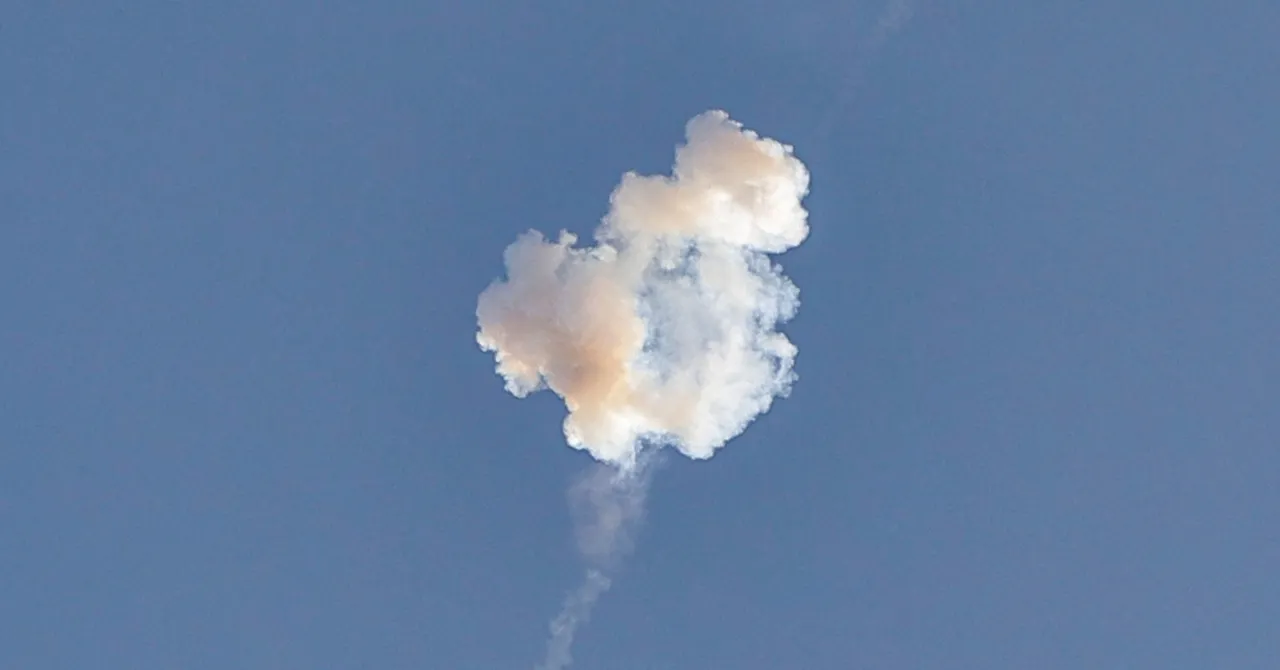
Anti-missile systems commence with detection devices capable of identifying a liftoff in mere moments. A primary radar employed alongside THAAD is the AN/TPY-2, an X-band, high-frequency radar fashioned to monitor diminutive, rapidly-advancing targets across vast ranges.
This radar possesses the capability to identify and monitor ballistic projectiles situated hundreds of kilometers distant, charting the course of items traversing at hyper-fast rates while relaying pertinent information to control hubs instantaneously.
Upon the detection of a missile’s liftoff, protective mechanisms compute its flight path and ascertain the projectile’s anticipated position at a specific juncture during its journey. Subsequently, interceptor rockets are deployed to converge with it precisely at that spatial coordinate.
Why Halting Ballistic Missiles Proves Such a Difficulty
Ballistic projectiles move with exceptional velocity. Certain ones achieve velocities exceeding 20,000 kilometers per hour, a pace sufficient to traverse the entirety of the UAE in mere minutes. Due to such rapid movement, protective frameworks frequently possess merely a few minutes to identify, monitor, and halt a missile prior to its descent upon its intended objective.
To react effectively within such a limited timeframe, anti-missile frameworks depend upon an array of interconnected technologies: pre-alert detectors for launch identification, interlinked radar systems for menace monitoring, and counter-missiles engineered to obliterate it during its aerial trajectory.
The proliferation of anti-missile mechanisms throughout the Gulf region is predominantly spurred by the swift augmentation of ballistic projectile stockpiles within the area. Iran is broadly perceived as holding one of the most substantial ballistic missile caches in the Middle East.
Consequently, nations bordering the Gulf have dedicated over ten years to funding radar arrays, interceptor rockets, and control infrastructure intended to safeguard essential infrastructure, prominent urban centers, and armed forces installations. The UAE accommodates multiple significant military sites, notably Al Dhafra Air Base, which accommodates both Emirati and American personnel.
Even if a projectile is effectively neutralized, the peril does not vanish completely.
Halted projectiles may disintegrate at elevated heights, dispatching shards plummeting earthward. Occasionally, remnants can still inflict harm if they alight in inhabited zones. The occurrence on Saturday exemplifies this hazard: Despite incoming missiles being halted prior to collision, descending fragments from a single interception claimed the life of a resident in Abu Dhabi.
This report first surfaced in WIRED Middle East.
{content}
Source:{feed_title}