
Uber presents a proposition to autonomous vehicle developers: we’ve got this covered.
The enterprise specializing in ride-hailing and food delivery has unveiled a fresh unit, Uber Autonomous Solutions. This division is configured to undertake all responsibilities related to managing robotaxi, self-driving truck, or pavement delivery robot operations, encompassing both software and auxiliary services.
Disclosed on Monday, this endeavor officially establishes what Uber has been steadily pursuing for a number of years now.
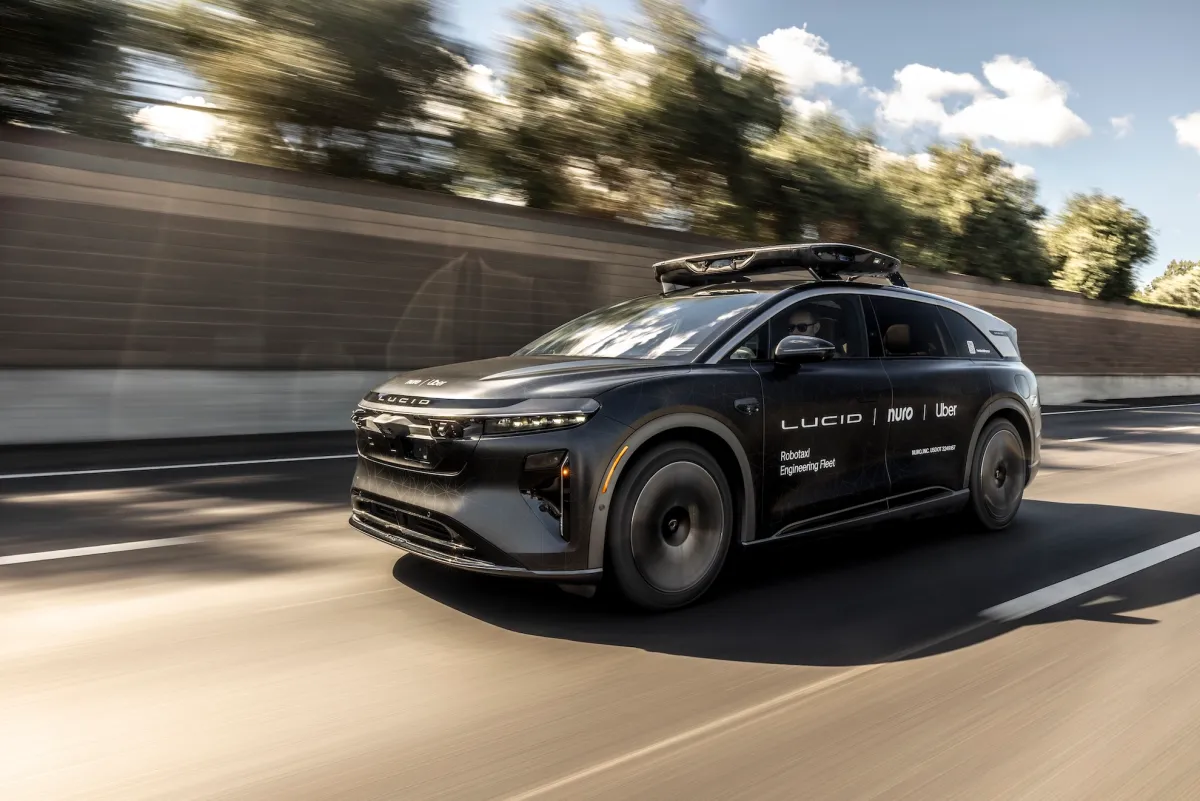
Uber has cultivated alliances with approximately twenty-four autonomous vehicle technology enterprises, spanning all applications from robotaxis and trucking to pavement delivery robots and drones. The company has supported many of these firms—Lucid and Nuro, Waabi, and China’s WeRide—and committed $100 million to construct rapid-charging stations for autonomous vehicles. Furthermore, it initiated Uber AV Labs, a dedicated technical group tasked with collecting information for robotaxi collaborators.
Uber has formed the alliances and secured investments; now it seeks to establish an irreplaceable role for itself.
“AV technology teams ought to concentrate on their core strength: developing software capable of securely driving an autonomous world,” stated Sarfraz Maredia, Uber’s global head of autonomous mobility and delivery, who will be spearheading the initiative. The objective, he clarified, is to provide “extensive operational capabilities wherever required,” encompassing aspects like generating client interest, enhancing the passenger journey, offering client assistance, or overseeing routine fleet management.
The ultimate aim is to assist these enterprises in lowering their per-mile expenses and accelerating their market entry. Uber announced its intention to help these partners broaden robotaxi rollouts to over fifteen urban centers by the close of this year.
Techcrunch conference
Boston, MA
|
June 9, 2026
“The triumph or downfall of autonomy globally will be dictated by its ability to be monetized, and Uber is poised to be the element that ensures autonomy is financially feasible,” Uber President and COO Andrew MacDonald said.
For Uber, this entails managing foundational elements such as training data and mapping, vehicle fleet funding, compliance assistance, and supervising the way robotaxis and other AVs traverse intricate situations and locations. The firm indicated it is deploying a collection of custom-fitted Lucid vehicles to gather information, which can then be provided to collaborators for educating their artificial intelligence platforms.
This fresh unit also intends to address the end-user journey, encompassing client assistance. Significantly, Uber desires to assume responsibility for vehicle administration, which includes distant aid—a matter that recently gained notice from national legislators due to worries that Waymo employs foreign personnel. Vehicle administration would additionally encompass insurance and hiring individuals who may be required to assist these AVs during their real-world operations.
Uber’s strategy is both critical for survival and opportunistic. The firm divested its internal AV R&D department, referred to as Uber ATG, in 2020, after a biennium of internal challenges and scrutiny when one of its test vehicles caused the fatality of a walker. (Uber transferred the unit through an intricate agreement with Aurora.)
It has endeavored to bolster its standing via collaborations and capital injections. And there have been numerous instances. Uber and Waymo maintain a joint robotaxi service in Atlanta and Austin. The company has additionally secured alliances with Chinese enterprises Baidu, Momenta, and Pony.ai, pavement delivery robot developers Cartken, Starship, and Serve, and the British-headquartered autonomous driving technology newcomer Wayve, in addition to autonomous taxi creators AVride and Motional, among others. It intends to introduce a robotaxi service with Volkswagen in Los Angeles by the close of 2026—though it will not operate autonomously until 2027.
While these efforts furnish Uber with some security, they do not offer an substitute for forfeited income should these companies diminish its proprietary ride-hailing and food delivery operations, currently operated by human chauffeurs. Uber anticipates this fresh unit will achieve that.
{content}
Source:{feed_title}