
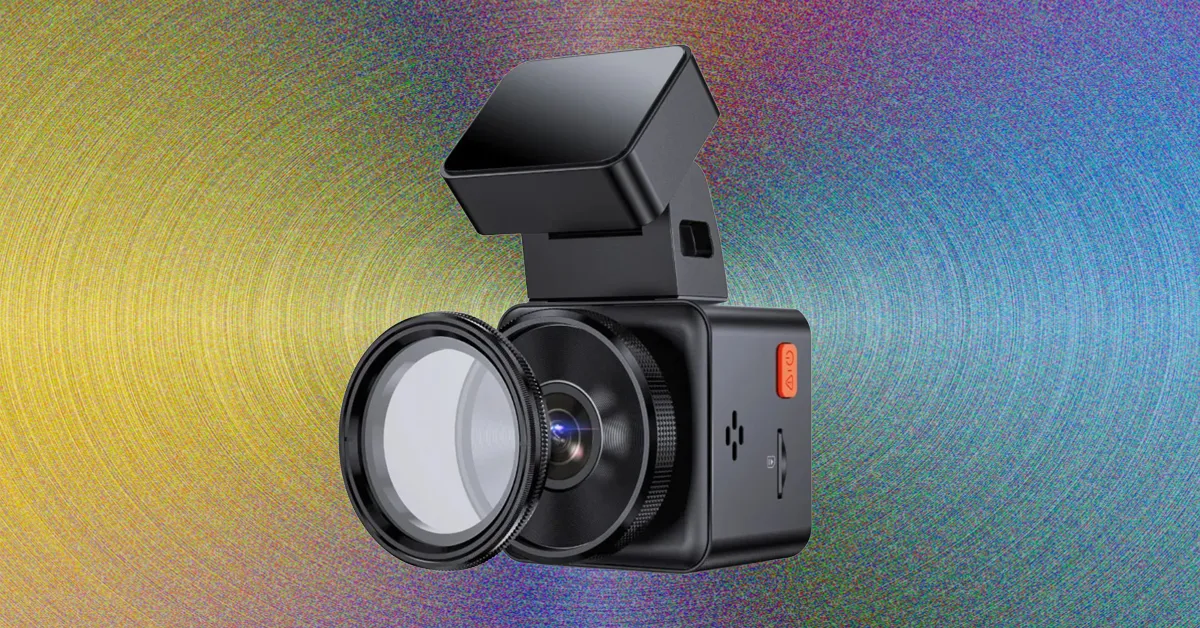
An available method involves purchasing an optional $25 hardwire kit from Vantrue, which serves to directly connect the device to your vehicle’s fuse box. Bear in mind, however, that the camera unit typically consumes between 25 and 35 milliamps when operating in parking mode (equivalent to about 3 to 4 watts from a standard home outlet); this consumption will deplete your car’s battery if hardwired. Nevertheless, this power draw is not unduly problematic and should be acceptable for several days, or potentially weeks, provided your battery is in good health.
Generally speaking, I would ratheravoiddischarging my car’s battery while it remains stationary. Instead, my preference would be to forgo the hardwire kit and procure a high-quality power bank. Even a $48 portable charger from Anker ought to provide sufficient power for approximately a week of continuous operation while parked, alleviating any concern regarding your car’s battery depletion.
Limitations and Faults
Vantrue app via Matthew Korfhage
Despite being a compact gadget, the Vantrue nonetheless features a real-time display screen. It is improbable, however, that you will utilize it for browsing video footage. Its primary utility lies in verifying the camera’s framing when you affix it to your windshield. The screen itself appears somewhat cluttered with information and offers a lower resolution compared to the actual video recording.
Should you wish to review footage, this will typically be accomplished on your smartphone using the accompanying application. Still, the screen proves valuable for adjusting settings manually, should an urgent need arise—though navigating the camera’s on-device interface can be a bit awkward and frustrating. Again, connecting the camera to your phone remains the more advisable approach for altering settings.
Indeed, a multitude of settings are available. Through the application, you can monitor mileage, activate or deactivate GPS tracking, modify the camera’s frame rate and resolution, and determine whether to employ high-dynamic range settings or PlatePix. The former option is particularly beneficial in conditions of low light.
Furthermore, it operates as a straightforward, single-camera unit. Vantrue offers more sophisticated (and consequently more expensive and larger) multi-camera configurations with comparable specifications, which I am currently evaluating. These include a Nexus 4 Pro, featuring a front-cabin and rear camera with reduced resolution. A 4-channel N5 model incorporates an additional rear-cabin channel, providing extensive camera coverage, albeit at the expense of some image clarity.
PlatePix certainly assists in capturing vehicle registration plates; however, it achieves this by sacrificing contrast across the remainder of the image. This trade-off becomes most significant during nighttime. Essentially, you are faced with a choice between achieving minimal license plate capture on a dimly lit image, or, conversely, obtaining superior license plate capture on crisper nighttime footage.
{content}
Source:{feed_title}