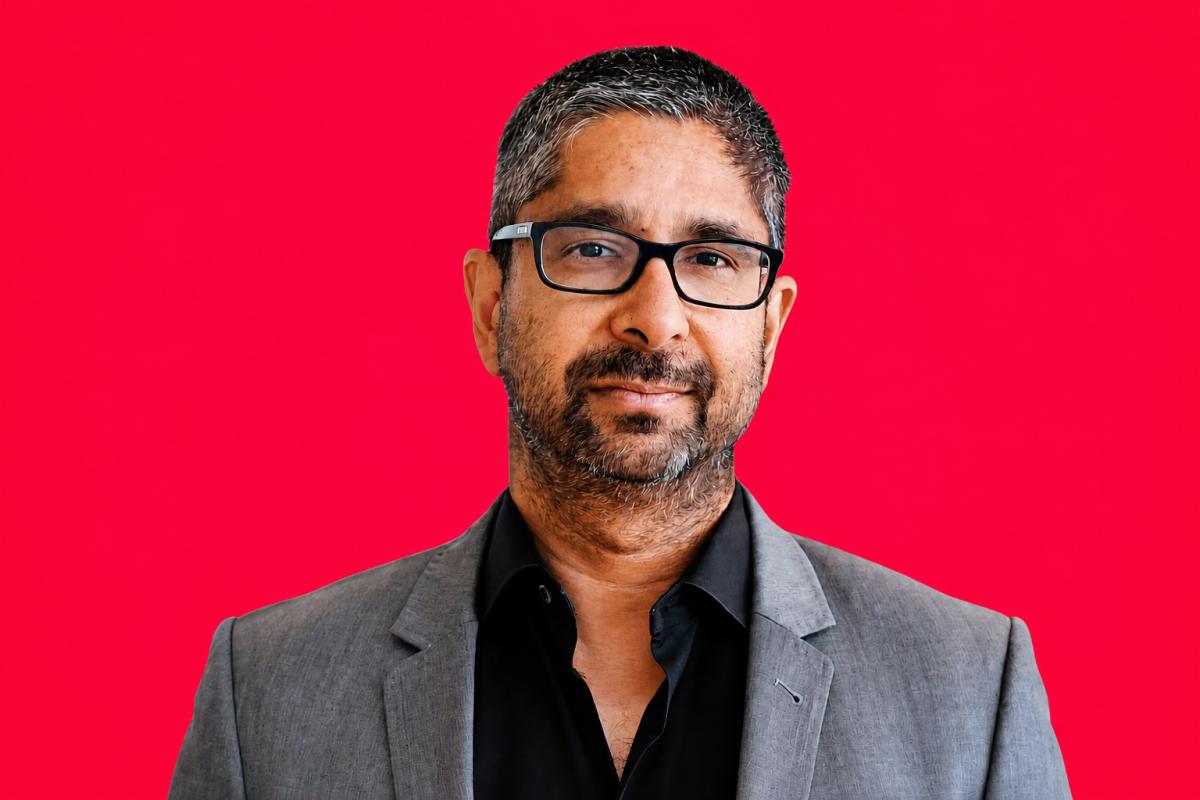
Vijay Pande’s AI-Driven Leap: From Billion-Dollar Funds to Precision Biotech
Key Takeaways
Strategic Pivot for Precision:Vijay Pande’s unexpected move from managing a multi-billion-dollar fund at a16z to launching VZVC, a lean, AI-centric firm making concentrated bets, signals a deep conviction in focused, high-impact innovation in biotech.
Biology as an Engineering Discipline:AI and machine learning are fundamentally transforming biology from a “science of discovery” to a field of “engineering,” enabling more precise drug design, improved clinical trial predictability, and the advent of true personalized medicine.
Navigating Proprietary Data:Unlike traditional AI, biological data cannot be easily scraped from the internet, creating unique challenges. This necessitates the development of “atlases of biological information” and open-source foundation models to overcome data silos and accelerate scientific progress.
It used to be that Vijay Pande was better known in academic circles than investor circles. That changed pretty abruptly a dozen years ago, when Marc Andreessen and Ben Horowitz — who’d spent their firm’s first five years explicitly avoiding healthcare and life sciences — decided the category was worth betting on after all and handed the keys to Pande. At the time, he was a Stanford chemistry professor best known for building Folding@home, the distributed-computing project that turned millions of home PCs into a supercomputer for disease research. Over the next decade-plus, he grew a16z’s bet into a practice managing close to $4 billion, a testament to his vision and the burgeoning potential of biotech under his leadership.
So it was somewhat unexpected when in June of last year, Pande walked away from it all to start something much smaller, yet arguably more focused and impactful. His new firm, VZVC, co-founded with longtime investor Zach Werner, is built around a handful of concentrated bets a year rather than dozens. It operates with no associates and relies heavily on AI for its day-to-day operations, embodying a philosophy of precision and efficiency. This hard pivot from a sprawling empire to a nimble, AI-first venture marks a significant statement about the future of biotech investment and innovation.
We recently sat down with Pande to delve into the motivations behind his strategic shift, his views on making concentrated bets in the current market, and one of the most intriguing conundrums in AI-driven biotech: the unique challenge of biological data. Unlike textual data, biological information cannot be simply scraped off the internet, leading nearly every company to construct its own walled-off dataset. What does this imply for the grand promises of AI in medicine, and who ultimately gains access to these transformative advances?
Our conversation, edited for length and clarity, reveals a compelling vision for a future where AI doesn’t just assist, but fundamentally reshapes, our understanding and treatment of disease.
From Fortuity to Precision: Engineering Biology with AI
Vijay Pande posits a profound shift in how we approach disease: biology is moving from a “science of discovery” to something we can actively engineer. For much of history, drug development often carried a fortuitous element, with serendipitous findings guiding breakthroughs. Today, however, AI and machine learning are enabling computers to unravel the immense complexity of biological systems with unprecedented precision. “AI and machine learning allow computers to wrap their type of understanding around something very, very complicated,” Pande explains. This advanced comprehension extends to identifying optimal targets for drugs, facilitating their creation, and even streamlining the most resource-intensive phase: clinical trials.
Reimagining Clinical Trials: The AI Advantage
The notion that AI will immediately make clinical trials cheaper is, as Pande puts it, “very much an aspiration.” While the cost and time to *initiate* clinical trials are indeed shrinking thanks to AI, the actual trials themselves remain extraordinarily expensive, often running into hundreds of millions of dollars. The staggering reality is that only about 20% of drugs successfully navigate from the first trial to the end of the third. This high failure rate isn’t typically due to biologists making errors, but rather the fundamental limitation of preclinical models. “All the experiments these drugs were designed on were on animal models like mice, and in the end, animal models are just not very predictive of humans,” Pande notes, underscoring a critical bottleneck.
This is where AI promises a monumental leap. While an AI model won’t be “perfect,” it will be “way better than any animal model would be,” significantly increasing the probability of success once a drug enters human trials. The implications are profound: reducing the amortized cost of drug development and accelerating the delivery of effective treatments to patients. It’s not just about speed, but about a far more intelligent and predictive approach to validating new therapies.
The Promise of Personalized Precision Medicine
Beyond improving drug development, AI is propelling us towards true “precision medicine.” Pande highlights the current predicament in healthcare: “If you go to a doctor with something not trivial, they have to guess what’s going on, because there’s only so much they can tell.” This often leads to a trial-and-error approach to medication, particularly in complex areas like cancer, where patients cycle through treatments hoping to find efficacy. The ideal, Pande argues, is for the first drug prescribed to be the right one, avoiding unnecessary suffering and expense.
Traditional blood tests compare an individual’s values to population averages. However, AI enables a more nuanced and individualized approach: “Really, they should be compared to: is this [result] weird for you?” This shift towards understanding individual baselines and unique biological profiles is central to personalized medicine, ensuring treatments are tailored to the specific needs of each patient, rather than a generic statistical average. It promises a future where medicine is truly about ‘me,’ not just ‘us.’
Navigating the Unique Data Landscape of Biology
The path to this moment has been a steady convergence of multiple advancements, rather than a sudden spike. Pande points to the evolution beyond genomics, which acts as “the blueprint for your house on day one, but your house is fairly different now compared with the moment it was built.” Newer measurements in proteomics and other ‘omics fields offer a more dynamic, real-time understanding of the body’s current state and disease progression. Coupled with significant automation in robotic measurements, which naturally integrates with AI, these factors have driven a decade of consistent progress in both AI for biology (treating disease) and AI for chemistry (designing drugs). These parallel advances create a powerful synergy that is now reaching an inflection point.
The “Walled Garden” Conundrum of Biological Data
One of the most defining characteristics of AI in biology, Pande emphasizes, is its unique data challenge. Unlike the vast oceans of text and image data readily available online for training large language models or computer vision systems, “biology is one of the few places AI can’t just scrape data off the internet.” This fundamental difference means that companies often end up building their own proprietary, “walled-off” datasets, each a carefully curated treasure trove.
“It’s a place where you don’t have any of this data that people can just all train the same thing, and your data can’t be distilled from one model to another,” Pande explains, highlighting the scarcity and proprietary nature of this information. This presents a critical hurdle for the rapid, collaborative development seen in other AI domains, potentially slowing down the pace of discovery if data remains fragmented.
AI as the Bridge: Overcoming Medical Silos
This proprietary data landscape echoes a familiar, long-standing problem in medicine: the siloed nature of specializations. Doctors often operate within their own domains, making comprehensive care for complex, multi-disciplinary conditions challenging. Pande sees AI as a powerful solution to this fragmentation. “What is really intriguing about AI is that it can, in principle, be a specialist in everything, and it can start to see things that really any single human being couldn’t,” he states. Imagine having “a team of the very best doctors all clamoring together in that moment” – AI has the potential to embody this collective expertise, integrating insights across specialties to provide a holistic view of a patient’s health.
However, for this vision to materialize, the challenge of data sharing remains paramount. While founders and investors understandably seek to protect their hard-won findings, Pande points to an emerging trend that could democratize access: “We’re starting to see a shift toward building these atlases of biological information — which, from a technology standpoint, are typically foundation models.” He predicts a future mirroring the open-source movement in large language models, where “open-source foundation models in biology having a very broad impact” will emerge, fostering greater collaboration and accelerating discoveries across the field, ultimately benefiting all of humanity.
Pande’s Focused Vision: Cultivating Impact at VZVC
Pande’s pivot to VZVC underscores his belief that impact in this new era requires strategic focus. Rather than spreading resources across many ventures, his firm concentrates on a select handful of investments each year. This concentrated approach is particularly critical in a field where data generation is expensive, models are complex, and deep scientific validation is paramount, allowing for deeper engagement and more tailored support for portfolio companies. It’s a strategy designed for maximum leverage in a high-stakes, high-reward environment.
His investment philosophy is clearly rooted in deep personal connections and long-term vision. Pande is involved with Genesis Therapeutics, which originated from his lab at Stanford, and Insitro, the drug-discovery company launched by Daphne Koller, a former Stanford colleague. He’s also actively incubating a new company with a founder he’s known for two decades. These engagements highlight his preference for working with established talent and groundbreaking ideas, leveraging trust and proven expertise to drive innovation.
When asked about his focus areas, Pande indicates a strong interest in “AI for healthcare delivery,” a sector ripe for disruption given the inefficiencies and complexities of current systems. This focus, combined with his prior expertise in drug discovery and development, positions VZVC at the forefront of leveraging AI to not only create new therapies but also ensure they reach patients effectively and efficiently, fundamentally transforming the entire healthcare ecosystem.
***
The Anti-a16z? Vijay Pande’s Bet on a Tiny, AI-Native VC Firm
Key Takeaways:
Micro-Concentration, Macro Impact:VZ, co-founded by Vijay Pande and Zach Werner, radically departs from traditional venture capital with an exceptionally small team and a hyper-concentrated portfolio (around five investments annually), approaching each deal with the gravity of “having another child.”
Integrity and Go-to-Market Over Hype:Pande prioritizes founders with high integrity and long-term vision, emphasizing that go-to-market strategy is as critical, if not more so, than cutting-edge technology itself. He seeks partners who aim to “win together.”
Realistic AI, Data-Driven Insights:A pioneer in AI/ML for biotech, Pande remains bullish on AI’s ability to uncover insights humans can’t. However, he cautions against overhyping AI’s “cure-all” potential, stressing that its efficacy is fundamentally limited by the availability and quality of data.
Vijay Pande is no stranger to the cutting edge of venture capital. As a former general partner at Andreessen Horowitz (a16z), he was instrumental in shaping the firm’s bio and health investment strategy, carving out a reputation as a forward-thinker with an uncanny ability to spot paradigm shifts. Now, Pande is embarking on a new chapter, one that represents a deliberate and profound departure from the very model he helped define. With his new firm, VZ, Pande, alongside co-founder Zach Werner, is crafting a venture capital operation that prioritizes intimacy, intense focus, and a deeply personal commitment to a select few groundbreaking startups.
This pivot isn’t merely a change of scenery; it’s a philosophical re-imagining of how venture capital can operate in an increasingly complex and competitive landscape. VZ is designed to be lean, agile, and hyper-focused, a stark contrast to the sprawling multi-stage funds that dominate the industry. Pande’s insights, gleaned from decades at the intersection of technology and biology, reveal a seasoned investor who has learned to trust his intuition, acknowledge past missteps, and relentlessly pursue what he believes is truly transformative.
VZ: A Radically Concentrated Approach to Investing
The most striking feature of VZ is its intentional smallness. “VZ is named after me, Vijay, and my co-founder, Zach Werner — he’s the Z,” Pande explains. “We’re intentionally really quite small… on the investment side, it’s really just the two of us.” This lean structure is not an oversight but a strategic choice, facilitated by the firm’s innovative use of agents, which Pande notes has negated the need for additional associates. This allows for unparalleled direct engagement from the firm’s principals, fostering a level of partnership often absent in larger funds.
The concentration extends directly to their portfolio. While many venture funds boast dozens, if not hundreds, of investments annually, VZ operates on an entirely different scale. “We’re not driving 30 bets per year… we’re talking about probably five, not a lot of investments — very concentrated,” Pande clarifies. The analogy he uses to describe this commitment is particularly telling: “Adding a company at a typical fund is like adding a Facebook friend — that’s something you do pretty quickly. For Zach and I, it’s more like wanting to have another child. This is a big deal for us.” This comparison underscores the profound responsibility and long-term vision that underpins every investment VZ makes, setting a powerful tone for their relationships with founders.
The VZ Philosophy: Integrity, Partnership, and Go-to-Market Prowess
For Pande, the foundation of a successful investment isn’t just a compelling technology or a burgeoning market; it’s the character of the founder. “One of the things that’s most important to me [about founders] is that we can really trust each other — founders that have high integrity, that do what they say they’re gonna do,” he asserts. This isn’t merely about ethics; it’s a recognition that the investor-founder relationship is a marathon, not a sprint. “I’m expecting this relationship to be 5, 10 years plus into, ideally, their next company. I want to work with people who are thinking long term like that.” This philosophy naturally filters out those solely driven by short-term wins. “Ideally, these are people who are not just trying to win and beat other people, but really thinking about the question: how do we win together?”
Pande’s investment wisdom has also evolved significantly over his career. While the allure of groundbreaking technology is undeniable, he’s learned that innovation alone is often insufficient. “I think it took me some time to really appreciate that as seductive as the coolest technologies are, it really always comes back to go-to-market,” he admits. This realization has become a core tenet he imparts to his portfolio companies. “I tell my founders, especially the ones who are coming from the science or the product side, for them to take all their brilliance and creativity and really apply it to the go-to-market side, that the go-to-market part is at least as hard or harder than the technology side.” This emphasis on commercialization strategy ensures that brilliant inventions don’t languish as mere academic curiosities.
This hands-on, deeply invested approach defines VZ’s competitive edge. In a world where VCs often jostle for “hot rounds,” Pande notes that VZ rarely finds itself in direct competition. “The funny thing about this model is that typically we’re not trying to compete for a hot round — people make room for us,” he explains. “Largely, people want us as investors because of what Zach and I can do, and how hands-on we can be.” This ability to add substantive value beyond capital is what attracts founders to their unique model. Pande draws inspiration from firms like Valor, founded by Antonio Gracias (known for SpaceX), and Thrive, both lauded for their concentrated portfolios and deep operational engagement. While a16z’s influence is “in my DNA,” these newer inspirations highlight a move towards a more bespoke and impactful investment style.
Navigating the Hype: AI’s Promise and Peril
Pande has long been a champion of AI and machine learning in medicine and biology. “When I started talking about AI and machine learning and technology and medicine and bio 10 plus years ago, there was a lot of resistance and a lot of people saying, ‘Oh, that’s never going to happen. That’s never going to be useful,’ and so on,” he recalls. Witnessing the arc from skepticism to widespread adoption has been profoundly fulfilling. “That resistance is largely gone and seeing this arc is very fulfilling.”
Despite his deep conviction in AI’s transformative power, Pande remains pragmatic about its limitations, especially when discussing current hype cycles. “The reality is that AI can find insights that we can’t get from just humans alone,” he acknowledges. However, the narrative often goes awry. “The thing that always gets tricky is when there’s this call that AI is going to cure all everything. The reason for hesitance there is not because of any doubt about AI — it’s about doubt of the data.” He emphasizes that the success of powerful models like LLMs hinges on vast datasets. “LLMs work because there’s so much data to learn from. When the data is just simply not there, then AI can’t magically solve that problem.” This nuanced perspective is crucial for founders and investors alike, grounding expectations in the practical realities of data availability and quality.
When you purchase through links in our articles, we may earn a small commission. This doesn’t affect our editorial independence.
{content}
Bottom Line
Vijay Pande’s VZ is more than just another venture firm; it’s a carefully crafted experiment in high-conviction, high-touch investing designed for the next generation of deep tech. By radically shrinking its footprint and deepening its commitment to a select few founders, VZ aims to cut through the noise of traditional VC, proving that profound impact can be achieved not through volume, but through focused, long-term partnerships built on trust, strategic acumen, and a realistic understanding of technological potential. Pande’s journey from pioneering AI in biotech to architecting this “anti-a16z” model signals a maturation in the venture landscape, where quality and bespoke value creation may increasingly trump the scale and speed of conventional funds.