
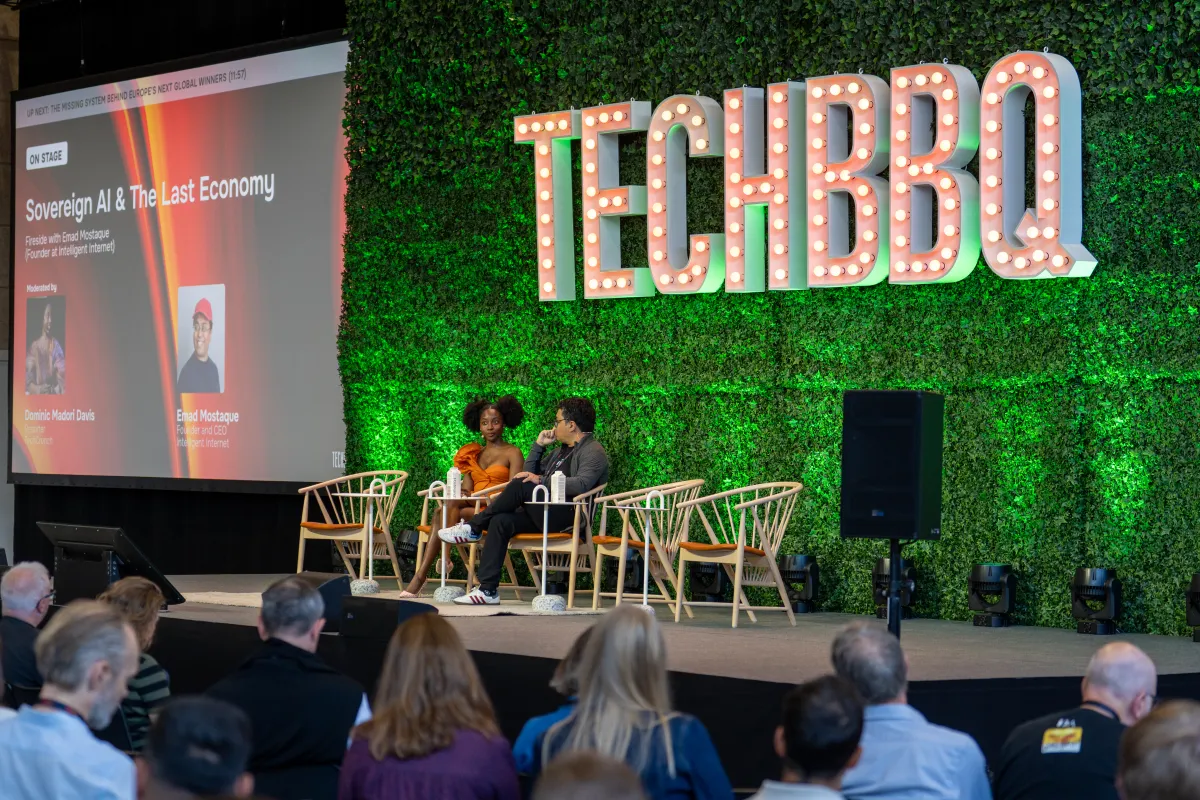
Copenhagen’s annual TechBBQ event, a nexus for European tech leaders, pulsed with a singular, urgent question this year: not just what AI can build, but who will control its destiny. As investors, founders, and operators converged under the theme of “Emerging from Agency,” the conversation repeatedly circled back to Europe’s imperative to claim sovereignty over the burgeoning power of artificial intelligence. From high-stakes panel discussions to late-night networking, the message was clear: the continent must define its own path in the AI era, or risk relinquishing its agency entirely.
Key Takeaways:
- The Quest for AI Sovereignty:TechBBQ highlighted Europe’s growing urgency to control its own AI models and underlying infrastructure, driven by incidents like Anthropic’s service restrictions, rather than relying on US or Chinese tech giants.
- Human Agency vs. Machine Autonomy:The dialogue shifted from AI capabilities to ethical considerations, focusing on human judgment, privacy concerns, and the societal implications of increasingly powerful AI agents.
- Community as a Counterpoint:Despite intense debates on complex tech and geopolitical issues, the conference emphasized the irreplaceable value of face-to-face human connection, collaboration, and relationship-building in navigating the future of AI.
The air at TechBBQ in Copenhagen wasn’t just electric with innovation; it was charged with an existential query. Among the buzzing crowds of investors, ambitious founders, and seasoned operators from across Europe, the chatter wasn’t merely about the next big thing to build with artificial intelligence. Instead, a more profound and pressing question dominated every interaction, from the main stage to the intimate cocktail hours and exclusive after-parties: who should ultimately control this transformative technology?
This pervasive focus on sovereignty — an apt reflection of this year’s conference theme, “Emerging from Agency” — gained particular resonance following a recent incident. Earlier this year, Anthropic’s advanced AI models, Mythos and Fable, became unexpectedly unavailable to users outside Europe. This disruption served as a stark wake-up call, forcing many within the European tech ecosystem to confront the precarious reality of their reliance on foreign-owned AI infrastructure.
The incident ignited serious introspection about what it truly means to own the foundational models and the underlying computational infrastructure that power this new wave of AI. The current paradigm, where Europe often “rents” this immense power from dominant players in the U.S. and China, suddenly felt unsustainable. While one startup executive lamented the significant disruption the Mythos and Fable incident caused his software team, another exhibited a more resigned pragmatism. He acknowledged the long-term geopolitical risks of such dependence but suggested that, for now, the immediate consequences were manageable.
“TechBBQ’s theme of agency felt particularly timely this year as the conversation shifted from what AI can do to what we’re actually willing to let it do,” Ellen de Brever, an angel investor and head of partnerships at the Novo Nordisk Foundation Cellerator, observed during the conference. Her perspective resonated throughout the event. While panels covered diverse topics from the future of women’s health and Nordic-African innovation collaboration to strategies for injecting more growth capital into Europe, AI was the silent, ubiquitous thread. Yet, as de Brever underscored, “the debates weren’t about smarter machines, but about human judgment and who gets to stay in the driver’s seat.” The age of AI agents, she continued, “isn’t really a story about machines gaining agency. It’s a story about humans deciding what to give up.”
Privacy, Power, and the Peril of Surrender
One of the most impactful sessions, according to attendees, featured Signal President Meredith Whittaker, who joined a panel I moderated on the delicate coexistence of privacy and AI. Whittaker, known for her candidness, did not shy away from critiquing the current trajectory. She voiced strong opposition to the integration of AI assistants and agents into fundamental operating systems, citing examples like ChatGPT’s potential deep integration with iMessage. This era of AI, she argued, is constructing a vast “data collection apparatus,” and AI labs are often leveraging clever marketing to divert public attention from the “collateral consequences” of amassing such unprecedented volumes of personal data.
“There is still a huge market need for privacy,” Whittaker asserted, delivering a powerful message to a European audience grappling with data protection regulations. “And particularly with the sovereignty concerns, we will have customers here.” Her words highlighted a potential competitive advantage for Europe: positioning itself as a bastion of privacy in an increasingly data-hungry world.
In another thought-provoking panel, I sat alongside Emad Mostaque, co-founder of Stability AI and Intelligent Internet, to explore the impact of an agentic workforce on the global economy and, critically, on personal sovereignty. Mostaque offered a stark definition: “Sovereignty is the ability to resist power being exerted over you.” He painted a chilling picture of power concentration, arguing that with a few AI labs wielding immense influence, “Inevitably, every country will be run by AI,” and consequently, “the person that controls the AI controls the country.”
Mia Negru, the advocacy and engagement director for the nonprofit Life With Artificials, later shared her reflections on Mostaque’s unsettling predictions. Her message underscored the profound societal shifts on the horizon: “If intelligent agents perform cognitive work and robots increasingly perform physical work, we may be approaching something much bigger than another technological revolution. We may have to rethink ownership, work, democracy, economic participation and eventually even who gets to participate in society.” These are not merely technical challenges, but fundamental questions that demand urgent philosophical and political engagement.
Beyond the Debates: The Irreplaceable Human Element
Yet, it wasn’t all intellectual heavy lifting. When the panels concluded, the atmosphere transformed, giving way to the lighter, yet equally vital, conversations of happy hours and rooftop soirées. These social gatherings served as crucial decompression zones, allowing attendees to connect on a more personal level and solidify the bonds that drive collaboration.
A vibrant rooftop barbecue, generously hosted by Lovable, Nvidia, OpenAI, AWS Startups, and HSBC, provided a backdrop for discussions about Denmark’s burgeoning tech hubs. Later, at the intimate cocktail bar Bird, London’s Ada Ventures hosted a gathering where I delved into the exciting advancements in women’s brain health with an innovative health tech founder. The pinnacle of the social events was arguably the speakers’ dinner, held on a picturesque island nestled in the heart of Copenhagen, where international press members mingled while mesmerized by a display of fire dancers. The evening’s conviviality stretched into an after-party upstairs, tempting everyone to linger for “just one more drink” until the bar eventually closed.
“In a room full of conversations about machines, the most memorable moments still come from the simplest thing,” Ellen de Brever reflected, echoing a sentiment widely shared. “Human connection, face-to-face, building relationships, sharing ideas, and reminding each other of what technology can never quite replace.” These moments of genuine interaction underscored the fact that even as we grapple with the most complex technological evolutions, the human element remains at the core of innovation and problem-solving.
Ultimately, TechBBQ 2024 served as a potent reminder that Europe stands at a pivotal juncture in the global AI race. The discussions moved beyond admiring AI’s capabilities to wrestling with its implications for governance, privacy, and societal structures. The calls for European AI sovereignty were not merely nationalistic but pragmatic, driven by a desire for resilience and control over critical future infrastructure. The conference provided a crucial forum for leaders to articulate these concerns and begin charting a course for a future where Europe not only participates in the AI revolution but truly shapes its ethical and operational framework.
Bottom Line:
TechBBQ vividly underscored that for Europe, the age of AI is fundamentally about agency. The continent faces an urgent imperative to transition from being a consumer of externally developed AI to a sovereign architect of its own digital future. This means not only investing in indigenous AI talent and infrastructure but also embedding European values of privacy and democratic control into the very fabric of its technological advancements. Failure to secure this AI sovereignty risks ceding unprecedented power to external actors, potentially compromising economic independence, data privacy, and the very fabric of societal governance for generations to come. The message from Copenhagen is clear: the time for Europe to emerge from agency and define its AI destiny is now.
When you purchase through links in our articles, we may earn a small commission. This doesn’t affect our editorial independence.
{content}
Source:{feed_title}