
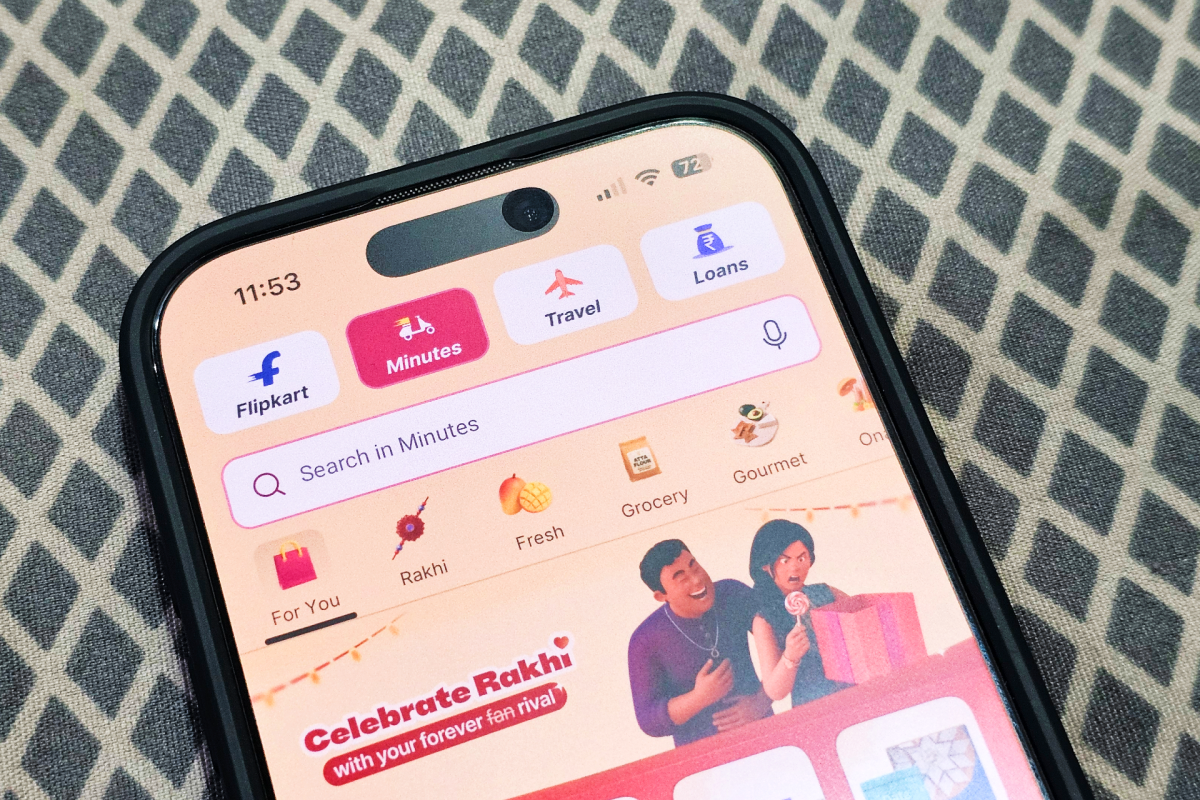
Indian startups spent years getting consumers accustomed to having groceries and everyday goods delivered within minutes. Now Walmart-owned Flipkart is rapidly closing the gap with those quick-commerce pioneers, as global rival Amazon mounts its own push into instant delivery.
Key Takeaways
- Flipkart Minutes’ Explosive Growth:Despite being a late entrant, Flipkart’s quick-commerce service, Minutes, has rapidly scaled to over a million daily orders, aggressively challenging established players like Swiggy Instamart and marking a significant shift in India’s e-commerce landscape.
- Intensifying Competitive Arena:The quick commerce market is a fierce battleground, with incumbents like Blinkit and Zepto maintaining strong leads, while Amazon Now also rapidly expands, making instant delivery a critical strategic pillar for all major e-commerce entities.
- Irreversible Consumer Shift:Quick commerce is no longer a niche service but a fundamental expectation, driving massive infrastructure investments and transforming shopping habits in India, cementing instant delivery as the new standard for a growing range of goods.
India’s Quick Commerce Race Heats Up: Flipkart and Amazon Challenge the Pioneers
India’s dynamic e-commerce sector is witnessing an unprecedented acceleration in quick commerce, a model that promises groceries and everyday essentials delivered to your doorstep within minutes. For years, domestic startups like Swiggy Instamart, Blinkit, and Zepto have cultivated consumer expectations for ultra-fast delivery. Now, the landscape is being dramatically reshaped as global giants, led by Walmart-owned Flipkart and its formidable rival Amazon, aggressively pivot into this high-stakes arena, rapidly eroding the lead of the pioneers.
Flipkart Minutes: A Latecomer’s Rapid Ascent
Launched just in August 2024, Flipkart Minutes has swiftly emerged as a formidable force in the quick commerce space. In a remarkable display of scaling prowess, the service now fulfills an impressive 1.1 million to 1.2 million orders daily. This figure represents a staggering increase from approximately 390,000 to 400,000 orders just last November, indicating an exponential growth trajectory. This puts Flipkart Minutes on the heels of Swiggy’s Instamart, which currently processes around 1.4 million orders per day, effectively closing a significant gap in a remarkably short period.
Flipkart’s late entry into a market already dominated by established players makes its rapid ascent particularly noteworthy. Instamart, a venture of food-delivery behemoth Swiggy, debuted in 2020. Zepto followed in 2021, both capitalizing on the pandemic-driven surge in online deliveries. Blinkit, with roots tracing back to the 2013 online grocery platform Grofers, holds the largest market share. Yet, Flipkart, leveraging its immense resources and existing ecosystem, is demonstrating that market leadership is not insurmountable.
Infrastructure and Strategic Advantages Fuel Growth
The engine behind Flipkart Minutes’ explosive expansion is an aggressive build-out of its micro-fulfillment center (MFC) network. These small, strategically located warehouses, designed to facilitate rapid deliveries, have surged from just 340 a year ago to approximately 600 in January, and now stand at an impressive 1,020 to 1,050. The company’s ambition is clear: it plans to add around 100 such facilities monthly, aiming for a total of 1,500 by the end of 2026. This extensive infrastructure is critical for achieving and maintaining ultra-fast delivery times.
Beyond physical infrastructure, Flipkart possesses a profound strategic advantage: its vast, pre-existing e-commerce customer base. The company has invested years and billions of dollars in acquiring and retaining these consumers, providing Minutes with a ready and receptive audience for its faster delivery options. Satish Meena, an adviser at Datum Intelligence, underscores the significance, stating, “Flipkart is already a serious player. Once you open 1,000 dark stores and [are] doing a million orders per day, it’s serious enough.”
Deepening Customer Engagement and Expanding Offerings
The success of Flipkart Minutes isn’t solely about new acquisitions; it’s also about fostering strong customer loyalty and increasing engagement. Data reveals that approximately 65% to 70% of monthly purchasers on the service are repeat buyers, a testament to its stickiness. Furthermore, transactions per customer have seen a substantial increase, rising 50% to 60% compared to a year earlier, indicating growing reliance on the service for daily needs.
Customers are spending an average of ₹400 to ₹500 (approximately $4.20–$5.20) per order, with fast-moving categories including fruits and vegetables, staples, dairy, and meat. Recognizing evolving consumer preferences, Flipkart is also strategically expanding its selection to include higher-end gourmet products, such as organic and artisanal items. This move aims to capture a larger share of customers’ wallet, solidifying Minutes as a comprehensive solution for diverse grocery needs. Remarkably, even with this rapid expansion and diversified product range, the average delivery time has improved, falling to about 11 minutes from 13 minutes a year ago, showcasing operational efficiency.
The Broader Quick Commerce Battlefield: Incumbents and Amazon’s Counter-Punch
While Flipkart makes significant inroads, the quick commerce market remains intensely competitive, with formidable incumbents holding substantial leads. Blinkit continues to dominate with an estimated 3.4 million to 3.6 million daily orders, followed by Zepto at about 2.4 million to 2.6 million, according to Datum Intelligence. Swiggy’s Instamart, though now facing Flipkart’s challenge for the number three spot, still boasts a substantial scale with over 14 million monthly transacting users and operates across more than 130 cities with over 1,200 dark stores. Instamart has also made strides in improving its financial health, with over 45% of its dark-store network now contribution-margin positive.
Adding another layer of intense competition, Amazon is equally determined to secure its share of India’s burgeoning quick commerce market. The Seattle-based behemoth is aggressively expanding Amazon Now, its own instant-delivery service, integrating it deeply into its existing e-commerce ecosystem. During CEO Andy Jassy’s visit to India in June, Amazon highlighted Now as its fastest-growing business in the country, with orders doubling every quarter since its launch. The company has ambitious plans to extend the service to over 300 cities and establish a network of more than 1,000 micro-fulfillment centers, complemented by larger facilities to broaden the product range available for minutes-fast delivery.
Quick Commerce: A Strategic Imperative and Irreversible Shift
The aggressive expansion by both Flipkart and Amazon into quick commerce is as much a defensive maneuver as it is an offensive strategy. As consumers increasingly experience the convenience of immediate deliveries for a range of products, their expectations are recalibrating. E-commerce giants risk losing a significant volume of transactions to specialist quick-commerce platforms if they fail to offer comparable speed. Satish Meena aptly captures this shift: “Can you go back to scheduled delivery now in grocery? No. You will not go back.”
This dynamic highlights a broader trend: quick commerce is not merely a transient fad but a fundamental transformation in how Indians shop online. This shift persists even when broader consumer demand shows signs of weakness, as noted by Bernstein analysts. Their recent report indicated that despite a softening in consumption growth in July, the migration towards quick commerce and e-commerce continued unabated, with instant delivery platforms recording robust growth in monthly active users.
Attempts to reach Flipkart, Amazon, Swiggy, Zepto, and Blinkit parent Eternal for comment were unsuccessful.
The Bottom Line
The Indian quick commerce market is undergoing a profound transformation, evolving from a niche service offered by agile startups to a core battleground for the nation’s e-commerce titans. Flipkart Minutes’ meteoric rise, fueled by aggressive infrastructure expansion and leveraging its vast customer base, along with Amazon Now’s parallel push, signifies that instant delivery is no longer an optional add-on but a critical strategic imperative. This intense competition is not just about market share; it reflects an irreversible shift in consumer behavior, where the expectation of immediate gratification is reshaping the future of retail across India. Companies that fail to adapt to this lightning-fast delivery paradigm risk being left behind in a market where speed is the ultimate currency.
When you purchase through links in our articles, we may earn a small commission. This doesn’t affect our editorial independence.
{content}
Source:{feed_title}