
Key Takeaways:
- The escalating public backlash against AI and data centers is creating a significant divide between the tech industry’s optimistic vision and wider societal concerns.
- Community opposition to data center development is intensifying, leading to project delays and new legislative guardrails, as residents prioritize local control and environmental health over perceived economic benefits.
- Beyond technical debates, the conversation around AI and data centers has become a flashpoint for broader anxieties about economic inequality, job displacement, and accountability for powerful tech entities.
Beyond the Code: How AI’s Infrastructure is Sparking a Societal Backlash
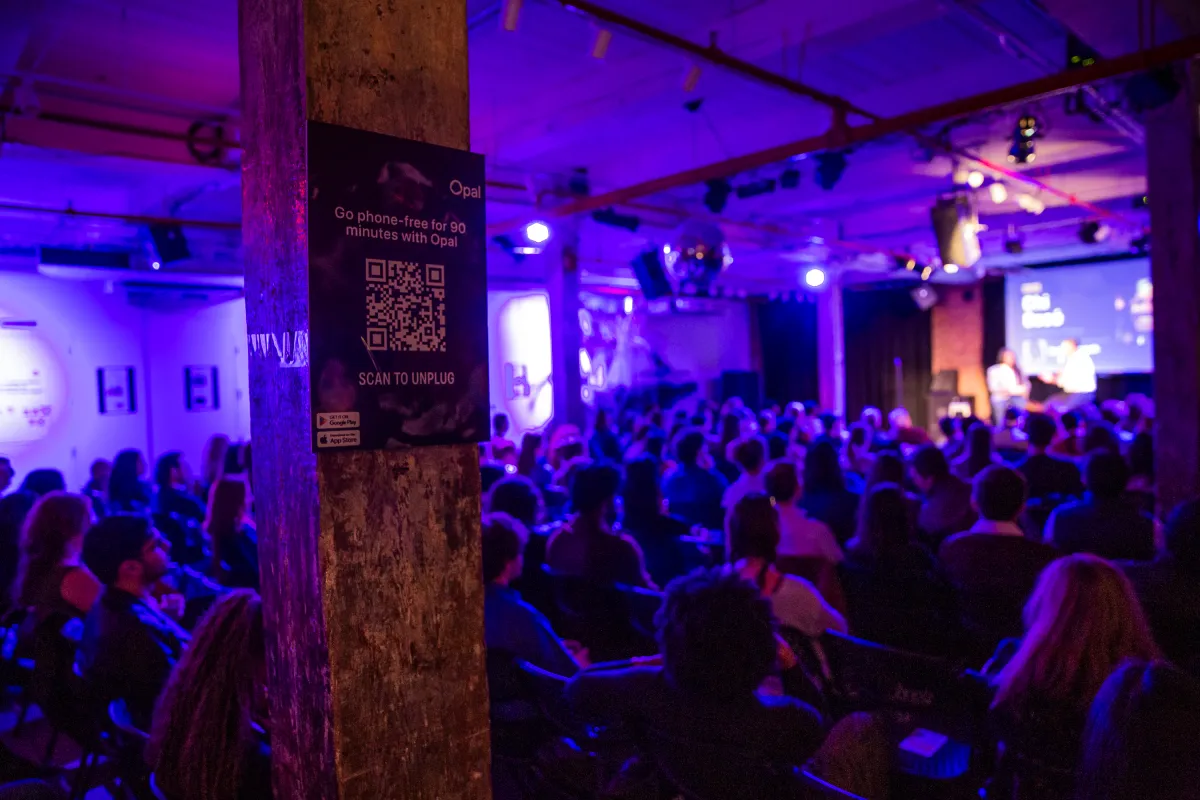
A vibrant Brooklyn warehouse, usually a canvas for art or industry, transformed into a hub of political discourse on a recent Thursday evening. Dressed in neon yellow heels and a floral mini dress – because, well, it’s New York – I joined a gathering teeming with media professionals, tech innovators, and policy advocates. The occasion was a midterm election event hosted by Newsreel, the media company founded by former Forbes and Newsweek reporter Jack Brewster. With a lineup that included Kenneth Schlenker of Opal and Aryan Banjan of Barza, the stated goal was clear: for attendees to “put their phones away and talk to each other about the election, five days out.” Yet, as the evening unfolded and the blue-lit space filled, a different, more potent conversation dominated every corner of the room: the escalating impact of AI, the physical footprint of data centers, and the growing backlash against a perceived technocratic future.
The Widening Chasm: Tech’s Ambition Meets Public Apprehension
For those embedded within the tech ecosystem, the promise of Artificial Intelligence often shines brightly. My daily interactions as a tech reporter frequently involve conversations with innovators brimming with ambition and unbridled optimism about AI’s potential to revolutionize industries, enhance efficiency, and solve complex global challenges. This internal narrative, however, often clashes starkly with perceptions beyond the industry’s confines. What appears as progress and innovation from within the tech bubble is increasingly viewed with skepticism, concern, and even alarm by the general public.
This disconnect, a profound and rapidly widening chasm, has transformed the abstract concept of AI into a tangible, contentious issue. It’s no longer just about algorithms; it’s about the physical infrastructure that powers them – data centers – and the socio-economic implications they bring. The burgeoning technocracy, symbolized by these colossal digital fortresses, has become a potent ballot-box issue, demonstrating a surprising capacity to sway midterm races and local elections.
Data Centers: The Tangible Embodiment of Tech’s Impact
The abstract fears surrounding AI find their concrete manifestation in the rapid proliferation of data centers. These vast complexes, indispensable for processing the immense datasets that fuel AI, are increasingly seen not as symbols of progress but as contentious, often unwelcome, neighbors. The backlash is not merely rhetorical; it has quantifiable consequences. According to a recent report from Data Center Watch, a staggering almost $200 billion in data center projects faced delays, stalls, or outright blockages in the first half of 2026 alone. This unprecedented level of opposition stems directly from mounting political and community resistance.
Across the United States, states like Pennsylvania, Georgia, Texas, New York, and Virginia are actively grappling with the implications of this rapid development. Legislators and local officials are now considering, or actively implementing, more stringent guardrails and demanding greater transparency around data center construction and operation. Virginia, already dubbed the “data center capital of the world,” stands as a stark example, with hundreds of new facilities planned amidst growing public outcry. The sheer scale and speed of these developments are forcing communities to confront issues ranging from environmental impact and energy consumption to local resource strain and land use conflicts.
Echoes of Concern: Policy Makers and Public Advocates Speak Out
The undercurrent of discontent was palpable even before my designated panel on data centers. New York City Council member Chi Ossé, in a preceding fireside chat, encapsulated a sentiment increasingly common among public servants. While not overtly hostile to AI – he admitted he doesn’t “really use it” – Ossé’s focus was squarely on accountability. He championed holding tech executives to higher standards, advocating for increased taxation on trillionaires like Elon Musk, and demanding that CEOs who speak of technologies that “could deplete 10% of human civilization” be compelled to testify before Congress. His perspective, a blend of democratic socialism and a “law and order” ethos, highlighted a growing desire for checks and balances on unchecked technological power.
Taking the stage to moderate my own panel on data centers, alongside technology and human rights researcher Maia Woluchem and environmental and public health advocate Hilary Flint, I decided to gauge the room’s temperature directly. My question, “Who here is pro-AI data center?”, was met with an immediate and resounding chorus of boos. The visceral reaction confirmed the deeply rooted anxieties pervading the audience. Our subsequent discussion delved into the core grievances: allegations of opaque dealings between large tech corporations and local officials, leading to the secretive development of multi-billion-dollar data centers. The insidious nature of these projects, often obscured by complex zoning regulations, means communities frequently find themselves facing a fait accompli, with little recourse to protest once construction is underway.

Beyond Bytes: The Human Cost of Unchecked Growth
The visceral opposition to data centers is rooted in more than just NIMBYism; it’s a symptom of deeper societal anxieties. As communities grapple with rising costs of living and a dwindling sense of control over their futures, the rhetoric from some tech leaders about AI replacing human workers, or even threatening human civilization, strikes a particularly discordant note. Data centers, therefore, become the physical embodiment of these fears – tangible monuments to a tech class perceived as detached, powerful, and unaccountable. Residents express profound concerns over environmental degradation, increased energy demands, potential health risks, and a fundamental loss of local autonomy in decision-making.
During our panel, when I raised the argument of economic benefits that some communities might reap from data center developments, Hilary Flint’s response cut to the core of the issue: “What is a life worth?” She articulated that despite any promised financial incentives, communities protest because they “value their lives a little bit more than a temporary check.” This sentiment underscores a critical perception: that the long-term well-being and environmental integrity of a place are not commodities to be traded for short-term economic gains, especially when those gains are often perceived as disproportionately benefiting external corporations.
The persistence of this theme was evident even in the subsequent panel, which was ostensibly focused on the future of the Democratic Party, featuring NewsNation host Batya Ungar-Sargon, political strategist Morris Katz, and Vox’s Astead Herndon. Despite the different topic, the conversation inevitably circled back to data centers. Ungar-Sargon acknowledged the complex dynamics at play, noting the support some labor unions lend to data center projects due to the promise of jobs. However, she implicitly highlighted the temporary nature of these benefits, as construction jobs are not permanent. She drew a poignant parallel to the Rust Belt era:
“There used to be a lot of pride in a community in the Rust Belt about very ugly, enormous buildings in their communities because everybody worked there,” she remarked, referencing an earlier observation I’d made about the aesthetic impact of data centers. “And they knew that building represented prosperity for themselves, stability for their children, and a future and a piece of the American dream.”
Her words resonated deeply, suggesting that for many, the modern data center, despite its advanced purpose, fails to offer the same sense of collective ownership, stable employment, or shared prosperity that industrial behemoths once did. Instead, they represent something alien – a silent, consuming entity that offers little in return for the disruption it causes.
Bottom Line
The Brooklyn midterm event, intended to foster dialogue on political futures, instead served as a powerful microcosm of a much larger national tension. The overwhelming focus on AI and data centers revealed that the public’s anxieties are no longer abstract technological fears but concrete concerns about accountability, community control, and the equitable distribution of progress. The tech industry can no longer afford to operate in a bubble, assuming that innovation alone will be celebrated. Instead, it must actively engage with and address the legitimate fears and grievances of communities, seeking genuine partnership rather than merely presenting a fait accompli. The future of technology, and indeed the “American Dream” it purports to enhance, hinges on bridging this chasm with transparency, empathy, and a commitment to shared societal well-being.

## Newsreel’s Midterm Madness Reveals Tech Backlash: AI and Data Centers Spark Voter Fury
### Key Takeaways
1. **AI & Data Centers Go Mainstream Political:** These once-niche tech topics are now central to voter discourse, evolving into potent election issues with distinct anxieties across rural (job displacement) and urban (profit distribution) communities.
2. **Skepticism Runs Deep:** Despite tech’s promises, a pervasive distrust remains regarding its impact on labor, job security, and the outsized influence of “Big Money” in politics, echoing sentiments from Rust Belt states to tech hubs.
3. **The Human vs. Machine Aesthetic:** A cultural counter-movement is quietly gaining traction, with a growing perception that AI-generated art signals “cheapness,” prompting luxury brands to pivot back to handmade, artisanal creativity.
—
The air in the Brooklyn warehouse hummed with a different kind of electricity than usual. It wasn’t just the techno beats that would later fill the space, but the palpable tension surrounding technology’s role in society. At Newsreel’s “Midterm Madness” event, what began as a panel discussion quickly revealed a surprising pivot: the impending midterm elections weren’t just about traditional politics; they were becoming a referendum on AI and the sprawling data centers powering it.
As a tech journalist, I’ve seen countless discussions about innovation and disruption. Yet, this gathering felt distinct. It wasn’t just the usual suspects from the tech bubble dissecting industry trends. Here, amidst conversations that drifted from policy to personal anecdotes, a clear signal emerged: the public’s perception of tech, especially AI and its infrastructure, is rapidly shifting from awe to apprehension.
### The Unsettling Buzz: AI & Data Centers as a Political Hot Potato
The panel discussion quickly gravitated towards the societal impact of AI and data centers. Speakers like Herndon highlighted the “lack of consent” he witnessed among Republicans in Rust Belt states, where the promise of tech innovation often clashes with the reality of economic displacement. He recalled Vivek Ramaswamy facing boos for similar sentiments in Ohio, underscoring a deep-seated frustration. Meanwhile, Katz voiced a powerful skepticism, noting, “It’s the same people who have taken so many union jobs away… the same institutional powers that have robbed labor and working people of jobs and profit. Now coming back to essentially finish the job and take whatever scraps remain.” This sentiment wasn’t confined to the stage; sticky notes along the warehouse walls, answering questions like “Will we ever be able to get Big Money out of politics?”, echoed a collective yearning for change. “God, I hope so,” one note simply stated.
After the panel concluded and the music kicked in, those intense dialogues only moved into smaller, more intimate circles. I asked Brewster, one of the event organizers, if he was surprised by the pervasive focus on AI and data centers. His answer was telling. “It came up in every conversation on stage, and it was the second most common topic in the questions people sent us when they RSVP’d,” he revealed. This wasn’t just a niche concern for tech insiders; it was resonating even in New York, a city where the physical footprint of data centers isn’t immediately obvious. “AI has become an election issue for regular voters,” Brewster emphasized. “In rural communities, the backlash is about feeling replaced. In a place like Brooklyn, it’s more about who gets rich from it.” The narrative, it seems, has broadened beyond Silicon Valley boardrooms, entering the homes and polling booths of everyday Americans.
### Beyond the Hype: The “Craziest” Tech Moments and a Shift in Perception
As I milled around, probing attendees for the “craziest thing” they’d witnessed in tech this year, the answers further underscored the deepening public engagement with – and sometimes exasperation by – the industry. Two tech founders pointed to the AI assistant startup Instinct, likely alluding to its rapid rise or perhaps some controversial aspect that had made headlines. Intriguingly, a non-tech person simply named Sam Altman, highlighting how figures at the helm of major AI advancements have themselves become lightning rods for public attention and scrutiny.
Another fascinating insight came from a non-tech individual who brought up the proliferation of deepfakes and AI art. Her observation was particularly prescient: AI art, she argued, is beginning to signal cheapness. This isn’t just an aesthetic critique; it’s a commentary on perceived value and authenticity. The implications are already rippling through the market, particularly in the luxury sector. Brands like Prada, for their holiday campaign, are deliberately featuring hand-drawn illustrations, while Hermès has been spotlighting artists’ handmade work on Instagram. This isn’t a mere stylistic choice; it’s a strategic pivot, an implicit acknowledgment that in an era saturated with digitally generated content, the human touch, the undeniable mark of artisanal craftsmanship, is becoming the ultimate luxury differentiator. It suggests a growing cultural resistance to the perceived soullessness or ease of AI creation, valuing genuine human effort above all.

### Local Battles, Global Implications: The Data Center Uprising
The growing concern about data centers isn’t just an abstract economic discussion; it’s a very real, very local battle. On my way out, a software engineer shared a story that brought the issue home. The “craziest thing” she’d seen this year, she joked, was someone painting their nails orange for Halloween and being asked if it was a tribute to the Anthropic IPO – a testament to how deeply tech has permeated even our casual cultural references. I had to admit, I once wore a burnt orange dress and fleetingly imagined myself as the Claude logo.
But her anecdote quickly turned serious. She shared that data centers are rapidly popping up in her Southern California hometown, igniting a fervent community backlash. For the first time, I truly considered how I’d feel if such a behemoth materialized in my own backyard. Her community, predominantly Chinese immigrants, is actively resisting. Neighbors are displaying signs in their yards featuring dragons symbolically choking a data center – a powerful image that speaks volumes about their fear for their cultural landscape and local environment. The universality of this sentiment was evident, she noted, as these protest signs have since been translated into other languages, signaling a broader, multi-ethnic front against what many perceive as invasive, resource-intensive industrial complexes threatening their way of life.
### Bottom Line
The “Newsreel Midterm Madness” event offered a stark reflection of a turning tide: the honeymoon phase between the public and the tech industry, particularly concerning AI and data infrastructure, appears to be over. From the Rust Belt to Brooklyn, and even in diverse Southern California communities, a potent mix of economic anxiety, political skepticism, and cultural pushback is brewing. Voters are no longer passive recipients of innovation; they are actively questioning tech’s societal cost, demanding accountability, and even influencing aesthetic trends. As we head into future elections, the impact of AI and the very physical presence of data centers will undoubtedly remain central, forcing politicians, and indeed the tech industry itself, to confront a newly awakened and increasingly vocal populace.
When you purchase through links in our articles, we may earn a small commission. This doesn’t affect our editorial independence.
{content}
Source:{feed_title}