
Check out what’s clicking on FoxBusiness.com.
Key Takeaways for Investors and Industry Observers:
- Strategic Experiential Marketing:Miller Lite’s “Matchball” campaign leverages the immense cultural and commercial pull of the 2026 FIFA World Cup as a co-host, employing a unique, shareable product to create buzz and foster deep consumer engagement beyond traditional advertising. This aims to drive brand loyalty and capture market share in a highly competitive beverage sector.
- Scarcity & Digital Engagement Drives Demand:By implementing limited-time online drops and a social media contest, Miller Lite is strategically generating urgency and exclusivity. This digital-first approach not only maximizes reach to a tech-savvy audience but also provides valuable consumer data and amplifies organic brand visibility through user-generated content, all while maintaining an accessible price point ($19.75) rooted in brand history.
- Capitalizing on U.S. Soccer Growth:The campaign targets the rapidly expanding U.S. soccer fan base, which is increasingly diverse and affluent. Miller Lite is positioning itself as an integral part of the gameday experience, tapping into national pride and communal viewing habits, forecasting strong sales growth and brand association with a premier global sporting event on home soil.
It’s already less than one month until the 2026FIFA World Cupkicks off in the United States, Mexico and Canada, and one top beverage company is celebrating the biggest tournament in sports in a very unique way.
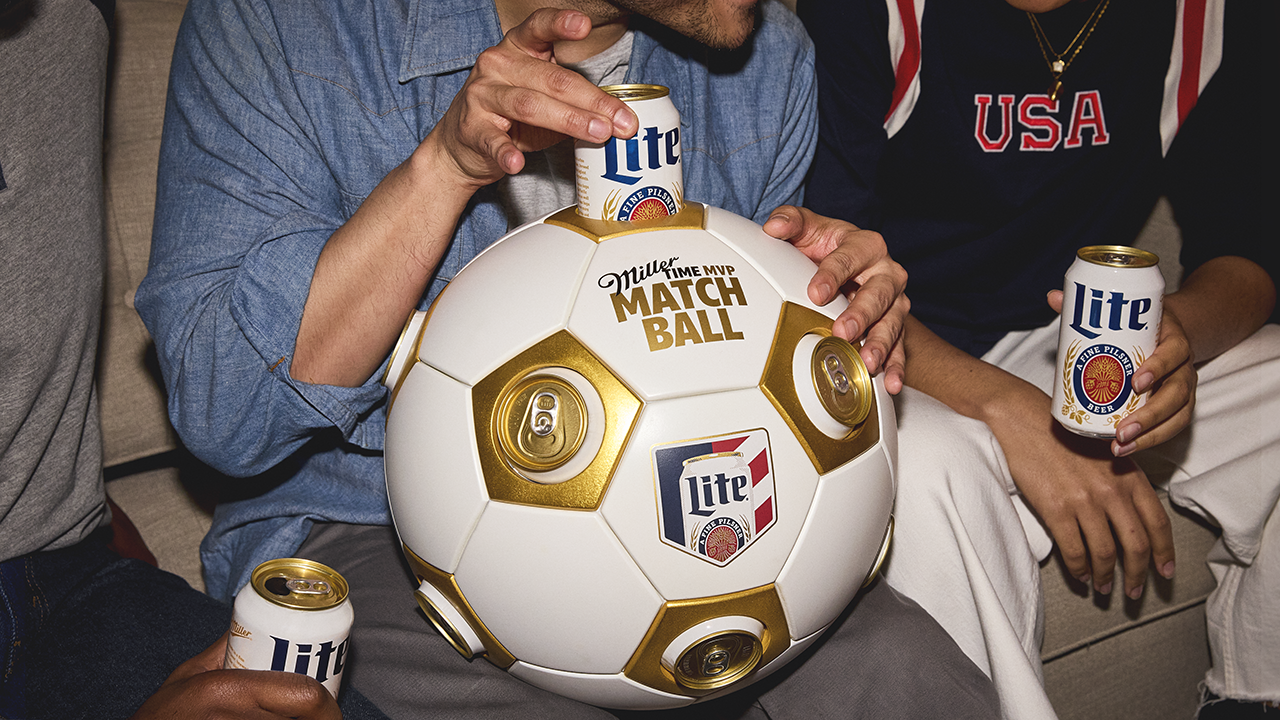
Miller Lite is debuting a first-of-its-kind Matchball for the World Cup’s true MVPs — the fans.
The limited-edition Miller Time MVP Matchball, a white and gold ball 1.5 times larger than a regulation-size ball that can hold 12 Miller Lites, and is fully reloadable throughout match days.
CLICK HERE FOR MORE SPORTS COVERAGE ON FOXBUSINESS.COM
The Miller Time MVP Matchball has been launched by Miller Lite, celebrating the true MVPs of the FIFA World Cup — the fans.(Miller Lite / Fox News)
The U.S. beverage market, particularly the light beer segment, is a fiercely contested arena, marked by maturing consumption trends and the rise of diverse alternatives from craft beers to hard seltzers and non-alcoholic options. Against this backdrop, Miller Lite, a flagship brand of Molson Coors Beverage Company, is executing a calculated marketing offensive designed to not only celebrate the forthcoming 2026 FIFA World Cup but to strategically fortify its market position and engage a crucial demographic: the burgeoning American soccer fan base.
This initiative, centered around the “Miller Time MVP Matchball,” transcends mere advertising; it’s a sophisticated play in experiential marketing. Priced accessibly at $19.75 – a nostalgic nod to Miller Lite’s founding year – this oversized, 12-pack-capacity soccer ball is more than just merchandise. It’s a social lubricant, a conversation starter, and a tangible emblem of shared celebration. The timing is impeccable, capitalizing on the mounting excitement as the U.S. prepares to co-host the global tournament. For Molson Coors, this represents a significant investment in brand equity, aiming to inextricably link “Miller Time” with the communal joy and national pride that the World Cup ignites.
Courtney Benedict, vice president of marketing for the Miller Lite Family of Brands, articulated the strategic intent, stating, “This summer is a massive moment for soccer and beer fans alike… The Matchball is our way of celebrating and rewarding the fans who bring the traditions and unmatched energy to every watch party.” Her statement underscores a deeper understanding of modern consumer behavior: loyalty is increasingly forged through authentic experiences and emotional connections, rather than just product attributes. By identifying fans as the “MVPs,” Miller Lite cleverly elevates its target audience, fostering a sense of belonging and appreciation that can translate into sustained brand preference.
US SOCCER GREAT THINKS AMERICAN TEAM CAN SHOCK THE WORLD AT UPCOMING WORLD CUP
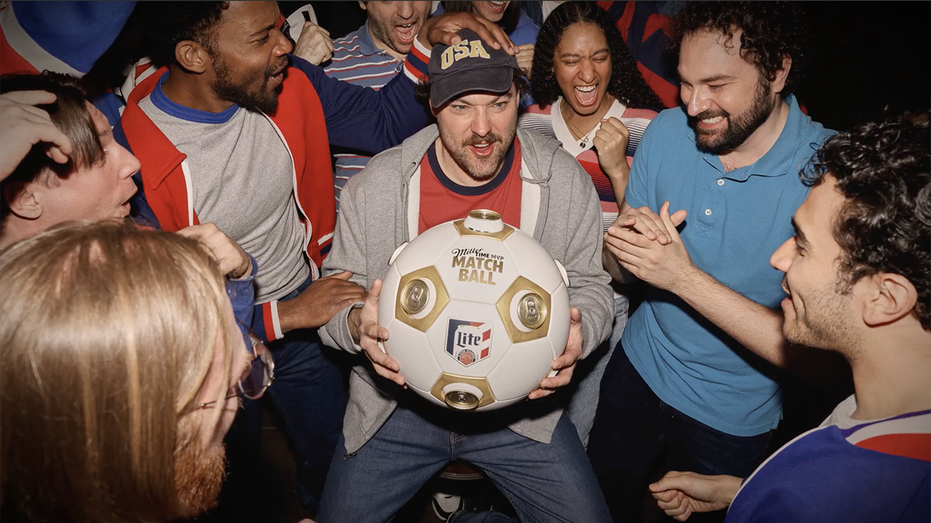
A general view of a Miller Lite promotion shot for their Miller Time MVP Matchball, which will be launched on May 20.(Miller Lite / Fox News)
The distribution strategy for the Matchball is equally shrewd. Implementing limited-edition drops on May 20 and June 3 creates a sense of scarcity and urgency, mimicking successful streetwear or tech product launches. This “drop culture” approach not only generates immediate buzz and sell-through but also incentivizes prompt engagement from consumers. For Miller Lite, this direct-to-consumer (DTC) model for unique merchandise offers invaluable data on consumer interest and purchasing patterns, complementing traditional retail channels. Furthermore, the social media contest, where fans nominate “MVPs,” harnesses the power of user-generated content, expanding the campaign’s organic reach and authenticating the brand’s message without additional advertising spend.
The investment in such a campaign reflects the high stakes in sports sponsorships. Global events like the FIFA World Cup offer unparalleled reach and demographic diversity. With the U.S. set to host, the event’s cultural penetration and economic impact are projected to be substantial. Brands like Miller Lite are not just buying visibility; they are buying into a narrative of celebration, community, and national pride. This is particularly salient as the U.S. Men’s National Team (USMNT) prepares for matches against Paraguay, Australia, and Türkiye, fueling a collective anticipation that Miller Lite aims to be at the heart of. The strategic placement of these matches in major U.S. cities like Inglewood and Seattle ensures maximum exposure and congregational viewing opportunities, ideal for a product designed for group consumption.
In a competitive market dominated by giants, differentiating through innovative engagement is paramount. While competitors like Budweiser (a long-standing FIFA sponsor), Heineken, and various craft brewers will undoubtedly launch their own World Cup activations, Miller Lite’s Matchball stands out for its tangible, shareable, and functional novelty. This approach seeks to cut through marketing clutter by offering a product that enhances the viewing experience, rather than just advertising alongside it. From a financial perspective, the ROI for such campaigns is not solely measured in immediate sales lift, but in strengthened brand affinity, expanded consumer databases, and increased social currency – all critical for long-term market resilience and growth in the beverage industry.
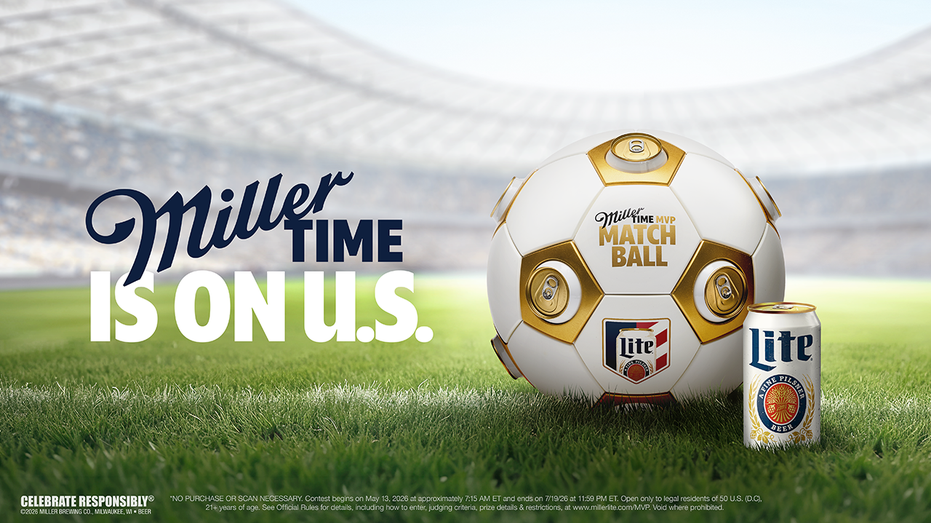
The Miller Time MVP Matchball can hold up to 12 beers in the soccer ball that’s 1.5x larger than a regulation-size one used for the FIFA World Cup. (Miller Lite / Fox News)
GET FOX BUSINESS ON THE GO BY CLICKING HERE
From there, the USMNT will have Group D matches against Australia on June 19 at Lumen Field in Seattle, Washington, followed by their last group match against Türkiye on June 25 back at SoFi Stadium.
Watch 3 Days of the FIFA World Cup for Free after 5/18 or before. Start your free trial ortry it free.
Follow Fox News Digital’s sports coverage on X and subscribe to the Fox News Sports Huddle newsletter.
Market Impact:
Miller Lite’s “Matchball” initiative is poised to significantly influence the broader beverage and sports marketing landscape. This campaign sets a precedent for how brands can move beyond traditional ad placements to create highly interactive and buzz-worthy product extensions that directly enhance the consumer’s event experience. Competitors are likely to observe the virality and engagement metrics closely, potentially spurring a new wave of experiential merchandise and scarcity-driven DTC strategies around major sporting events. Furthermore, by innovatively tapping into the growing U.S. soccer market, Miller Lite is accelerating the trend of brands investing in diverse sports fan bases, which could lead to re-evaluation of marketing budgets across different sports and cultural touchpoints. The success of this fan-centric approach could redefine expectations for how brands integrate into large-scale cultural phenomena, pushing the boundaries of what constitutes effective brand activation in the experience economy.