
Check out what’s clicking on FoxBusiness.com.
Key Takeaways:
- **Supply Chain Vulnerability & Third-Party Risk:** The incident underscores the critical importance of rigorous oversight for third-party manufacturers, particularly regarding shared equipment and allergen controls, a common challenge in the rapidly expanding specialty food sector.
- **Brand Reputation & Consumer Trust in Premium Markets:** For direct-to-consumer (DTC) brands like Fly By Jing, which command premium pricing through perceived quality and authenticity, an undeclared allergen recall can significantly erode consumer trust and brand equity built through sophisticated marketing.
- **Enhanced Regulatory Scrutiny & Allergen Awareness:** The FDA’s prompt action, coupled with growing consumer awareness and social media amplification, highlights the heightened demands on food companies for transparent labeling and robust food safety protocols, especially concerning life-threatening allergens.
A potential peanut contamination has prompted a nationwide recall of certain instant noodle packages, a development that sends ripples through the specialty food market and highlights the persistent challenges of supply chain oversight, federal regulators announced Tuesday.
Los Angeles-based Fly By Jing, a brand celebrated for its authentic Chinese flavors and premium pantry staples, voluntarily initiated the recall for select lots of its Creamy Sesame Noodles. This particular product, marketed as a protein-packed vegan noodle, now faces scrutiny after the discovery of undeclared peanuts, according to the U.S. Food & Drug Administration (FDA).
“People who have allergies to peanuts run the risk of a serious or life-threatening allergic reaction if they consume these products,” the FDA emphatically stated. This stark warning underscores the severe health implications of undeclared allergens, which can lead to anaphylaxis and, in rare cases, fatality, thereby elevating the urgency and market impact of such recalls.
“We take food quality and safety seriously, and we are deeply sorry for any concern this causes. We are committed to making this right for every customer,” Fly By Jing communicated, a standard yet critical response in crisis management aimed at mitigating brand damage and reassuring its consumer base.
CHOCOLATE RECALL HITS COMPANY’S ENTIRE PRODUCT LINEUP OVER SALMONELLA CONTAMINATION FEARS
The FDA announced a recall on an instant noodle product sold nationwide.(U.S. Food & Drug Administration / Fox News)
According to the recall notice, the company discovered that a third-party manufacturer, responsible for producing the noodles, utilized shared equipment that also processes peanuts. Crucially, this occurred “under conditions that could pose a health risk to individuals with peanut allergies.” This revelation points directly to a common vulnerability in the food manufacturing sector: the reliance on external partners and the inherent complexities of ensuring consistent allergen control across multi-facility operations. For a brand like Fly By Jing, which has cultivated a strong following through its perceived authenticity and high-quality ingredients, such a lapse in a third-party facility can carry significant reputational costs.
The affected products were distributed nationwide through a diverse and modern sales network, reflecting the evolving retail landscape for consumer packaged goods (CPG). This includes its own direct-to-consumer (DTC) website, major health-conscious retail stores such as Whole Foods Market and Thrive Market, and even emerging e-commerce platforms like TikTok Shop. This multi-channel distribution strategy, while excellent for market penetration, amplifies the logistical challenge and financial burden of a nationwide recall.
The affected products include single and four-pack containers with lot codes 8-50052-23988-6 and 8-50052-23991-6, carrying best-by dates of Oct. 15, 2026, Dec. 6, 2026, and March 23, 2027. Federal regulators added that the affected products were distributed to retailers between Feb. 1, 2026, and May 8, 2026. These specific details are crucial for consumers and retailers alike to identify and remove the compromised inventory, but also underscore the potential for a wide temporal and geographic spread before the issue was identified.
MULTIPLE SNACK MIXES RECALLED, INCLUDING TARGET PRODUCT, OVER RISK OF SALMONELLA CONTAMINATION
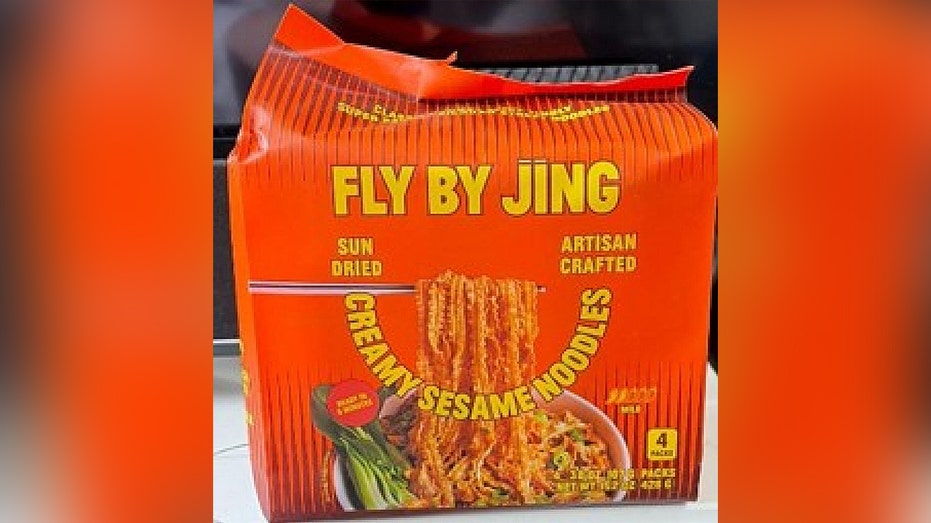
Fly By Jing, based in Los Angeles, is recalling select lots of its Creamy Sesame Noodles.(U.S. Food & Drug Administration / Fox News)
Fly By Jing is offering full refunds to those who purchased the affected items, a standard procedure designed to protect consumers and limit financial liability. Customers can return the products to their retailer for a full refund, and those who bought the items through the company’s website or TikTok Shop will also be contacted directly, showcasing the brand’s commitment to customer service amidst the crisis. The logistical undertaking of processing refunds from varied channels, including rapidly expanding platforms like TikTok, adds another layer of complexity to the recall process.
To ensure consumer safety and to rebuild trust, the company immediately stopped distribution, notified customers and retail partners, and placed all remaining inventory on hold. More importantly, Fly By Jing has also implemented stricter allergen controls with its third-party manufacturer to help prevent future issues. This proactive measure, if effectively communicated and executed, could be pivotal in demonstrating the brand’s commitment to safety and potentially recovering its market standing. In a competitive market, where consumer loyalty can be fickle, such decisive action is paramount.
The affected products were distributed nationwide through its website and retail stores.(iStock / iStock)
This incident also serves as a stark reminder for investors and stakeholders in the broader specialty food and instant noodle segments. The burgeoning market for convenient, high-quality meal solutions often relies on lean supply chains and outsourced production to meet demand. However, the trade-off can be increased exposure to quality control issues, particularly when dealing with critical health concerns like undeclared allergens. No other products from the brand were included in the safety alert, a detail that may help contain the damage to this specific product line rather than impacting the entire brand portfolio.
Customers seeking additional information may contact the Fly By Jing consumer hotline at 1-866-862-2645, or email recall@flybyjing.com. Clear and accessible communication channels are essential during a recall, not only for customer service but also for maintaining transparency and accountability in the eyes of regulators and the public.
Market Impact:
The Fly By Jing recall is poised to have a multifaceted market impact. Immediately, the company faces substantial financial costs associated with the recall itself, including logistics, refunds, and potential legal fees. More significantly, its brand reputation in the premium, Asian-inspired food segment, built on quality and authenticity, is likely to suffer, potentially leading to a temporary dip in sales and market share as consumers become wary. Competitors, especially those in the specialty instant noodle space, may see a short-term boost or, conversely, face increased scrutiny from their own distribution partners and consumers regarding their supply chain transparency and allergen protocols. For the broader food industry, this incident reinforces the need for enhanced due diligence in supplier relationships and robust internal quality assurance systems, particularly as companies increasingly leverage third-party manufacturers and diverse e-commerce distribution channels, including social media platforms, to reach their target demographics. The long-term impact on Fly By Jing will depend heavily on the effectiveness of its crisis management and its ability to visibly implement and communicate strengthened safety measures, potentially serving as a case study for growing DTC food brands.