
May 13, 2026
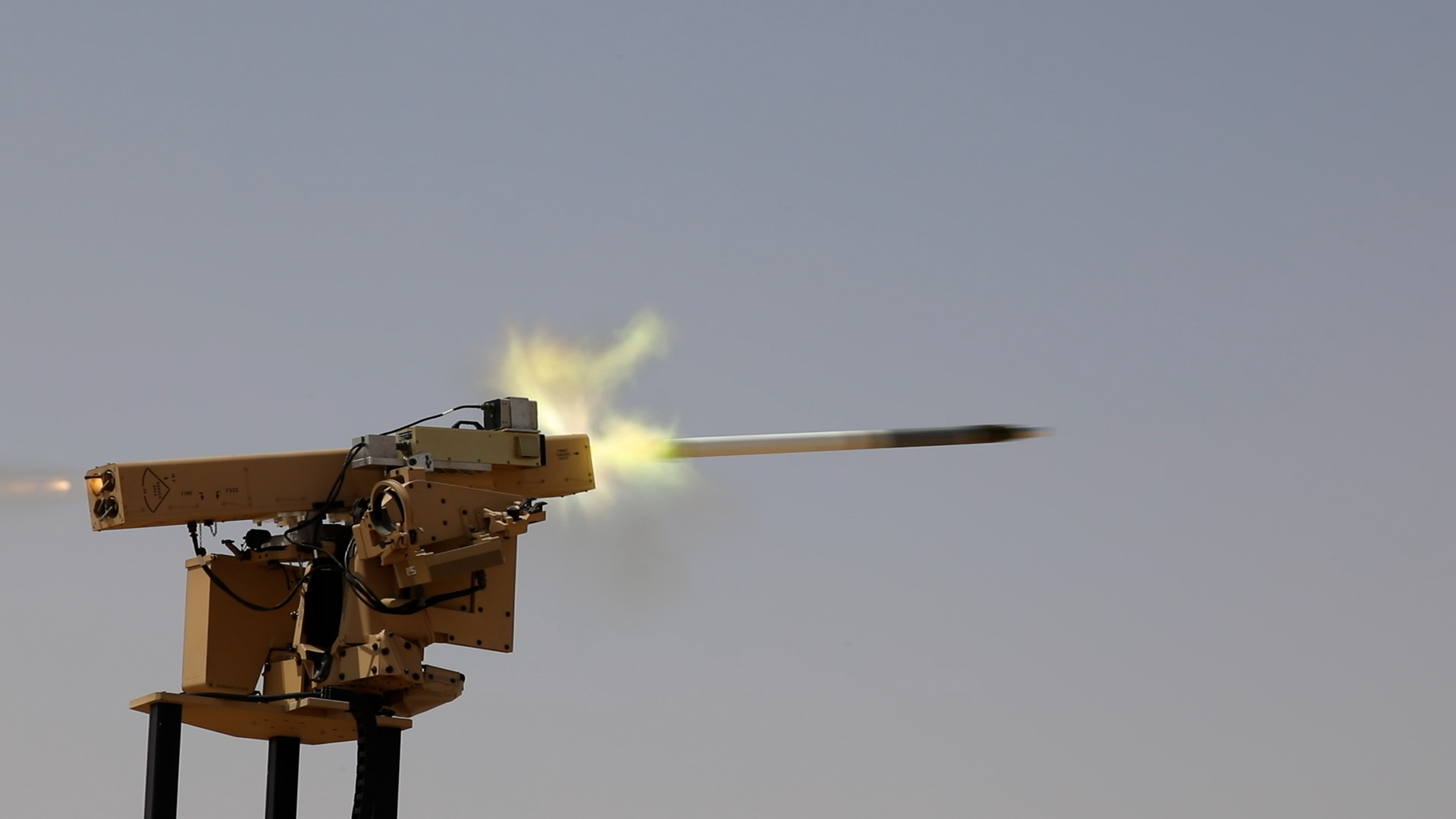
The Pentagon today announced a significant strategic shift in its approach to weapons procurement, unveiling new long-term agreements with four defense companies to rapidly develop and mass-produce low-cost cruise missiles. This initiative, dubbed the Low-Cost Containerized Missile (LCCM) program, is designed to bolster U.S. munition stockpiles and enhance military capabilities across multiple domains, with an initial focus on the U.S. Army but clear synergies with Air Force objectives for affordable munitions.
The LCCM program’s primary goal is to deliver ground-launched missiles capable of intercepting aerial threats. However, the foundational technology being developed under this umbrella is intended to be highly adaptable, allowing for deployment from air, ground, or maritime platforms through modifications to boosters and other core components. This multi-domain adaptability signals a concerted effort by the Department of Defense to achieve greater versatility and cost-efficiency in its next generation of weapons systems.
Undersecretary of War for Research and Engineering Emil Michael emphasized the program’s importance in signaling a new commitment to the defense industry. “These deals send a clear message to industry,” Michael stated in a press release, “committing the federal government to affordable, on-time delivery and sustained investment in munitions research and manufacturing. This is about building a resilient and responsive defense industrial base for the future.”
The four companies selected to participate in the LCCM program are notable for being “new entrants” to the traditional defense contracting landscape: Anduril, CoAspire, Leidos, and Zone 5. This move away from reliance on established prime contractors is a deliberate strategy by the Pentagon to foster innovation and expand its industrial capacity.
“We are moving beyond the traditional prime contractors to expand our industrial base, accelerating testing timelines, and sending a clear, long-term demand signal to innovative new entrants,” affirmed Michael Duffey, Undersecretary for Acquisition and Sustainment. This approach aims to reduce the bureaucratic hurdles and lengthy development cycles often associated with traditional defense procurement.
The LCCM program is ambitious, targeting the procurement of more than 10,000 missiles within a three-year timeframe, with production slated to commence in 2027. While the Pentagon did not disclose the specific financial value of the four individual contracts or the overall projected budget for the LCCM initiative, the scale of the intended acquisition underscores the urgency and strategic importance placed on this new class of munitions.
Though initially spearheaded by the Army, the LCCM program is closely coordinating with the Air Force’s program acquisition executive for weapons, Brig. Gen. Robert Lyons III, whose office is responsible for air-delivered munitions. This inter-service collaboration highlights a unified vision for modernizing military capabilities.
While the Air Force has not immediately provided granular details on its specific involvement with LCCM, the program’s overarching objectives align seamlessly with the Air Force’s own Family of Affordable Mass Munitions (FAMM) initiative. The FAMM program encompasses a broad spectrum of missile types, with recent efforts increasingly concentrating on cruise missile development, mirroring the LCCM’s focus.
During a Senate Armed Services Committee hearing on March 24, Brig. Gen. Lyons highlighted recent successes within the cruise missile development space. He specifically praised the rapid progression of the Extended Range Attack Munition (ERAM), which entered production just 14 months after its initial contract award. Both CoAspire and Zone 5 Technologies, now LCCM participants, secured contracts for the ERAM program in 2024, demonstrating their proven capabilities in this emerging field.
The FAMM program, which began in fiscal year 2026, is already projecting a substantial increase in funding, with the Air Force requesting over $12 billion in the 2027 presidential budget request over the next five years. This significant investment is projected to acquire approximately 28,000 units, underscoring the critical role these affordable options will play in future military strategy.
These cheaper, mass-producible options represent one crucial facet of a dual-pronged approach by the Air Force. The service plans to continue investing in highly sophisticated and expensive “exquisite” weapons, such as the Joint Air-to-Surface Standoff Missile-Extended Range (JASSM-ER), which can cost upwards of $1.5 million per round, for precision-driven missions requiring advanced capabilities. However, the introduction of more economical alternatives is deemed essential for addressing the realities of modern combat environments.
The demand for such munitions is starkly illustrated by recent operational experiences. During the first 40 days of “Operation Epic Fury,” U.S. forces reportedly struck more than 13,000 targets, according to Chairman of the Joint Chiefs of Staff Dan Caine. Tactically, it is often necessary to employ more than one munition per strike to ensure target neutralization. Experts also project that an early-stage air campaign against a peer competitor like China could necessitate an astonishing 100,000 target strikes, far exceeding current inventory and production capacities for high-cost precision weapons.
Historically, the procurement and manufacturing of expensive precision munitions have been hampered by protracted timelines, often due to material and workforce shortages, coupled with inconsistent government funding. Compounding these concerns, some defense analysts have expressed apprehension that ongoing conflicts, such as the hypothetical conflict with Iran mentioned in internal discussions, may have significantly depleted U.S. stockpiles of these critical munitions.
While Secretary of Defense Pete Hegseth has consistently maintained that current munitions stockpiles are sufficient for U.S. needs across the globe, he and other Pentagon leaders have vigorously advocated for a substantial increase in the production of both low-cost and high-cost munitions. To achieve this, they have championed innovative approaches, including targeted industry investments, the adoption of advanced manufacturing technologies like additive manufacturing, and the implementation of multiyear procurement contracts to provide greater stability and predictability to manufacturers.
Existing Missile Developments for LCCM Participants
All four companies selected for the LCCM program already have cruise missiles in various stages of development, providing a solid foundation for their contributions:
- Leidos: The company’s “Black Arrow,” designated AGM-190A by the Air Force, is a foundational technology. A May 13 Leidos press release indicated that the company plans to produce 3,000 munitions for the LCCM program, leveraging technology derived from Black Arrow. The Leidos LCCM offering is described as twice the size of the Black Arrow, featuring significantly greater fuel capacity to maximize its operational range, though a specific range figure was not publicly released.
- CoAspire: Its “GHOST,” or Rapidly Adaptable Affordable Cruise Missile-Extended Range (RAACM-ER), builds on previous successes. The RAACM, an earlier iteration, was selected as one of the Air Force’s Extended Range Attack Munitions in late 2024 and successfully conducted long-range test flights in mid-2025. The 8-foot-long RAACM is comparable in size to the existing 500-pound Joint Direct Attack Munition (JDAM), a widely used weapon on various aircraft including the B-52, B-1B, F-16, F-22A, and F-35A. CoAspire recently showcased its new RAACM-Extended Range, which incorporates a stronger booster to significantly enhance its reach. The company’s release announced that the GHOST cruise missile, the new program name for the RAACM-ER, is planned for test flights this year to support the LCCM program. “The inclusion of CoAspire’s GHOST missile in this groundbreaking program and framework agreement underscores CoAspire’s potential to revolutionize ground-launched strike capabilities, offering a boosted, extended-range solution that can be deployed across multiple platforms,” stated CEO Doug Denneny.
- Anduril: The company’s release confirmed it will deliver 3,000 of its “Barracuda-500” missiles as part of the LCCM program over the three-year procurement period. According to company data, the Barracuda carries a 100-pound payload and boasts an impressive range of 575 miles, making it a versatile option for various mission profiles.
- Zone 5: Its “Rusty Dagger” is another significant contribution. In April, the Air Force successfully tested Zone 5’s Rusty Dagger, which is one of the two types of ERAMs, on an F-16 fighter jet at Eglin Air Force Base, Florida, validating its aerial launch capabilities.
Why This Matters
The Pentagon’s Low-Cost Containerized Missile (LCCM) program represents a pivotal shift in U.S. defense strategy with profound implications for national security, future warfare, and the global defense industrial landscape. Firstly, it directly addresses the critical need for increased munition stockpiles. Recent conflicts and geopolitical tensions have highlighted that modern warfare consumes munitions at an unprecedented rate, often depleting existing inventories faster than they can be replenished. By prioritizing mass production of affordable missiles, the U.S. aims to ensure sustained operational capability in protracted conflicts or against multiple adversaries, thereby enhancing deterrence and responsiveness.
Secondly, this initiative signifies a deliberate diversification of the defense industrial base. By engaging “new entrant” companies like Anduril and Zone 5 alongside more established players like Leidos and CoAspire, the Pentagon seeks to inject innovation, foster competition, and reduce reliance on a few traditional prime contractors. This not only promises to accelerate development and reduce costs through novel approaches, but also creates a more resilient supply chain, less susceptible to single points of failure or production bottlenecks that have historically plagued high-cost programs.
Thirdly, the LCCM program underscores an evolving understanding of future warfare. The emphasis on “low-cost” and “mass-producible” suggests a recognition that overwhelming numerical advantage, particularly in contested environments, can be as crucial as individual weapon sophistication. While “exquisite” precision munitions will retain their role for high-value targets, a high volume of more economical, adaptable missiles can overwhelm enemy defenses, create dilemmas, and provide tactical flexibility across air, ground, and maritime domains. This hybrid approach to munitions procurement aims to optimize for both precision and persistence.
Finally, the success of the LCCM program could set a new precedent for defense acquisition globally. If the U.S. demonstrates an effective model for rapidly developing and fielding advanced, affordable weapons in large quantities, it could influence military procurement strategies among allies and adversaries alike. For allies, it offers a potential pathway to bolster their own defenses cost-effectively. For adversaries, it presents a new challenge in managing the sheer volume of potential threats, impacting their own defense planning and resource allocation. Ultimately, the LCCM program is not just about new missiles; it’s about reshaping the future of military readiness and strategic competition.