
Covert Israeli Military Bases Discovered in Iraq Following Shepherd’s Death
The presence of at least two covert Israeli military bases in Iraq’s rugged western desert has been revealed, following a deadly incident on March 3 involving an Iraqi shepherd. The discovery raises significant questions regarding Iraqi sovereignty, the extent of U.S. knowledge and potential complicity, and the complex geopolitical landscape of the Middle East.
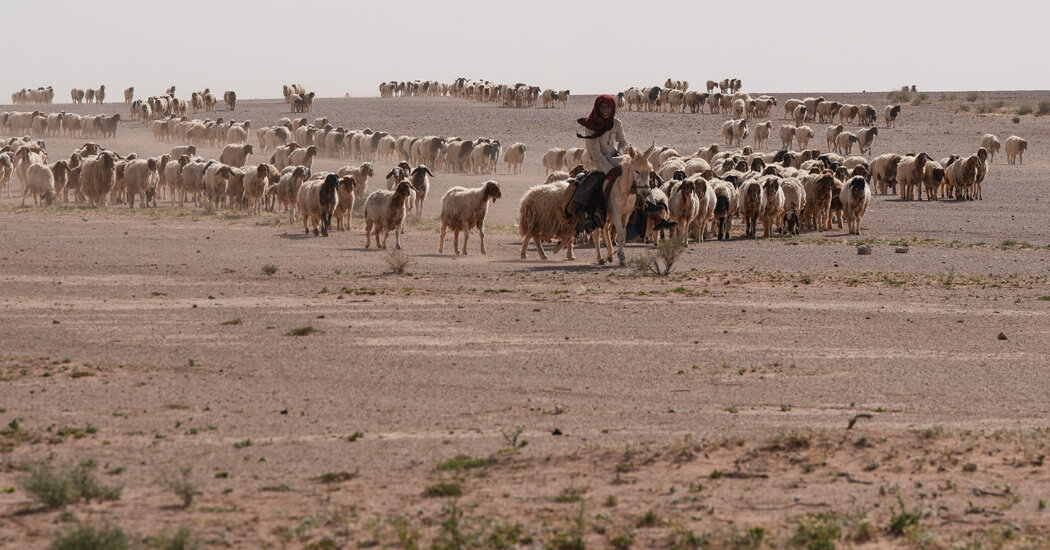
Awad al-Shammari, a 29-year-old shepherd, was reportedly killed after encountering one of these clandestine outposts. According to his cousin, Amir al-Shammari, the shepherd had departed from a Bedouin encampment for a routine grocery trip to the nearby town of al-Nukhaib. Witnesses from the encampment described a harrowing scene a few hours later, as al-Shammari’s pickup truck returned, engulfed in flames and riddled with bullets. They observed a helicopter actively pursuing the vehicle, firing repeatedly until it came to a halt in the desert sands.
Al-Shammari’s family believes his death was a direct consequence of his accidental discovery of a highly sensitive Israeli military secret. Senior Iraqi and regional officials confirmed that, sometime during his ill-fated journey, al-Shammari had contacted Iraq’s regional military command. He reported seeing soldiers, helicopters, and tents clustered around a landing strip – information that ultimately led to the uncovering of these hidden bases.
The bases, previously undisclosed in their full scope, were reportedly operated intermittently by Israel, a state considered hostile by Iraq, for well over a year. While The Wall Street Journal had previously reported on the existence of one such Israeli outpost in Iraq, Iraqi officials speaking to The New York Times confirmed the presence of a second, previously unknown base, also located in Iraq’s western desert.
According to regional security officials, the base discovered by Mr. al-Shammari predated the current conflict involving the United States, Israel, and Iran. It was reportedly utilized during a “12-day war against Tehran” in June 2025. Israeli forces began preparing for these makeshift bases as early as late 2024, identifying remote locations suitable for future operational use. The primary purpose of these outposts, according to two regional security officials, included providing air support, refueling capabilities, and medical treatment for Israeli personnel, thereby shortening flight distances for Israeli aircraft targeting Iran.
The Israeli military has consistently declined to comment on the camps or on the circumstances surrounding Mr. al-Shammari’s death, despite repeated requests for information.
The witnesses to Mr. al-Shammari’s death, as well as most officials who discussed the Israeli bases, spoke on condition of anonymity, citing significant concerns for their safety and the sensitivity of the security matter. The information they provided suggests that at least one of the bases – the one Mr. al-Shammari stumbled upon – was known to Washington since June 2025 or potentially earlier. This suggests that the United States, a key ally to Baghdad, may have withheld critical intelligence from Iraq regarding the presence of hostile foreign forces on its sovereign territory.
Waad al-Kadu, an Iraqi lawmaker who attended a confidential parliamentary briefing on the matter, condemned the situation. “It shows a blatant disregard for Iraqi sovereignty, its government and its forces, as well as for the dignity of the Iraqi people,” al-Kadu stated. Regional officials indicated that the U.S. role in Iraqi security calculations played a factor in Israel’s decision to operate clandestinely within Iraq. During both the “brief war last year” and the “current conflict,” two Iraqi security officials reported that Washington had compelled Iraq to deactivate its radar systems to safeguard U.S. aircraft. This action, they noted, left Baghdad more dependent on U.S. forces for detecting hostile activities.
The revelations also present uncomfortable questions for Iraq itself. It remains unclear whether Iraqi forces were genuinely unaware of a foreign military presence until exposed by a civilian, or if they possessed prior knowledge and chose to disregard it. Either scenario underscores Iraq’s persistent struggle to assert full control over its territory, perpetually caught in the geopolitical rivalry between Washington and Tehran.
“The position of our security leaders is shameful,” lawmaker al-Kadu asserted. Maj. Gen. Ali al-Hamdani, commander of the Iraqi military’s Western Euphrates Forces, stated that the army had suspected an Israeli presence in the desert for over a month prior to the shepherd’s discovery. “Until now,” he added, “the government has been silent about it.”
Iraq’s government, facing a politically fraught situation in acknowledging Israeli outposts given its lack of diplomatic relations with Israel and its population’s view of Israel as an enemy, has yet to officially acknowledge the bases. Lt. Gen. Saad Maan, a spokesman for Iraq’s security forces, informed The New York Times that Iraq “has no information regarding the locations of any Israeli military bases.” The growing outrage within Iraq over these revelations could potentially undermine U.S. efforts to counter Iranian influence in the country, particularly as the outcome of the ongoing conflict remains uncertain.
The outpost discovered by Mr. al-Shammari was described as a temporary installation designed to support military operations, particularly those witnessed in the June 2025 conflict, where, according to two regional officials, it proved “extremely useful.” Following that conflict, Israel’s military chief of staff, Lt. Gen. Eyal Zamir, attributed the success of Israeli operations, “among other things, by integration and deception carried out by air forces and ground commando forces.”
The Pentagon’s Central Command (CENTCOM), responsible for U.S. military operations in the Middle East, declined to comment on Israeli operations in Iraq, referring inquiries to the Israel Defense Forces. However, former top U.S. military commanders, Pentagon officials, and American diplomats who served in the region expressed that it is “inconceivable,” given the close operational ties between the U.S. and Israeli militaries, that CENTCOM would have been unaware of the Israeli presence in western Iraq.
A Dangerous Secret Unveiled
For several weeks leading up to Mr. al-Shammari’s tragic encounter, Bedouin communities in Iraq’s western desert had reportedly been informing Iraq’s regional command about unusual military activities, according to General al-Hamdani. Despite these reports, the army chose not to directly approach the suspected sites. Instead, they conducted “surveillance monitoring” from a distance, believing the forces to be Israeli. General al-Hamdani further stated that they requested information from their U.S. counterparts regarding these suspicions but received no response.
The killing of Awad al-Shammari on March 3 ultimately brought these long-held suspicions to a deadly and public forefront, forcing a re-evaluation of security protocols and international relations in the volatile region.
Why This Matters:
The discovery of covert Israeli military bases in Iraq’s western desert carries profound implications for regional stability, international law, and the complex alliances in the Middle East. Firstly, it represents a significant challenge to Iraq’s national sovereignty, raising questions about its ability to control its own territory and protect its citizens from unauthorized foreign military operations. The perceived disregard for Iraqi sovereignty could fuel anti-government sentiment and destabilize a nation already grappling with internal divisions and external pressures.
Secondly, the revelations strain the relationship between Iraq and the United States, particularly if allegations of U.S. knowledge and non-disclosure prove true. Such an act of withholding intelligence from an ally could erode trust, complicate future security cooperation, and potentially empower anti-U.S. factions within Iraq, jeopardizing Washington’s efforts to counter Iranian influence in the region. It also underscores the precarious position of Iraq, caught between the strategic interests of its major allies, the U.S. and Iran.
Thirdly, the existence of these bases highlights Israel’s expanding operational reach and its aggressive posture against Iran, extending its military presence into a third country to facilitate strikes. This covert activity in Iraq introduces a new layer of complexity to the already tense Israeli-Iranian rivalry, potentially increasing the risk of broader regional conflict and drawing Iraq further into a proxy war it has sought to avoid. The incident also casts a stark light on the vulnerability of civilian populations caught in the crossfire of geopolitical maneuvering, as tragically demonstrated by the death of Awad al-Shammari.
Finally, the Iraqi government’s silence and the suspected prior knowledge of its military leaders reveal the deep challenges in governance and security within Iraq. It exposes either a lack of effective territorial control or a politically motivated decision to overlook foreign military presence, both of which weaken the state and exacerbate public distrust. As outrage grows, Baghdad faces immense pressure to provide transparency and assert its authority, a task made more difficult by the ongoing geopolitical conflicts shaping the region.
A series of escalating events in Iraq’s western desert region in early March brought to light the suspected presence of Israeli military outposts on Iraqi soil, triggering a political crisis in Baghdad and raising significant questions about Iraq’s sovereignty and its complex alliances. The incident began with the disappearance and subsequent discovery of a local shepherd, leading to a confrontation between Iraqi forces and an unidentified military unit.
The sequence of events began in late February when Awad al-Shammari, a shepherd from the al-Nukhaib area near the Iraqi-Syrian border, went missing. According to his cousin, Amir, Mr. al-Shammari had departed his village in search of a stray camel. His last known contact was with a local shepherd who reported seeing a mysterious military encampment in the desert, described as a “strange military outpost.” The shepherd recounted seeing heavily armed soldiers, a reconnaissance balloon, and a large vehicle within the outpost. Concerned, Mr. al-Shammari contacted his cousin to relay this information, stating his intention to report it to local authorities.
Maj. Gen. Fahim al-Gurayti, spokesman for the regional Karbala Operations Command, confirmed that Mr. al-Shammari did indeed contact local authorities. Shortly after this communication, General al-Gurayti and Mr. al-Shammari’s family lost contact with him.
His family initiated a two-day search. Their efforts eventually led them to Bedouin residents who had witnessed his killing. These witnesses provided details of what had transpired. Amir, the cousin, recounted the grim discovery: “We were told that a burned-up pickup truck the same as Awad’s was out there, but no one dared to go there. When we got there, we found the car and body burned.”
Photographs shared by his family depicted a bloodied corpse with blackened head and fingers, alongside his charred pickup truck. His body was buried next to the vehicle, marked by a simple gray tombstone.
A day after the shepherd’s initial report, Iraq’s regional command dispatched a reconnaissance mission to the area, a deployment confirmed by both General al-Gurayti and General al-Hamdani. As these units approached the suspected outpost, they came under fire. A statement released by Iraq’s Joint Operations Command a day later detailed the ambush: one Iraqi soldier was killed, two were wounded, and two vehicles were destroyed by bombs before the units retreated.
In Baghdad, top Iraqi security officials grappled with understanding the incident. Two senior officials reported that their efforts to investigate were repeatedly hindered by top military commanders who reportedly downplayed the severity of the situation. Publicly, Iraq’s Joint Operations Command announced that “foreign” forces had attacked their soldiers and stated that complaints had been lodged with the U.N. Security Council. However, behind the scenes, a different narrative emerged.
General Abdul-Amir Yarallah, the chief of staff of Iraq’s armed forces, privately contacted his counterparts in the U.S. military, according to General al-Hamdani and the two senior Iraqi officials. General al-Hamdani stated that the U.S. military “confirmed the force is not an American force. So we understood it was Israeli.” This private communication contradicted the public statements and pointed towards Israel as the likely perpetrator.
Four days after the attack on Iraqi soldiers, on March 8, the Iraqi Parliament compelled military leaders to provide a confidential debriefing. Lawmakers present at the briefing stated they were unable to divulge specific details. However, one lawmaker, Hassan Fadaam, informed The Times that Israel had established at least one other outpost inside Iraq. He explicitly stated, “The one in al-Nukhaib is just the only one that was found out.” A second Iraqi official corroborated the existence of another base, though without specifying its location, only confirming it was also in a western desert region.
Official protocol dictates that Washington must inform Baghdad of any military activities conducted on Iraqi soil, a requirement confirmed by both a former and a current senior Iraqi official. This raised a critical question: either Washington had concealed the Israeli activity from Baghdad, or Iraq’s top command was informed of the operations and chose to keep them confidential. The officials considered it highly improbable that Iraqi leaders were aware of an Israeli presence until the shepherd’s discovery, suggesting they most likely assumed any such sites were American.
Why This Matters
The suspected presence of Israeli military outposts in Iraq, particularly if concealed from the Iraqi government and involving violent confrontations, carries profound implications for regional stability, international law, and Iraq’s delicate internal political balance. Here’s why this matters:
Firstly, it represents a significant **breach of Iraqi sovereignty**. Any unauthorized foreign military presence constitutes a violation of a nation’s territorial integrity, undermining its authority and control over its own land. For Iraq, a country still recovering from decades of conflict and foreign interventions, such an intrusion is particularly sensitive and can destabilize its fragile governance.
Secondly, this incident severely complicates **Iraq’s precarious geopolitical balancing act** between its two primary allies and adversaries: the United States and Iran. Since the 2003 U.S. invasion, Baghdad has striven to maintain working relationships with both, a task made increasingly difficult by escalating U.S.-Iran tensions. The Trump administration, in particular, exerted immense pressure on Iraq to curb Iranian influence, including disarming Iran-aligned militias. The revelation of Israeli bases risks framing engagement with the U.S. as alignment with Israel, potentially providing a pretext for more direct Iranian military involvement in Iraq should regional conflict resume. As Ramzy Mardini, founder of Geopol Labs, a Middle East-based risk advisory firm, noted, “Engagement with the U.S. now risks being framed as alignment with Israel. If the war with Iran resumes, it could provide a pretext for more direct Iranian military involvement in Iraq.” This could further entrench Iraq in a proxy conflict, rather than allowing it to pursue an independent foreign policy.
Thirdly, it could **undermine efforts to disarm Iran-aligned militias**. These groups have often resisted disarming, citing the need to defend Iraq against foreign threats. The presence of Israeli outposts could be seized upon by these militias as justification to maintain their arms and influence, further obstructing government efforts to consolidate state control over security forces.
Fourthly, the potential **U.S. knowledge or concealment of these activities** strains Washington’s relationship with Baghdad. If the U.S. was aware of Israeli operations on Iraqi soil and did not inform its sovereign host, it erodes trust and could lead to calls for a reassessment of the U.S. military presence in Iraq. Such a scenario could empower anti-American factions within Iraq and push Baghdad closer to Tehran.
Finally, the **killing of Awad al-Shammari** underscores the human cost of these covert operations and geopolitical tensions. His family’s demand for an investigation and respect for his rights highlights the direct impact of these larger conflicts on ordinary citizens. The failure to adequately investigate and provide justice for such incidents can foster deep resentment and a sense of injustice among the population.
While the Israeli base in al-Nukhaib is reportedly no longer operative, the status of other potential outposts remains unknown. The lingering questions surrounding these events continue to challenge Iraq’s sovereignty, threaten its internal stability, and complicate the already volatile dynamics of the broader Middle East.
Aaron Boxerman, Sanjana Varghese, Eric Schmitt, Christoph Koettl and Devon Lum contributed reporting.