
Focused Energy recently raised an oversubscribed $240 million Series A round, one of the largest early-stage rounds for a fusion power startup.
The new round, announced last week, brings the company’s total private capital raised to $300 million, the company told TechCrunch. The startup has also received $200 million in grants, collectively making it one of the most heavily funded fusion startups.
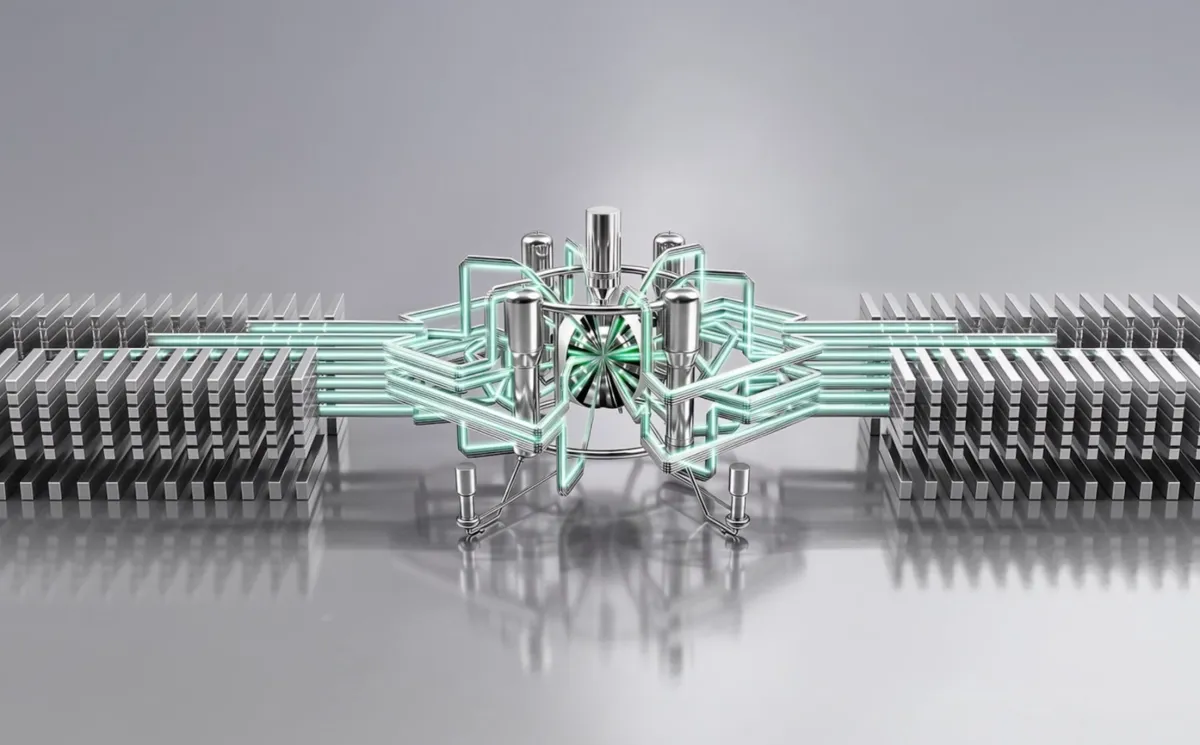
Germany-based Focused Energy is developing a reactor that will use lasers to compress fusion fuel, an approach known as inertial confinement. The lasers fire on a fuel target, which compresses under the onslaught to create conditions ripe for fusion. When atoms inside the fuel finally fuse, they release significant amounts of energy.
The company is basing its design on the experiment at the National Ignition Facility at the Lawrence Livermore National Laboratory in California. That experiment is so far the first and only one to create a controlled nuclear fusion reaction that released more energy than it took to ignite it. The NIF connection is more than conceptual — Debbie Callahan, who helped design the fuel target at the NIF, joined Focused Energy in December as its chief strategy officer.
At Focused Energy, Callahan is working to simplify the fuel target. The NIF’s target is complex and hard to manufacture, and the facility only fires about 400 shots per year. Focused Energy, on the other hand, will need to do 10 shots per second, or about 864,000 shots per day.
One simplification involves doing away with the hohlraum, a precision-manufactured gold cylinder that converts laser energy into X-rays. The X-rays do the work of compressing the fuel pellet at the NIF. Focused Energy’s laser system is what industry insiders call “direct drive” — that is, the lasers directly compress the fuel pellet. That should help boost the reactor’s efficiency, making it easier to produce power.
Focused Energy is hoping to build its first demonstration system, Lighthouse, at the site of a decommissioned nuclear fission power plant in Germany that was operated by the utility RWE.
RWE was the main investor in the Series A, Focused Energy told TechCrunch. The round also included participation from the German Federal Agency for Breakthrough Innovation (SPRIND), Prime Movers Lab, and the European Innovation Council Fund.
As large as this Series A is, the fusion industry has been an investor favorite this year. Last week, Thea Energy raised $100 million to develop its pixel-inspired fusion reactor. In February, Inertia Enterprises raised a $450 million Series A to develop its own reactor, which could be a close competitor to Focused Energy’s. And in January, Type One Energy told TechCrunch that it had raised almost $90 million toward a $250 million Series B.
{content}
Source:{feed_title}
Focused Energy Ignites Fusion Race with $240M Series A, Aims for Laser-Powered Breakthrough
German startup secures massive funding, targets NIF-inspired direct-drive fusion for commercial power.
Key Takeaways:
- Mega Funding Boost:Focused Energy secured a $240 million oversubscribed Series A, bringing its total capital to $500 million ($300M private, $200M grants), making it one of the most well-capitalized fusion startups globally.
- NIF-Inspired Innovation:The company is leveraging the breakthrough at Lawrence Livermore’s National Ignition Facility (NIF) for its laser-driven inertial confinement approach, simplifying fuel targets with a “direct drive” method for higher efficiency and rapid firing.
- Strategic Utility Partnership:German energy giant RWE led the Series A, signaling a critical partnership for Focused Energy’s Lighthouse demonstration system, planned for a decommissioned fission plant site – a significant step towards real-world integration.
The race to harness nuclear fusion, the energy source of the stars, just got another massive injection of capital and a clearer path forward for one of its leading contenders. Germany-based Focused Energy has announced an oversubscribed $240 million Series A funding round, propelling its total private capital to an impressive $300 million. Combined with $200 million in grants, the startup now commands $500 million in resources, cementing its position as one of the most heavily funded players in the increasingly competitive fusion energy landscape.
The Quest for Limitless Clean Energy
Nuclear fusion promises an almost limitless supply of clean energy by fusing light atomic nuclei, releasing enormous amounts of energy without the long-lived radioactive waste associated with nuclear fission. For decades, it has been the holy grail of energy research, perpetually “30 years away.” However, recent scientific breakthroughs and a surge in private investment suggest that commercial fusion power might finally be within reach, driven by global energy demands and the urgent need for decarbonization.
Focused Energy’s Laser-Driven Vision
Focused Energy is pursuing an approach known as inertial confinement fusion, where powerful lasers compress a tiny fuel pellet to extreme temperatures and pressures, forcing atomic nuclei to fuse and release energy. This method gained significant validation last year when the National Ignition Facility (NIF) at Lawrence Livermore National Laboratory achieved “ignition” – producing more energy than the lasers delivered to the target. This landmark event marked the first time a controlled fusion reaction generated net energy gain.
The NIF connection for Focused Energy is more than just conceptual. Debbie Callahan, a key architect of the NIF’s groundbreaking fuel target design, joined Focused Energy in December as its Chief Strategy Officer. Her expertise is crucial as the company aims to translate NIF’s scientific success into a commercially viable power plant. The challenge is immense: NIF fires approximately 400 shots per year, while a commercial reactor would need to fire around 10 shots per second – roughly 864,000 shots daily. Callahan’s mandate is to dramatically simplify and miniaturize the NIF’s complex fuel target for high-repetition-rate operation.
The “Direct Drive” Advantage: Boosting Efficiency
One of Focused Energy’s key innovations lies in doing away with the “hohlraum.” At NIF, the hohlraum, a precision-manufactured gold cylinder, converts laser energy into X-rays, which then compress the fuel pellet. While effective, this indirect drive method is complex, expensive, and energy-intensive. Focused Energy’s system employs “direct drive,” where lasers directly impinge upon and compress the fuel pellet. This simplification eliminates an energy conversion step, significantly boosting the overall efficiency of the fusion reaction. The move promises not only a more robust and simpler manufacturing process for the fuel targets but also a more energy-efficient pathway to sustained power generation, a crucial factor for economic viability.
Strategic Partnerships and the “Lighthouse” Project
The Series A round was prominently led by German utility giant RWE, a strategic investor whose participation underscores the growing interest from established energy players in next-generation power solutions. This partnership is pivotal, as Focused Energy plans to build its first demonstration system, aptly named “Lighthouse,” at a decommissioned nuclear fission power plant site formerly operated by RWE in Germany. This choice of location and partner highlights a pragmatic approach to commercialization, leveraging existing grid infrastructure and utility expertise. Other notable investors in the round include the German Federal Agency for Breakthrough Innovation (SPRIND), Prime Movers Lab, and the European Innovation Council Fund, signaling broad support from both public and private sectors for the company’s ambitious goals.
A Hotbed of Fusion Investment and Fierce Competition
Focused Energy’s substantial funding round is not an isolated event but rather indicative of a broader trend: the fusion industry is experiencing unprecedented investor enthusiasm. This year alone has seen several mega-rounds. Thea Energy recently raised $100 million for its pixel-inspired stellarator design, while Inertia Enterprises secured an astounding $450 million Series A for its own reactor, positioning it as a potential direct competitor to Focused Energy in the inertial confinement space. Type One Energy also announced significant progress towards its $250 million Series B. These investments reflect a growing confidence in the private sector’s ability to accelerate fusion development, often outpacing traditional government-funded programs. The diverse technological approaches being explored – from magnetic confinement (tokamaks, stellarators) to various forms of inertial confinement – underscore a healthy but highly competitive innovation ecosystem.
Bottom Line
Focused Energy’s latest funding round marks a significant milestone, providing the capital and strategic partnerships necessary to push its laser-driven fusion concept closer to reality. By leveraging NIF’s groundbreaking science and streamlining the process with “direct drive,” the company aims to overcome critical engineering hurdles. While the journey from a demonstration plant to a commercial, grid-scale fusion reactor remains long and filled with formidable challenges in materials science, engineering, and cost-effectiveness, the influx of private capital and the involvement of major utilities like RWE signal a tangible shift. The dream of clean, abundant fusion power, once relegated to science fiction, is now moving with increasing velocity towards a potential future reality, driven by innovative startups like Focused Energy.
When you purchase through links in our articles, we may earn a small commission. This doesn’t affect our editorial independence.