

FOX Business correspondent Ashley Webster reports on Nissan’s growth in Tennessee as it rides momentum on ‘The Big Money Show.’
Key Takeaways:
- Software Quality Scrutiny:Nissan’s recall of over 51,000 Kicks SUVs due to a dashboard software defect underscores a growing industry-wide challenge, highlighting the increasing financial and reputational risks associated with software complexity in modern vehicles.
- Brand & Financial Impact:While the immediate repair cost for a software update is relatively low, the recall for a popular, newer model like the Kicks can erode consumer trust, impact future sales velocity, and strain dealer resources, potentially weighing on Nissan’s short-to-medium term earnings and brand equity in a competitive segment.
- Broader Industry Trend:This incident serves as a stark reminder for investors across the automotive sector that robust software development and rigorous quality assurance are paramount. Companies failing to manage this risk effectively face not only regulatory penalties but also significant market disadvantages in the race towards software-defined and autonomous vehicles.
Tokyo, Japan –Nissan Motor Co. (TYO: 7201; OTC: NSANY) is confronting a significant quality control issue that could ripple through its brand reputation and bottom line, announcing the recall of more than 51,000 units of its popular Kicks compact SUV. The defect, stemming from a software glitch that can render the dashboard display partially or completely blank, presents not only a safety hazard but also a salient illustration of the growing complexities and vulnerabilities in modern automotive manufacturing, particularly in the realm of integrated software systems. For investors, this incident raises questions about Nissan’s execution in a critical growth segment and the broader industry’s capacity to manage increasingly sophisticated vehicle technology.
The recall affects 51,598 model year 2025-2026 Nissan Kicks vehicles, a relatively new entrant in the U.S. market, manufactured between June 24, 2024, and Jan. 9, 2026. The Kicks, positioned as an affordable and stylish option in the highly competitive compact SUV segment, is a key volume driver for Nissan, making this recall particularly sensitive. Any disruption to its sales momentum or damage to its perception of reliability could have a magnified impact on the automaker’s overall market share and financial performance in North America, a market Nissan is actively working to strengthen.
Nissan attributes the issue to a software logic error within the vehicle’s combination meter, or instrument cluster. This error can trigger a communication failure between electronic controllers during a cold startup, potentially resulting in a partial image, a blue screen, or a completely blank display. This isn’t merely an inconvenience; the malfunction directly contravenes Federal Motor Vehicle Safety Standard 101, which governs vehicle controls and displays, by preventing critical warning lights, indicators, and other safety-related information from reaching the driver. The financial and regulatory compliance risks associated with such breaches are substantial, potentially leading to fines and further reputational damage.
NISSAN RECALLING OVER 26,000 VEHICLES DUE TO DOOR ISSUE THAT COULD INCREASE RISK OF CRASH
A Nissan Kicks compact SUV is displayed at an auto show. Nissan is recalling 51,598 model year 2025-2026 Kicks vehicles due to a software defect that can cause the instrument cluster display to go partially or completely blank. (Gabby Jones/Bloomberg via Getty Images / Getty Images)
“If the combi-meter display cannot show safety related telltales and indicators, the driver may unknowingly operate the vehicle in an unsafe condition, increasing the risk of a crash,” Nissan stated in its filing with the National Highway Traffic Safety Administration (NHTSA). While the company has noted seven technical reports and 205 warranty claims related to the issue between October 2024 and April 2026, it has confirmed no crashes or injuries connected to the defect to date. However, the potential for such incidents casts a long shadow over consumer confidence, which is notoriously difficult to regain once lost and can translate directly into lost sales and market share.
The financial implications of recalls, even software-related ones, are multifaceted. Beyond the direct costs of developing and distributing the software patch and reimbursing dealerships for their labor (estimated at a modest 30 minutes per vehicle for this specific fix), there are significant indirect costs. These include damage to brand perception, potential deferment of new car purchases by wary consumers, and the allocation of internal resources away from future product development or sales initiatives to manage the recall process. For a company like Nissan, which has been navigating a challenging global automotive landscape and undergoing a significant turnaround plan under its “Nissan NEXT” strategy, such setbacks are unwelcome distractions that can derail progress toward profitability targets.
Nissan’s internal investigation began after a field report involving a 2025 Kicks with a blank display screen at startup. Despite initial difficulties in duplicating the problem, diagnostic trouble codes pointed to instrument cluster and communication system issues. Over subsequent months, collaborative efforts between Nissan and its supplier, Continental, ultimately pinpointed an integrated-circuit malfunction disrupting communication within the instrument cluster as the root cause. This highlights the intricate web of modern automotive supply chains, where a single component or its associated software can trigger widespread issues, underscoring the critical importance of rigorous supplier quality control and joint development protocols that extend deep into the electronic and software layers.
NISSAN ISSUES MASSIVE RECALL AS FAULTY PART THREATENS ENGINE FAILURE
KRAKOW, POLAND – APRIL 17, 2023: Nissan logo seen on Nissan vehicle parked in Krakow center, on Monday, April 17, 2023, in Krakow, Poland. ((Photo by Artur Widak/NurPhoto via Getty Images) / Getty Images)
This recall for the Kicks model is not an isolated incident for Nissan, nor is it unique in the automotive industry. Automakers globally are grappling with an escalating number of software-related defects, a direct consequence of the rapid advancement towards “software-defined vehicles” and increasingly complex in-car electronics. From infotainment systems to advanced driver-assistance systems (ADAS) and powertrain management, software now underpins nearly every aspect of a modern vehicle’s operation. This paradigm shift demands equally robust software development, testing, and over-the-air (OTA) update capabilities, which many legacy automakers are still working to fully integrate to avoid costly dealer visits for software patches.
NISSAN INCREASES JOB CUTS TO 20K BY 2027
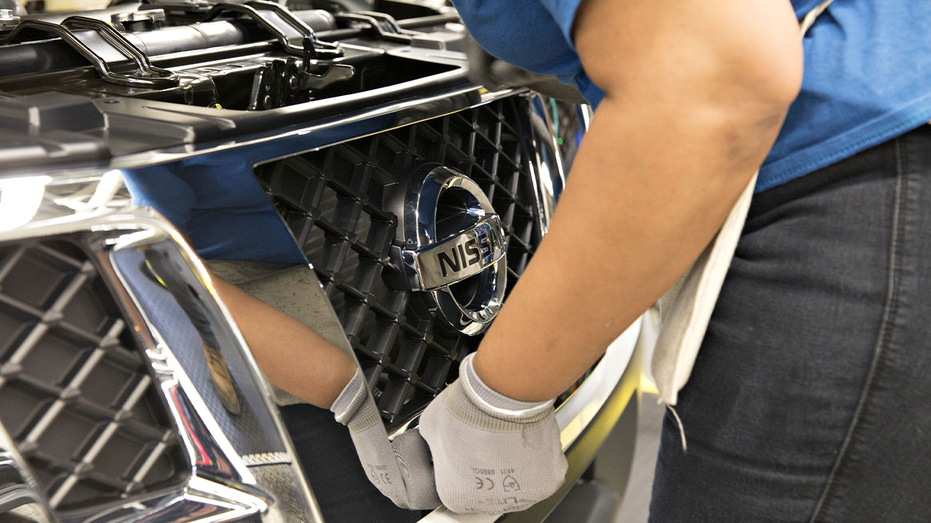
A worker assembles a Nissan vehicle at a manufacturing facility. Nissan is recalling 51,598 model year 2025-2026 Kicks SUVs because a software defect can cause the instrument cluster display to go partially or completely blank.(Getty / Getty Images)
To rectify the problem, Nissan dealers will update the combination meter software at no cost to owners, a process expected to take approximately 30 minutes. Dealer notifications commenced on May 22, with owner notification letters slated to be mailed beginning July 1. Affected vehicle owners can contact Nissan customer service at 800-647-7261 and reference recall number PMA66. The efficiency and effectiveness of this recall campaign will be crucial in mitigating long-term brand damage and ensuring regulatory compliance, thereby safeguarding investor confidence.
GET FOX BUSINESS ON THE GO BY CLICKING HERE
FOX Business has reached out to Nissan for additional comment on the matter, particularly concerning any estimated financial impact or potential measures being taken to prevent similar software-related issues in future models.
Market Impact:
This recall, while seemingly a straightforward software fix, could have subtle yet notable implications for Nissan and the broader automotive market. For Nissan (TYO: 7201; OTC: NSANY), even without reported injuries, the recall could exert downward pressure on investor sentiment, particularly if it signals broader issues with quality control or the integration of new technologies in key models like the Kicks. Analysts will be watching for any impact on upcoming sales figures for the Kicks, which competes in a cutthroat segment, as consumer confidence is paramount. Competitors, especially those touting robust tech integration and reliability, may subtly capitalize on such incidents. More broadly, this event reinforces the investment thesis that robust software engineering and cybersecurity measures are becoming as crucial as traditional mechanical engineering in determining an automaker’s long-term success and stock valuation. Companies demonstrating superior software quality and seamless OTA update capabilities may increasingly command a premium in the market, while those frequently resorting to dealer-based software fixes could face persistent valuation headwinds and increased regulatory scrutiny.