Close Menu
Newstech24.com
  • Home
  • News
  • Technology
  • Economy & Business
  • Sports News
What's Hot

Airbnb’s Smart System: How It’s Stopping July 4th Parties Before They Start

29/06/2026

Ancelotti’s World Cup Secret: How He Shut Down Brazil-Japan Mind Games

29/06/2026

The UK’s Autonomous Fleet: Britain’s Next-Gen Drone Warships

29/06/2026
Facebook X (Twitter) Instagram
Monday, June 29
Facebook X (Twitter) Instagram
Newstech24.com
  • Home
  • News
  • Technology
  • Economy & Business
  • Sports News
Newstech24.com
Home - Technology - Tesla FSD: Will It Redefine Mobility? TechCrunch Investigates.
Technology

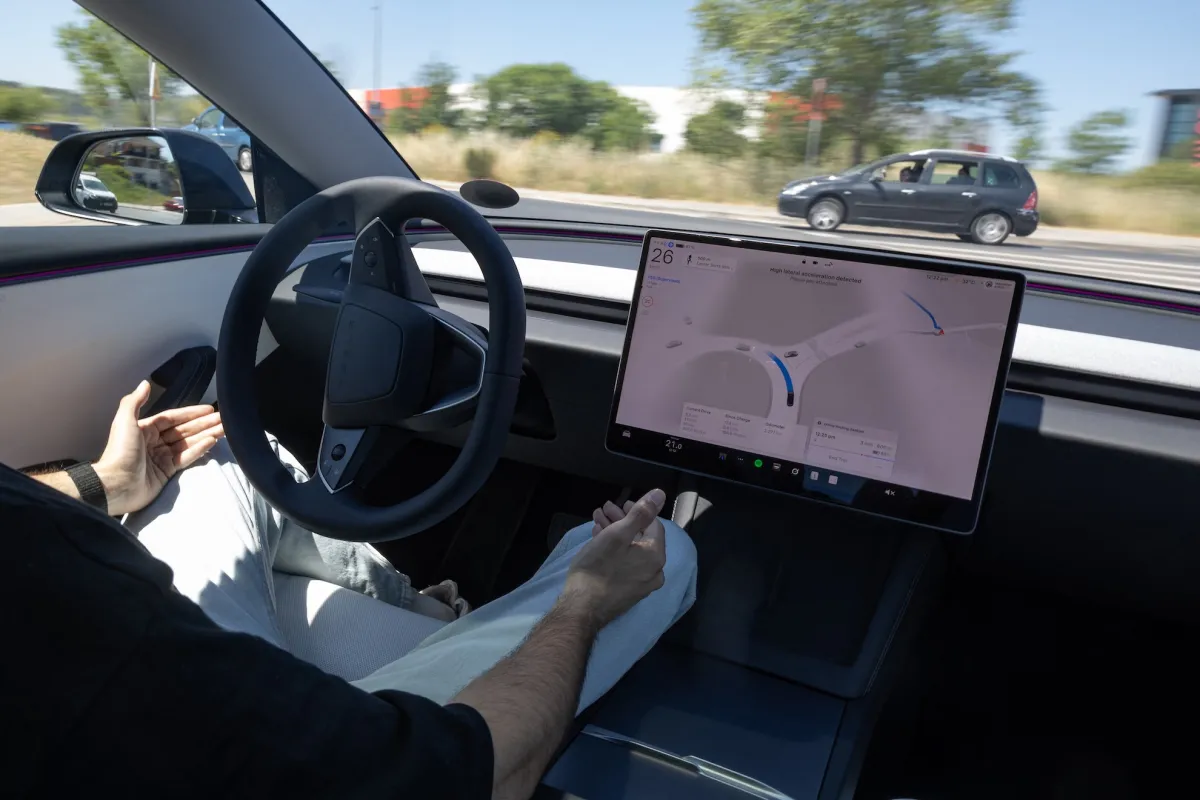
Tesla FSD: Will It Redefine Mobility? TechCrunch Investigates.

By Admin29/06/2026No Comments16 Mins Read
Facebook Twitter Pinterest LinkedIn Tumblr Email
TechCrunch Mobility: All eyes on Tesla FSD
Share
Facebook Twitter LinkedIn Pinterest Email

Welcome back to TechCrunch Mobility, your essential briefing on the future of transportation and the pervasive role AI now plays. To ensure you don’t miss a beat, sign up for free and get this delivered directly to your inbox – just click TechCrunch Mobility!

A quick heads-up to our valued readers: I will be taking a brief hiatus next week for the July 4th holiday. I look forward to reconnecting with you all the following week with more updates from the dynamic world of mobility.

Key Takeaways

  • Tesla’s Autonomy Faces Intense Scrutiny: Following a fatal crash and a recent settlement, Tesla’s Full Self-Driving (Supervised) system is under magnified regulatory investigation, challenging its positioning as an AI and robotics leader amidst safety concerns.
  • Waymo’s Rapid Scaling Revealed: Independent research employing Bill of Lading documents indicates Waymo is aggressively expanding its robotaxi fleet, projected to import over 3,000 Zeekr-sourced Ojai vehicles this year, signaling a significant push in autonomous deployment.
  • Mobility Sector Buzzes with Activity: Despite economic headwinds, the autonomous and electric vehicle ecosystem continues to attract substantial investment, while regulators propose significant policy shifts and major players like Lucid undergo strategic restructuring.

Tesla’s Autonomy Under the Microscope: Investigations Deepen and Questions Mount

The spotlight on Tesla’s automated driving systems, specifically its Full Self-Driving (Supervised) software, has intensified significantly this week, drawing national attention and renewed regulatory scrutiny. A tragic fatal crash in Texas, where a Tesla vehicle struck a home and tragically killed a 76-year-old woman, has become a central point of concern. The incident gained national traction after the driver reportedly informed police that “Autopilot” — Tesla’s basic driver-assistance system, which has since been phased out for newer FSD versions — was engaged at the time of the collision.

This initial account was swiftly met with a conflicting narrative from Ashok Elluswamy, Tesla’s vice president of AI software. Via a post on X, Elluswamy asserted that the driver “manually overrode self-driving by pressing the accelerator all the way to 100% of the accel pedal in this residential area.” His comments strongly suggest the vehicle was operating with FSD (Supervised), rather than the discontinued Autopilot system. However, without an independent and official investigation, the precise sequence of events and the system’s operational status remain unclear. Fortunately, clarity might be on the horizon.

In response to the gravity of the incident, both the National Highway Traffic Safety Administration (NHTSA) and the National Transportation Safety Board (NTSB) have now launched formal investigations into the Texas crash. These probes will be crucial in meticulously determining the exact sequence of events, the vehicle’s state, and the role of driver input. The timing of this heightened attention is particularly salient, coming shortly after Tesla settled a separate lawsuit linked to a fatal 2023 crash involving a vehicle also utilizing FSD (Supervised). That earlier incident is part of an ongoing NHTSA investigation focused on the system’s ability to “detect and respond appropriately to reduced roadway visibility conditions,” such as “sun glare, fog, or airborne dust.”

The confluence of these events — a new fatal crash, ongoing regulatory investigations, and a recent lawsuit settlement — places considerable pressure on Tesla. The company has increasingly branded itself as an AI and robotics pioneer, with FSD (Supervised) being its most prominent and revenue-generating product tied directly to this identity. The outcomes of these investigations will undoubtedly have significant implications for public trust, regulatory oversight, and Tesla’s broader strategic direction in the rapidly evolving autonomous driving space, potentially redefining its claims and market position.

Waymo’s Silent Expansion: The Ojai Fleet Emerges in Force

Image Credits:Bryce Durbin

A valuable tip from a trusted reader has shed compelling light on Waymo’s accelerating plans for its Ojai robotaxi fleet, revealing a significant push towards commercial scale. For those needing a refresher, Waymo entered a strategic supplier agreement with Zeekr, a premium electric mobility brand under China’s Geely Holding Group. This partnership sees Zeekr providing Waymo with a purpose-built electric vehicle, meticulously designed from the ground up to function as a robotaxi. The distinctive minivan-like Ojai is engineered in Sweden and manufactured in China, with a crucial design specification: these vehicles are specifically designed without any vehicle communication modules to comply with current U.S. policy regarding Chinese-connected vehicle technology. Upon arrival in the U.S., Waymo seamlessly integrates its sophisticated sixth-generation self-driving system, comprising an impressive array of 13 cameras, four lidar sensors, six radar units, and multiple external audio receivers, preparing them for autonomous operation.

The New York-based research firm MoffettNathanson undertook a diligent investigation to quantify the true scale of Waymo’s Ojai program. Their methodology involved meticulously examining Bill of Lading documents, which are detailed receipts of shipped goods filed with the U.S. government. By tracking Zeekr vehicle labels “CM1e” or “CME” — the company’s internal designation for Waymo-bound vehicles — MoffettNathanson was able to project Waymo’s import trajectory with remarkable precision. The findings, shared exclusively with TechCrunch, are significant: Waymo is on pace to import an astounding 3,156 vehicles into the U.S. this year, averaging approximately 300 vehicles per month.

This aggressive import schedule underscores Waymo’s commitment to scaling its autonomous ride-hailing services rapidly and substantially. Such a significant increase in fleet size would allow Waymo to broaden its operational footprint, reduce customer wait times, and potentially launch in entirely new markets much faster than previously anticipated, solidifying its position as a frontrunner in the autonomous vehicle race. The data from MoffettNathanson provides tangible evidence of Waymo moving beyond cautious pilot programs towards a robust and widespread commercial deployment strategy, highlighting the company’s burgeoning confidence in its technology’s maturity and its readiness to capture significant market share.

Got a tip for us? Email Kirsten Korosec at kirsten.korosec@techcrunch.com or my Signal at kkorosec.07, or email Sean O’Kane at sean.okane@techcrunch.com.

Driving Investment: Deals Fueling Mobility Innovation and Infrastructure

money the station
Image Credits:Bryce Durbin

Despite a sometimes challenging global investment climate, the mobility sector continues to attract significant capital, with a diverse range of companies securing funding to push innovation forward across various segments. From crucial autonomous vehicle support systems to expanding electric infrastructure, these deals reflect enduring investor confidence in the future of transportation:

  • Aseon Labs, a Silicon Valley startup specializing in developing mobile pods capable of autonomously inspecting, cleaning, and charging robotaxis, successfully raised $10 million in a seed round. The investment was led by Crane Venture Partners, with additional participation from notable entities including Y Combinator, Uber co-founder Garrett Camp’s venture firm Expa, Robin Hood Ventures, and Founders Capital, underscoring the growing ecosystem around efficient autonomous fleet management.
  • CaoCao, a ride-hailing platform, and May Mobility, a prominent autonomous vehicle technology startup, have announced a strategic partnership aimed at jointly exploring and commercializing robotaxi services in international markets, with an initial focus on Europe. This collaboration signals a proactive push for global expansion in the autonomous ride-hailing space.
  • Elroy Air, the innovative startup developing autonomous heavy-cargo drones designed for logistics, is poised to go public through a merger with the blank-check firm Columbus Circle Capital Corp II. The deal is valued at approximately $1 billion, highlighting robust investor interest in autonomous logistics and aerial delivery solutions as the future of supply chains.
  • Partly, a company leveraging AI tools to optimize and streamline the automotive repair supply chain, secured $50 million in a Series B funding round, led by DST Global Partners. This substantial investment indicates strong belief in the potential for AI to dramatically enhance efficiency and connectivity within the broader automotive aftermarket.
  • Spiro, a prominent African electric vehicle and clean energy infrastructure platform, finalized a significant $55 million investment from NewTrails Capital, a Chinese growth-stage fund. This funding is earmarked to bolster the expansion of EV adoption and the development of essential charging infrastructure across the African continent, addressing critical energy transition needs.
  • Terawatt Infrastructure, a key player in providing EV charging solutions for large fleets, including those of Waymo and other autonomous and electric operators, established a five-year senior secured credit facility. This facility could allow the company to borrow as much as $300 million from banks, with proceeds dedicated to supporting the acquisition and development of critical charging depots, further enabling large-scale EV fleet deployments and supporting the transition to electric mobility.

Industry Currents: Regulations, Restructuring, and Evolving Safety Standards

Image Credits:Bryce Durbin

Beyond the headlines of specific companies and funding rounds, broader trends are dynamically shaping the future of mobility, from evolving regulations to strategic corporate adjustments and ongoing debates about safety and operational standards:

  • The U.S. Department of Transportation (USDOT) is proposing significant and forward-thinking changes to federal vehicle regulations that could provide a substantial boost to companies like Tesla and Zoox. The proposed alteration would allow manufacturers to omit conventional brake pedals in “vehicles designed to be driven exclusively by automated driving systems.” This progressive move acknowledges the fundamental differences in design requirements for fully autonomous vehicles and could streamline their development and deployment by removing a conventional control that becomes redundant, or even problematic, in a truly self-driven system, paving the way for more radical interior designs.
  • Lucid Motors continues to navigate turbulent waters, announcing a fresh round of layoffs impacting 18% of its workforce, approximately 1,500 employees. This includes cutting the second shift of EV production at its Casa Grande, Arizona, factory. This marks the second significant workforce reduction in just four months, following a 12% cut earlier this year. CEO Silvio Napoli stated the cuts are part of an ongoing effort “to simplify the company, sharpen execution, and position Lucid to become more competitive over time.” The repeated layoffs, however, raise critical questions about what aspects of the company Lucid is willing to “give up” in this pursuit of simplification, and the long-term viability of its current strategy in a highly competitive and capital-intensive EV market, where production scale is paramount.
  • Lyft CEO David Risher recently published a compelling blog post that garnered considerable attention, outlining the company’s multi-sensor safety standard for autonomous vehicles. This initiative is particularly relevant as ride-hailing companies increasingly integrate AVs into their services. Risher’s emphasis on comprehensive sensor suites and rigorous safety protocols underscores the industry’s ongoing commitment — and crucially, the public’s demand — for verifiable and robust safety measures as autonomous technology becomes more prevalent on public roads, aiming to build trust and ensure reliable operation.

The Bottom Line

This week in mobility underscores a pivotal moment where technological ambition increasingly meets the realities of public roads, regulatory oversight, and market dynamics. While autonomous leaders like Waymo aggressively scale their operations, demonstrating a tangible path to commercialization and widespread deployment, others like Tesla face intensified regulatory scrutiny over their self-driving claims, highlighting the critical importance of safety, transparency, and clear accountability. The continued influx of investment across diverse mobility innovations, from robotaxi support infrastructure to autonomous cargo drones, signals enduring confidence in the sector’s long-term potential for disruption and growth. Simultaneously, regulatory bodies are adapting to entirely new technological paradigms, and established players are undergoing significant restructuring to stay competitive, underscoring the dynamic and often challenging environment. The path to a truly autonomous and electrified future is not linear; it’s a complex interplay of relentless technological advancement, robust regulatory oversight, strategic capital allocation, and an unwavering focus on ensuring safety and earning public trust. The industry is evolving at breakneck speed, demanding constant vigilance and adaptation from all involved as it navigates the road ahead.


Key Takeaways

  • Lyft Takes a Stance on Autonomy: The ride-sharing giant now explicitly excludes autonomous vehicles relying solely on camera-based sensor suites, like Tesla’s FSD (Unsupervised) robotaxis, from its network, citing a preference for multi-sensor systems.
  • Global Robotaxi Race Heats Up: Waymo signals potential expansion into Germany and drops its waitlist in Nashville, while Zoox readies its custom-built vehicles for commercial service, illustrating a dynamic period for autonomous mobility deployment.
  • EV Market Navigates Hurdles: Polestar faces a U.S. sales ban due to regulations on Chinese connected car technology, contrasting with Slate Auto’s launch of a radically affordable, minimalist electric truck, highlighting diverse challenges and innovations in the EV sector.

The tech and mobility sectors continue their relentless pace of evolution, with major players facing regulatory scrutiny, geopolitical headwinds, and the constant push for innovation. This week, the spotlight shines brightly on the autonomous vehicle landscape, where safety philosophies are diverging, and on the broader electric vehicle market grappling with both technological advancements and complex international relations.

The Autonomous Vehicle Arena: Safety, Expansion, and Strategic Shifts

The conversation around autonomous vehicles (AVs) took a significant turn this week with Lyft’s announcement, drawing a clear line in the sand regarding the acceptable sensor technology for AVs operating on its network. The upshot is stark: autonomous vehicles that rely solely on a single type of sensor will not be permitted on the Lyft network. This policy directly impacts highly anticipated models like the Tesla Cybercab and Tesla robotaxis, which utilize FSD (Unsupervised) technology, a system primarily dependent on cameras. Lyft has confirmed that vehicles leveraging a camera-only approach will not qualify.

This decision underscores a fundamental debate within the AV industry: whether a vision-only system, as championed by Tesla, can achieve the same level of safety and reliability as a multi-sensor suite incorporating lidar, radar, and ultrasonic sensors alongside cameras. Proponents of multi-sensor fusion argue that redundancy and diverse data inputs are crucial for robust perception in all conditions, from adverse weather to complex urban environments. Lyft’s move suggests a preference for this more conservative, layered approach to safety as it integrates third-party autonomous fleets onto its platform. It’s important to note, however, that these rules do not apply to advanced driver-assistance systems (ADAS), meaning human-driven Tesla vehicles currently operating on the Lyft app remain unaffected.

In parallel, other major players in the autonomous space are making significant strides. Waymo, the Alphabet-owned autonomous driving company, appears to be eyeing European expansion, having established an entity in Germany. First reported by the German news outlet Frankfurter Allgemeine Zeitung, the company registration filing strongly suggests Waymo is gearing up to launch a robotaxi service in the country. While insiders caution that this doesn’t imply an imminent launch, it signifies Waymo’s long-term global ambitions. Closer to home, Waymo has dropped its waitlist in Nashville, a strategic move that opens up its service to the general public in that market, further accelerating its U.S. expansion and competitive presence.

Meanwhile, Amazon-owned Zoox is also making visible progress. The company recently unveiled a makeover for its custom-built robotaxis as it prepares for commercial service and larger-scale production. This refinement phase is crucial as Zoox transitions from development to deployment, with its Hayward, California, facility poised to become a key production hub. The updates likely reflect lessons learned from extensive testing and a focus on optimizing both the passenger experience and operational efficiency ahead of a broader public rollout.

Beyond passenger mobility, the application of smart technology in logistics is gaining traction. Samsara, a leading fleet management company, is addressing a critical challenge for businesses: cargo theft. The company is rolling out innovative business-card-sized sticky tracking labels designed to provide real-time location data for goods in transit. This solution leverages Samsara’s robust IoT platform to offer enhanced visibility and security, potentially saving businesses significant losses and improving supply chain integrity.

Electric Vehicles: Market Dynamics, Affordability, and Geopolitical Tensions

The electric vehicle (EV) market continues to present a mixed bag of innovation, affordability drives, and complex regulatory challenges. Polestar, the Swedish electric vehicle manufacturer backed by Chinese automotive giant Geely, has hit a significant roadblock in the U.S. market. The company can no longer sell its new cars in the U.S. due to a specific government law that bans certain Chinese connected car technology. This restriction highlights the growing geopolitical tensions impacting global supply chains and consumer access to vehicles, with national security and data privacy concerns increasingly influencing trade policy within the automotive sector. For Polestar, a brand that has positioned itself on design and performance, this ban could significantly hinder its growth trajectory in one of the world’s largest EV markets.

In stark contrast, the emergence of ultra-affordable EVs continues to challenge traditional notions of vehicle pricing. Slate Auto is making waves with its “radically simple” electric truck, starting at an eyebrow-raising $24,950. This price point immediately raises questions about features and compromises. Indeed, the Slate Auto truck is a minimalist proposition: a two-seater with a 205-mile range, hand-crank windows, no infotainment system, and a utilitarian gray composite material finish (though owners can order customizable wraps). The question for potential buyers is whether they would embrace such a back-to-basics approach for a quarter of the price of many conventional EVs. Climate tech reporter and in-house battery expert Tim De Chant has provided valuable insight into why Slate opted to change the battery in its cheap EV truck, a decision that likely plays a critical role in achieving its aggressive price target and range claims while balancing performance and cost efficiency.

Corporate Maneuvers & Legal Reckonings

The corporate landscape also saw its share of significant developments. Uber, the global ride-hailing and delivery giant, is once again facing legal challenges, this time in the form of a lawsuit filed by shareholders. The lawsuit accuses the company’s board and management of prioritizing profits over compliance and safety, decisions that, according to the plaintiffs, have exposed the company and its shareholders to undue risk. This legal action harks back to previous periods of intense scrutiny for Uber regarding its operational practices and corporate governance, underscoring the ongoing tension between aggressive growth strategies and adherence to regulatory and ethical standards.

Finally, in a strategic talent acquisition move that signals its expanding ambitions, OpenAI has brought in top-tier executive talent. The artificial intelligence research and deployment company has hired Prabhjeet Singh, formerly the president of Uber India, to serve as its first managing director. This hire indicates OpenAI’s rapid scaling and its need for experienced leadership in managing complex global operations and commercialization efforts. Bringing in an executive with deep experience from a fast-paced, logistics-heavy tech company like Uber suggests OpenAI is preparing for significant operational expansion beyond its core research, likely into real-world applications and market penetration.

The Bottom Line

This week’s tech news underscores a dynamic and often challenging environment for innovation, particularly in mobility. Lyft’s clear directive on autonomous vehicle sensor requirements highlights the growing emphasis on safety and the ongoing debate over “vision-only” versus multi-sensor fusion. Meanwhile, Waymo’s global expansion and Zoox’s commercial readiness signal the inevitable march of robotaxis, even as regulatory hurdles trip up established EV players like Polestar. The emergence of ultra-affordable EVs like Slate Auto’s truck shows a burgeoning market for accessible electric transport, while corporate governance issues, exemplified by the Uber shareholder lawsuit, remind us that rapid growth must be balanced with ethical compliance. As AI giants like OpenAI strategically bolster their executive teams, the convergence of autonomous technology, electric vehicles, and artificial intelligence continues to reshape industries at an unprecedented pace, demanding constant vigilance and adaptability from all involved.

When you purchase through links in our articles, we may earn a small commission. This doesn’t affect our editorial independence.


{content}

Source: {feed_title}

Like this:

Like Loading…

Related

eyes FSD Mobility TechCrunch Tesla
Share. Facebook Twitter Pinterest LinkedIn Tumblr Email
Admin
  • Website

Related Posts

India’s Digital Payment Future: A Top Chief’s AI-Powered Vision

28/06/2026

Elon Musk’s Orbital Data Center: SoftBank & Industry Insiders Question The Vision

28/06/2026

Master Your Feed: Instagram Testing Deeper Algorithm Control

27/06/2026
Leave A Reply Cancel Reply

Don't Miss
Economy & Business

Airbnb’s Smart System: How It’s Stopping July 4th Parties Before They Start

By Admin29/06/20260

Airbnb co-founder and CEO Brian Chesky reveals what spectators are looking for amid bookings on…

Like this:

Like Loading…

Ancelotti’s World Cup Secret: How He Shut Down Brazil-Japan Mind Games

29/06/2026

The UK’s Autonomous Fleet: Britain’s Next-Gen Drone Warships

29/06/2026

Tesla FSD: Will It Redefine Mobility? TechCrunch Investigates.

29/06/2026

Unlock Unlimited Reading: Access Premium Articles & Exclusive Insights

29/06/2026

Eustaquio’s Canada Winner: The Unbelievable Feeling of a Nation’s Shot

29/06/2026

UK & Dutch Forge Strategic Alliance for Next-Gen Assault Ships

28/06/2026

World Cup 2026: South Africa vs Canada – Who Advances from the First Knockout Stage? Live Goals & Updates

28/06/2026

Apple’s Half-Billion Patent Fight: Will UK Supreme Court Overturn the Verdict?

28/06/2026

Revealed: Bafana Bafana’s XI for Last 16 Decider vs. Co-Hosts Canada

28/06/2026
Advertisement
About Us
About Us

NewsTech24 is your premier digital news destination, delivering breaking updates, in-depth analysis, and real-time coverage across sports, technology, global economics, and the Arab world. We pride ourselves on accuracy, speed, and unbiased reporting, keeping you informed 24/7. Whether it’s the latest tech innovations, market trends, sports highlights, or key developments in the Middle East—NewsTech24 bridges the gap between news and insight.

Company
  • Home
  • About Us
  • Contact Us
  • Privacy Policy
  • Disclaimer
  • Terms Of Use
Latest Posts

Airbnb’s Smart System: How It’s Stopping July 4th Parties Before They Start

29/06/2026

Ancelotti’s World Cup Secret: How He Shut Down Brazil-Japan Mind Games

29/06/2026

The UK’s Autonomous Fleet: Britain’s Next-Gen Drone Warships

29/06/2026

Tesla FSD: Will It Redefine Mobility? TechCrunch Investigates.

29/06/2026

Unlock Unlimited Reading: Access Premium Articles & Exclusive Insights

29/06/2026
Newstech24.com
Facebook X (Twitter) Tumblr Threads RSS
  • Home
  • News
  • Technology
  • Economy & Business
  • Sports News
© 2026

Type above and press Enter to search. Press Esc to cancel.

Powered by
►
Necessary cookies enable essential site features like secure log-ins and consent preference adjustments. They do not store personal data.
None
►
Functional cookies support features like content sharing on social media, collecting feedback, and enabling third-party tools.
None
►
Analytical cookies track visitor interactions, providing insights on metrics like visitor count, bounce rate, and traffic sources.
None
►
Advertisement cookies deliver personalized ads based on your previous visits and analyze the effectiveness of ad campaigns.
None
►
Unclassified cookies are cookies that we are in the process of classifying, together with the providers of individual cookies.
None
Powered by
%d