
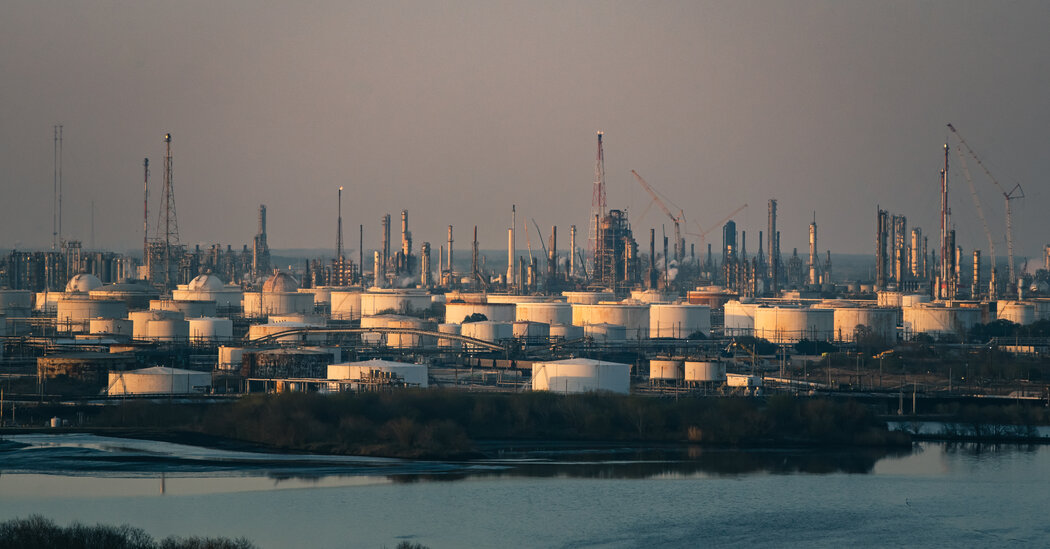
Global energy markets have been significantly disrupted by the ongoing conflict involving Iran, leading to a period of unprecedented profitability for many of the world’s major oil and gas corporations. These companies have reported some of their highest quarterly earnings in years, capitalizing on elevated commodity prices and the complex dynamics of supply chain security.
During the second quarter of the current year, international oil prices averaged approximately $96 per barrel. This represents a substantial increase of 45 percent compared to the same period in the prior year. Such a market environment has particularly rewarded companies that possess robust capabilities in oil extraction, refining, and global shipping, enabling them to navigate the operational challenges and heightened risks associated with the conflict in the Middle East.
Exxon Mobil, the largest oil company in the United States, announced on Friday that its earnings for the April through June period reached $14.53 billion. This figure signifies more than double the profit reported by the company in the second quarter of the previous year, underscoring the lucrative conditions within the energy sector. Darren Woods, Exxon’s chief executive, commented on the company’s preparedness during a recent earnings call, stating, “While we didn’t anticipate the current situation, we were prepared for it.”
Similarly, Chevron reported a significant surge in its second-quarter profit, which soared to $12.07 billion. This marks a substantial increase from the $2.49 billion recorded in the corresponding period a year earlier. Despite the strong financial results, Exxon’s shares experienced a modest decline of roughly 2 percent in morning trading, while Chevron’s shares climbed 1 percent, reflecting varied investor reactions to earnings announcements and future market outlooks.
The financial benefits of the conflict have extended across the Atlantic to Europe’s largest oil companies, including Norway’s Equinor and London-based Shell. Shell announced that its second-quarter earnings tripled compared to the prior year, reaching $10.82 billion. French energy giant TotalEnergies also reported a profit of $5.44 billion for the second quarter, more than doubling its earnings from the year before.
Patrick Pouyanné, chief executive of TotalEnergies, highlighted the persistent market instability during an earnings call, noting, “The situation has remained, to say the least, extremely volatile, with the Strait of Hormuz being an intermittent battleground.” This statement reflects the ongoing operational complexities faced by companies operating in or near key maritime chokepoints.
However, not all major players have experienced the same degree of profit growth. Saudi Arabia’s Aramco, recognized as the world’s most valuable oil company, has been more directly affected by the conflict due to the concentration of its operations within its home country, near the heart of the fighting. Despite these challenges, analysts surveyed by FactSet anticipate that Aramco’s second-quarter earnings, expected next week, will have climbed approximately 27 percent from the previous year, indicating a robust performance amidst regional tensions.
The broader geopolitical environment has been a primary driver of market volatility. The recent collapse of a cease-fire between the United States and Iran, coupled with ongoing disputes over control of the Strait of Hormuz—a critical passage for a significant portion of global oil shipments—has prolonged disruptions to energy markets. Furthermore, a new wave of attacks in the Red Sea, an alternative yet vital shipping route, occurred after the second quarter concluded. These incidents have collectively exerted upward pressure on energy prices.
International oil prices, which had temporarily retreated to around pre-war levels of $72 a barrel at the start of July, rebounded sharply to approximately $87 by the end of the week, underscoring the market’s acute sensitivity to security developments in strategic maritime corridors.
Beyond the extraction of crude oil, the business segment of converting crude into refined products such as gasoline and other transportation fuels has proven particularly lucrative for many companies. Despite instances where crude oil prices saw temporary declines, consumer prices at the fuel pump remained high throughout the spring. This phenomenon was largely attributed to damage sustained by refineries in the Persian Gulf and Russia due to the conflict, which constrained the global supply of refined fuels and widened refining margins.
Despite the influx of significant profits, major oil companies are largely exercising caution, choosing to retain their extra cash rather than substantially reinvesting it in increasing oil and gas production. According to Wood Mackenzie, a leading energy consulting firm, the industry is projected to spend less on producing oil and gas this year than it did in the previous year. This conservative approach is driven by widespread uncertainty regarding the duration and trajectory of the conflict with Iran.
Tom Ellacott, a senior vice president of corporate research at Wood Mackenzie, articulated this sentiment, stating, “There’s just so much uncertainty with respect to prices and how this is all going to play out.” This reflects a broader industry hesitance to commit to large-scale, long-term capital projects in an unpredictable geopolitical landscape, with companies prioritizing financial flexibility and shareholder returns.
The substantial profits reported by oil companies have drawn considerable public and political scrutiny. Environmental advocacy groups and European finance ministers have voiced their anger, as has former President Trump, who in June accused oil giants of “gouging consumers” at the gas pump. The concept of a “windfall tax” on these unexpected profits has re-entered public discourse.
The European Union previously imposed a temporary tax on such profits in 2022 following Russia’s invasion of Ukraine, although oil company earnings during the current crisis have generally not reached the same peak levels observed during that earlier period across most parts of the world. The United States also had a similar levy in place after the oil crises of the 1970s. However, any current legislative effort to implement a windfall profits tax in the United States faces significant challenges, particularly with Republicans, who generally hold sympathetic views towards the oil and gas industry, controlling both chambers of Congress. Eimear Bonner, Chevron’s chief financial officer, emphasized that the company is focused on factors within its control, including increasing oil and gas production by 5 percent from the first quarter and maximizing the processing capacity of its refineries.
The ongoing conflict has also heightened concerns among Wall Street investors regarding significant financial exposure to the Persian Gulf region. Jason Gabelman, an analyst at the investment bank TD Cowen, noted that “Some investors are questioning whether they need to diversify away from that Middle East footprint.” Companies such as Exxon and TotalEnergies maintain substantial investments in countries like Qatar, the United Arab Emirates, and Saudi Arabia, with TotalEnergies also operating in Iraq. These regions present heightened risks for energy production, processing, and transportation due to geopolitical instability.
Despite these investor anxieties, Exxon has maintained an unfazed stance. CEO Darren Woods reiterated the company’s long-term perspective on the region’s importance, stating, “The world needs the resources in that region, and it needs to have the strait opened. We’re convinced that will come to be at some point in the future,” signaling confidence in the eventual stabilization of the region and sustained global demand for its energy resources.
Why This Matters
The current situation, characterized by geopolitical conflict and surging oil company profits, carries significant implications across various global sectors:
- Global Economic Stability:Elevated oil and fuel prices directly contribute to inflation, increasing costs across industries ranging from transportation and manufacturing to agriculture. This erosion of purchasing power impacts consumers and businesses worldwide, potentially stifling economic growth and contributing to broader economic instability if prolonged.
- Energy Security and Geopolitics:The conflict underscores the world’s continued reliance on energy supplies from geopolitically volatile regions, highlighting vulnerabilities in global energy security. It intensifies geopolitical maneuvering as major powers seek to secure critical energy flows and exert influence over regional stability, potentially escalating conflicts beyond current parameters.
- Consumer Impact and Cost of Living:High profits for oil companies are intrinsically linked to higher prices at the fuel pump and for other energy-related goods and services. This directly impacts household budgets and operational costs for businesses globally, contributing to a rising cost of living and potentially fueling public discontent and social unrest in various nations.
- Corporate Strategy and Investment Trends:The decision by major oil companies to prioritize shareholder returns and retain significant cash reserves over substantial new investment in production during a period of high prices raises critical questions about future energy supply. This cautious approach, driven by geopolitical uncertainty, could lead to future supply shortages and influence the long-term trajectory of the energy transition towards cleaner alternatives.
- Government Policy and Regulation:The debate over implementing windfall taxes and the extent of government intervention in energy markets gains significant traction during such crises. Policy decisions made in this environment could establish precedents for how governments balance corporate profitability, consumer protection, and national energy security during periods of instability, shaping future regulatory frameworks.
- Climate Change and Energy Transition:While the immediate focus remains on fossil fuel supply, the crisis indirectly impacts the broader discourse on climate change and energy transition. It highlights the inherent risks of dependence on fossil fuels but also exposes the significant challenges of rapidly scaling renewable energy alternatives to meet global demand in times of crisis, influencing the pace and direction of international climate action strategies.