
Key Takeaways:
- **Erosion of the “Luxury” Threshold:** The $1 million home, once a benchmark for affluence, has been redefined as an entry-level or mid-tier property in many U.S. markets. This shift is a direct consequence of sustained inflationary pressures in housing, fueled by historic low interest rates, chronic supply shortages, and robust demand.
- **Widening Affordability Gap and K-Shaped Housing Market:** The U.S. housing sector is increasingly bifurcated, with a resilient luxury segment driven by high-net-worth individuals less sensitive to rising interest rates, while the starter and mid-tier markets face severe affordability challenges, exacerbated by high borrowing costs and limited inventory.
- **Market Distortions from Outdated Thresholds:** Psychological pricing barriers, coupled with antiquated tax policies designed for a bygone era of housing values, create inefficiencies and influence buyer behavior, impacting transaction volumes and the overall flow of capital within the real estate market.
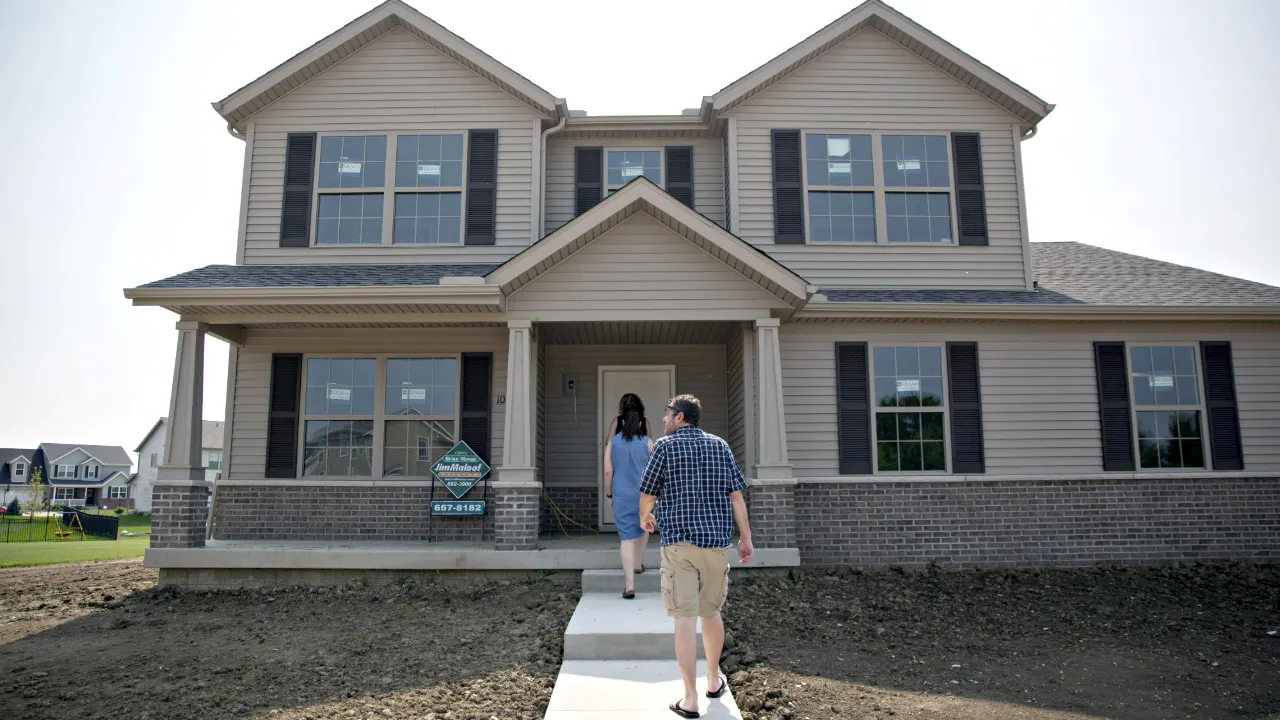
A $1 million home no longer guarantees luxury in much of the United States, as years of relentless price appreciation and evolving market dynamics have pushed millions of properties into seven-figure territory. This re-calibration of value is a critical indicator of broader economic shifts, reflecting the cumulative impact of monetary policy, supply-side constraints, and concentrated wealth on the nation’s housing landscape.
The latest analysis from the National Association of Realtors (NAR) underscores this dramatic transformation, revealing a significant increase in owner-occupied U.S. homes valued at $1 million or more. Climbing from approximately 1.5 million in 2005 to a staggering 6.9 million in 2024, these properties now constitute 8% of the total market, a substantial leap from just 2% two decades ago. This surge is not merely nominal; it represents a profound adjustment in what constitutes a “high-value” asset in the residential real estate market, driven by factors ranging from post-financial crisis quantitative easing to pandemic-era demand surges and persistent underbuilding.
The regional disparities in this trend are stark, highlighting the uneven distribution of economic growth and housing market pressures across the nation. High-cost metropolitan areas and amenity-rich regions have witnessed the most dramatic shifts. For instance, in Hawaii, a remarkable 40% of owner-occupied homes now command values of $1 million or more. Similarly, California and Washington, D.C., see roughly one-third of their residential properties hitting this mark. These markets are typically characterized by robust job growth, high-income populations, limited developable land, and often, restrictive zoning policies that stifle new supply, thereby intensifying price competition.
Conversely, states like Mississippi, North Dakota, and West Virginia — often with lower median incomes, different economic drivers, and more abundant land – report that million-dollar homes account for only about 1% of their properties. This geographic divergence paints a clear picture of a fragmented national housing market, where local economic fundamentals and regulatory environments dictate valuation trajectories.
CASH-STRAPPED HOAS RAMP UP FORECLOSURES AGAINST DELINQUENT HOMEOWNERS: REPORT
Industry veterans affirm this market re-evaluation. Billy Rose, founder and vice chairman of real estate brokerage The Agency, observes that the $1 million threshold ceased representing true luxury in Los Angeles years ago. “In L.A., it seems like there’s so much wealth here and there’s so much elevated housing that the million-dollar threshold now is truly entry,” Rose commented. His assertion points to the unique market dynamics of global gateway cities, where concentrated wealth, international capital flows, and intense competition for prime real estate consistently push valuations upwards. Indeed, some first-time buyers in these elite regions now commence their property searches in the $2.5 million to $3 million range, underscoring the severe entry barriers for younger generations and less affluent buyers.
The current market is also defined by a tense standoff between buyers and sellers, largely attributable to the rapid increase in borrowing costs. Rose notes that sellers remain anchored to the elevated values achieved during periods of historically low interest rates, while prospective buyers, facing significantly higher mortgage rates, are holding out for more favorable deals. This “staring contest” has led to a noticeable decline in transaction volumes. Many existing homeowners are reluctant to sell, effectively locked into their lower mortgage rates, creating a severe inventory crunch that further exacerbates price stickiness, particularly in desirable segments.
The $1 million price point also appears to exert a psychological influence on buyer behavior, impacting market efficiency. NAR data indicates that since 2015, approximately 2.4 times more homes have sold just below $1 million than just above it. This phenomenon suggests that buyers may strategically set search parameters to avoid this round number, potentially due to perceived prestige, different mortgage qualification criteria, or the activation of specific tax liabilities. These artificial thresholds can distort price discovery and transaction patterns, creating micro-markets around these psychological barriers.
New York’s “mansion tax” serves as a prime example of how outdated tax policies can influence market dynamics. Instituted in 1989, this 1% tax applies to purchases of $1 million or more. Crucially, adjusting for inflation, that original $1 million threshold would equate to approximately $2.7 million today. This means a tax originally intended for genuinely luxurious properties now applies to a significantly broader swath of the market, adding an extra $10,000 to the purchase of a $1 million home. Such levies, while generating revenue, can disproportionately affect middle-income buyers in high-cost areas and create friction in property transactions. “I think you need to be looking at whether those thresholds need to increase and be more keeping with the times,” Rose suggests, advocating for policy adjustments that reflect contemporary market realities.
The redefinition of luxury is not confined to the U.S. alone, as highlighted by a recent report from The Agency. In markets near Toronto, 1 million Canadian dollars (approximately $731,000 USD) similarly no longer represents true luxury. Steve Bailey of The Agency notes that high-end properties in these areas generally commence closer to 1.7 million to 3 million Canadian dollars (about $1.2 million to $2.2 million USD). This international parallel underscores a global trend: in prime urban and suburban centers, wealth concentration and limited supply are pushing up property values, making traditional definitions of luxury obsolete.
MIAMI’S TALLEST NEW TOWER NEARS SELLOUT AS PROJECT SPARKS MASSIVE WEALTH MIGRATION FOR TOP EXECUTIVES
The U.S. housing market is currently exhibiting a “K-shaped” recovery pattern, with distinct trajectories for different segments. A recent Zillow report corroborates this, indicating that demand for luxury homes is surging, while sales of starter homes are softening despite growing inventory in that segment. This divergence reflects a broader economic trend where high-net-worth individuals, often less reliant on mortgage financing and insulated from interest rate hikes, continue to drive demand in the premium market. Conversely, first-time and lower-income buyers are disproportionately affected by elevated interest rates, constrained by limited affordable inventory, and outcompeted by investors or wealthier buyers.
Rose explicitly connects this housing trend to the “K-shaped economy,” where wealthy buyers enjoy greater financial flexibility and access to capital, while lower-income buyers face increasing financial pressure and diminished purchasing power. “It’s creating a larger divide between, you know, the haves and the have-nots,” he concludes. This growing chasm in housing affordability has significant socio-economic implications, potentially exacerbating wealth inequality, limiting social mobility, and reshaping the demographic composition of communities.
INSIDE FLORIDA’S $85M JAMES BOND-INSPIRED MANSION BUILT TO ‘MAKE A BILLIONAIRE’S JAW DROP’
GET FOX BUSINESS ON THE GO BY CLICKING HERE
Market Impact:
The re-evaluation of the $1 million home threshold has far-reaching implications for various market participants. For **homeowners**, particularly those who purchased before the recent boom, it signifies substantial equity gains, bolstering household balance sheets. However, it also creates a “golden handcuff” effect, where selling means giving up a low-interest mortgage for a significantly higher one, stifling transaction volume. **Prospective buyers**, especially first-timers and those in the middle-income bracket, face unprecedented affordability challenges, with higher home prices and elevated mortgage rates pushing homeownership further out of reach. This fuels demand for rental properties and intensifies competition in the shrinking “affordable” segment. **Developers and builders** are incentivized to focus on higher-margin luxury developments, exacerbating the shortage of entry-level and mid-market homes, despite public and governmental calls for more affordable housing. **Mortgage lenders** see a shift in loan portfolios, with a greater emphasis on jumbo loans for high-value properties and increased sensitivity to interest rate fluctuations impacting overall lending volumes. **Local governments** may benefit from increased property tax revenues from higher valuations but also face pressure to adjust outdated tax thresholds (like mansion taxes) to reflect current market realities and avoid penalizing ordinary homeowners. Ultimately, this trend contributes to widening **wealth inequality**, poses challenges for **labor mobility** as housing becomes unaffordable in key economic hubs, and could dampen **consumer spending** as a larger portion of household income is allocated to housing costs.
FOX Business’ Eric Revell contributed to this report.