
Eat Just CEO Josh Tetrick says the company is growing ‘five times faster’ today than last year on ‘The Claman Countdown.’
Egg Recall Escalates to Class I: A Deep Dive into Market Implications and Food Supply Chain Vulnerability
Key Takeaways for Investors and Industry Stakeholders:
- Significant Financial and Reputational Hit:Midwest Poultry Services faces substantial financial losses from recall costs, potential lawsuits, and long-term brand damage, signaling heightened operational risk for producers.
- Retailer Supply Chain and Brand Risk:Major retailers like Kroger and Brookshire’s are exposed to supply chain disruptions, immediate sales losses, and potential erosion of consumer trust, underscoring the critical need for robust vendor oversight.
- Broader Market Volatility and Consumer Shift:The incident could trigger short-term egg price volatility, intensify regulatory scrutiny on the entire poultry sector, and accelerate a consumer shift towards perceived safer or alternative protein sources, influencing future investment in food tech.
Weeks after a recall was initially issued, the U.S. Food and Drug Administration (FDA) has dramatically upgraded the alert for more than 1.5 million cartons of eggs to a Class I recall. This isn’t merely a health advisory; it’s a potent signal to the market, highlighting profound vulnerabilities within the food supply chain and posing significant financial and reputational challenges for all stakeholders involved, from producers to major retail chains.
The Class I designation, announced Wednesday, is the FDA’s most severe classification, indicating “a situation in which there is a reasonable probability that the use of or exposure to a violative product will cause serious adverse health consequences or death.” This upgrade follows reports of nearly 98 individuals sickened across 17 states, with 26 hospitalizations, as of the FDA’s July 24 update. While thankfully no deaths have been reported, the scale of illness underscores the critical financial liabilities and operational risks inherent in large-scale food production.
The financial implications for Midwest Poultry Services, the company that initiated the voluntary recall, are expected to be substantial. Beyond the immediate costs associated with retrieving, destroying, and replacing 1,589,577 dozen cartons of white shell eggs and brown cage-free shell eggs, the company faces potential legal challenges from sickened consumers, significant reputational damage, and a likely downturn in future sales. Rebuilding consumer trust, especially after a Class I recall, often requires extensive public relations campaigns and costly enhancements to safety protocols, all impacting operating margins and long-term shareholder value.

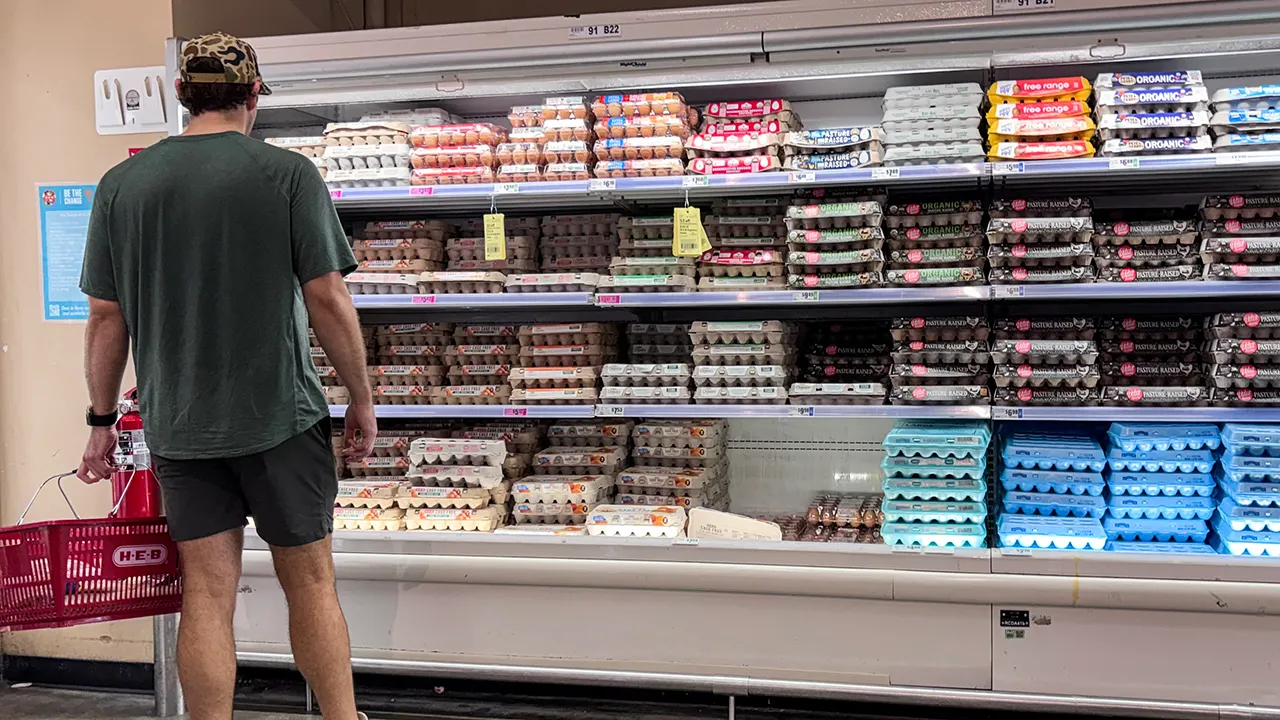
Cartons of eggs are seen at a supermarket in Houston.(Ronaldo Schemidt/AFP via Getty Images / Getty Images)
The recalled products, sold under a variety of prominent brands including Kroger, Brookshire’s, Country Morning, Simple Truth, and Sunups, as well as various bulk Grade A and Grade AA eggs, reveal the wide reach and interconnectedness of modern food distribution. For major retailers like Kroger and Brookshire’s, this incident translates into direct logistical costs for product removal, potential inventory write-downs, and a dent in brand equity. Consumer confidence, a crucial intangible asset, can be swiftly eroded when staple products like eggs are linked to severe health risks. This necessitates immediate and transparent communication strategies, often at considerable expense, to reassure their customer base and mitigate long-term sales impact.
Distribution spanned Texas, Oklahoma, Arkansas, Louisiana, New Mexico, and Mississippi, with potential for further reach. The concentration of cases – 73 in Texas alone – points to a regional supply chain vulnerability, but the broader distribution across 17 states underscores the systemic risks. The FDA’s acknowledgement that “product could have been distributed further, reaching additional states” creates an overhang of uncertainty for the entire egg market and other regional distributors, potentially prompting wider voluntary withdrawals or increased scrutiny of other suppliers.

Recalled retail egg cartons for Country Morning Grade A Large 12-count, top, and Brookshire’s Jumbo 12 White Eggs.(U.S. Food and Drug Administration / Fox News)
The incident originated from two farms in Texas and was detected during routine environmental testing. While such testing is a critical risk mitigation measure, the fact that contamination reached this scale before full containment raises questions about the frequency and robustness of existing protocols, potentially inviting greater regulatory scrutiny across the entire poultry industry. This could lead to increased compliance costs for producers, impacting their profitability and potentially influencing commodity egg prices in the medium term, as the cost of heightened safety measures is often passed down the supply chain.
This egg recall doesn’t occur in a vacuum. It joins a recent spate of food safety concerns, including a recall of popular Reese’s and Almond Joy ice cream bars over labeling errors, and Whole Foods’ recall of salsa, guacamole, and prepared foods due to salmonella. The mention of a deadly cyclosporiasis outbreak linked to lettuce further highlights a systemic challenge within the broader food industry, placing sustained pressure on companies to enhance their risk management frameworks and food safety investments. For investors, this recurring theme signals a need to factor in escalating operational risks and potential regulatory headwinds when evaluating food sector stocks.

A 12-count carton of Kroger Grade A Medium eggs subject to the Salmonella recall notice.(U.S. Food and FDA / Fox News)
Such food safety scares can also catalyze shifts in consumer behavior and market dynamics. With heightened awareness of health risks associated with traditional animal products, demand for alternative protein sources could see an acceleration. The accompanying video’s insight from Eat Just CEO Josh Tetrick, stating the company is growing “five times faster” today than last year, is particularly pertinent. This trend could see investment dollars increasingly flow towards plant-based or lab-grown alternatives, potentially impacting the long-term market valuation of conventional egg producers and associated agricultural firms as consumer preferences evolve.
For commodity markets, a recall of this magnitude can create localized supply shortages, potentially driving up egg prices in affected regions or leading to increased imports from unaffected areas, impacting logistics costs. While 1.5 million dozen eggs represents a fraction of the total U.S. annual production, concentrated regional impacts can still cause significant price volatility and disrupt established supply agreements. Investors in agricultural futures and food processing companies should monitor these ripple effects closely, as even perceived risks can influence trading sentiment.
CLICK HERE TO DOWNLOAD THE FOX NEWS APP
Market Impact
The escalation of the egg recall to a Class I level carries immediate and profound market implications. For Midwest Poultry Services, the financial fallout will be severe, encompassing recall expenses, potential litigation, and a significant blow to their brand equity, which could impact their ability to secure future contracts or financing. Retailers like Kroger and Brookshire’s face immediate logistical costs and the more insidious threat of eroded consumer trust, potentially affecting sales across their perishable goods categories. More broadly, the incident signals to investors heightened operational risks within the entire food production sector, particularly for companies with extensive supply chains. It could accelerate investment in advanced food safety technologies and traceability solutions, while simultaneously boosting interest and capital allocation towards alternative protein companies, as consumers and institutions increasingly prioritize safety and transparency. We can anticipate increased regulatory scrutiny on food safety protocols industry-wide, potentially leading to higher compliance costs and slight upward pressure on commodity prices as producers absorb these expenses. This event serves as a stark reminder of the fragility of even the most established supply chains and the critical importance of robust risk management in maintaining market stability and consumer confidence.
Fox Business’ Bonny Chu contributed to this report.