
CIA Director Visited Moscow Aboard US Military Transport Amid Strained Relations
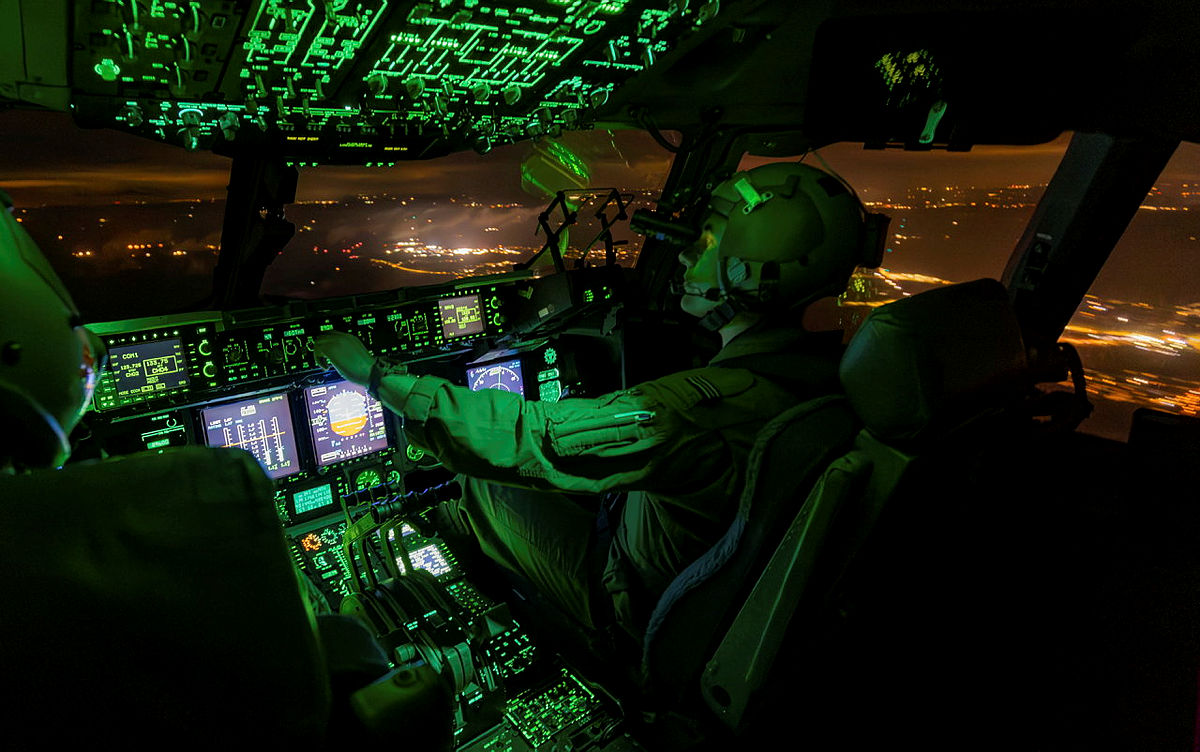
A United States Air Force C-17 Globemaster III aircraft made an unusual flight into Moscow on August 25, drawing significant attention from open-source flight tracking services. The reason for the conspicuous military presence in the Russian capital was later clarified by CBS News, which reported that the aircraft was transporting CIA Director John Ratcliffe for undisclosed meetings with Russian officials.
The development answered the central question raised when the aircraft, identified as US Air Force C-17A Globemaster III serial 07-7191, using the callsign REACH 4555, appeared on civilian flight-tracking services earlier on August 25. What initially appeared to be a highly unusual American military transport movement into Russia was, according to CBS News senior White House reporter Jennifer Jacobs, carrying the CIA Director on a visit to Moscow. Jacobs reported, citing anonymous sources, that Ratcliffe traveled to Russia aboard the C-17 for meetings in the city. She noted that this appeared to be his first known trip to the country since becoming CIA Director, although he has reportedly maintained contact with Russian intelligence counterparts.
It appears to be Ratcliffe’s first known trip to Russia as CIA director, though he has maintained contact with Russian intelligence counterparts.https://t.co/J9ugJzGnSj
— Jennifer Jacobs (@JenniferJJacobs) August 25, 2026
The aircraft’s itinerary began on August 23, when it was tracked departing the Washington area en route to Riga, the capital of Latvia. Two days later, on August 25, the C-17 departed Riga and headed eastward towards Moscow. This specific routing immediately drew attention from flight observers because direct movements by identifiable US military aircraft into Russia have become extremely uncommon, particularly amid the current strained relations between Washington and Moscow.
Open-source flight tracking data showed REACH 4555 approaching Moscow, and subsequent visual confirmation through video and photographs circulating from the city showed a C-17 descending towards the Russian capital. These visual confirmations verified that the aircraft had successfully completed its unusual journey into Russian airspace and landed in Moscow.
At the initial stage of tracking, the aircraft itself offered little indication of the nature of its mission. The C-17 Globemaster III serves as the US Air Force’s principal heavy strategic transport aircraft, routinely utilized for moving personnel, vehicles, and oversized cargo over intercontinental distances. The use of ‘REACH’ callsigns is commonly associated with US Air Mobility Command missions, which allowed the flight path to be followed in public without immediately revealing the identity of those aboard or the precise purpose of the aircraft’s dispatch to Moscow.
The CBS News report, however, significantly altered this picture, placing the flight in the clear context of a senior US intelligence visit rather than an unexplained logistical movement. Director Ratcliffe’s reported presence also helps to explain why a conspicuous military aircraft was being used on a route that would otherwise have appeared highly unusual. Despite this clarification, the precise purpose of his meetings, the specific Russian officials he met with, and the detailed subjects discussed have not been made public.
Separate aviation and ground activities surrounding the flight had already suggested that the movement involved more than a routine cargo mission. Following the C-17’s arrival, imagery began circulating that appeared to show US government vehicles traveling in convoy through Moscow. Open-source observers pointed out that the registration plates on these vehicles seemed consistent with diplomatic plates issued in Latvia, suggesting a connection to the C-17’s prior stop in Riga. The timing of these observations now makes a connection with Director Ratcliffe’s reported visit more plausible, although the available imagery does not conclusively establish whether those vehicles transported the CIA Director, formed part of his security detail, or had any direct connection with his delegation.
Additionally, there was other US government aviation activity observed at Riga before REACH 4555 continued to Moscow. A Boeing C-40 aircraft, serial 02-0042 and using the callsign REACH 790, was tracked arriving at Riga International Airport from Joint Base Andrews on August 23, the same day the C-17 arrived. Open-source imagery suggested that this C-40 was parked close to the C-17. While this movement can now be viewed alongside Director Ratcliffe’s reported journey, there has been no confirmation that the C-40 also continued to Russia or that it played a direct role in the CIA Director’s visit.
Jennifer Jacobs’ reporting that Ratcliffe has maintained contact with Russian intelligence counterparts is also a significant detail, indicating that direct, high-level intelligence channels between Washington and Moscow have continued despite the broader breakdown in political and military relations. The specific content of those contacts remains unknown, and there is no public information establishing whether the Moscow meetings concerned critical issues such as the ongoing conflict in Ukraine, the status of detained individuals, strategic stability, general intelligence liaison, or another pressing matter.
The known sequence of events is now considerably clearer than it was when REACH 4555 first appeared over Russia: the aircraft traveled from the United States to Riga, subsequently flew onward to Moscow, and was later identified by CBS News sources as carrying the CIA Director for meetings in the Russian capital. The fundamental reason for the flight is therefore no longer the mystery it was when the movement was initially detected, even if the substance of Director Ratcliffe’s discussions remains undisclosed.
When approached for comment about the flight, the US Air Force declined to provide details. Neither the Central Intelligence Agency nor Russian authorities have yet issued a detailed public account of Director Ratcliffe’s reported meetings. Consequently, while the question of why an American C-17 was in Moscow has been answered, the specific motivations that brought the CIA Director there and what was discussed once he arrived largely remain subjects of speculation.
Why This Matters
The revelation of CIA Director John Ratcliffe’s clandestine visit to Moscow holds significant implications for understanding the complex and often contradictory nature of US-Russia relations. At a time when public diplomatic and military ties between Washington and Moscow are severely strained, such a high-level, discreet meeting underscores the persistent need for direct communication channels, particularly on sensitive intelligence matters.
Firstly, the existence of such a back-channel signifies that despite overt hostilities and public condemnations, both nations recognize the imperative to maintain lines of communication for critical issues. Traditional diplomatic avenues may be deemed insufficient or too public for addressing highly sensitive topics that require discretion and direct engagement between top intelligence officials. This covert dialogue suggests a mutual understanding that certain global or bilateral challenges are too important to leave entirely unaddressed, even between adversaries.
Secondly, such a visit is frequently indicative of an urgent need to discuss specific, pressing matters. Potential topics could range from de-escalating regional conflicts, particularly concerning the war in Ukraine, to managing nuclear proliferation risks, addressing cybersecurity threats, or negotiating the release of detained citizens. These types of discussions are often aimed at preventing miscalculation, reducing tensions, or finding limited areas of cooperation where shared interests might align, even if only temporarily. The absence of public details surrounding the discussions means the world remains unaware of the precise nature of these critical conversations, highlighting the deep sensitivity of the issues at stake.
Thirdly, the role of intelligence agencies in conducting such high-stakes diplomacy is noteworthy. When conventional diplomacy falters, intelligence chiefs often step in as a crucial, albeit unofficial, extension of foreign policy. Their capacity to operate with greater secrecy and directness allows for candid exchanges that political leaders might find difficult in public forums. This underlines the essential, often unseen, function of intelligence services in maintaining strategic stability in a volatile geopolitical landscape.
Finally, the very act of a US Air Force C-17 making a conspicuous flight into Moscow, followed by a controlled leak of the CIA Director’s presence, could be a deliberate signal. To Russia, it might convey a message of serious concern, a willingness to engage on specific terms, or even a demonstration of intelligence reach. To allies, it could offer reassurance that the US is actively managing critical threats, while potentially raising questions about the nature of these private engagements. The fact that the US Air Force declined to comment, and no official statement followed, further emphasizes the delicate balance between necessary secrecy and the eventual, perhaps strategic, disclosure of such an event.