
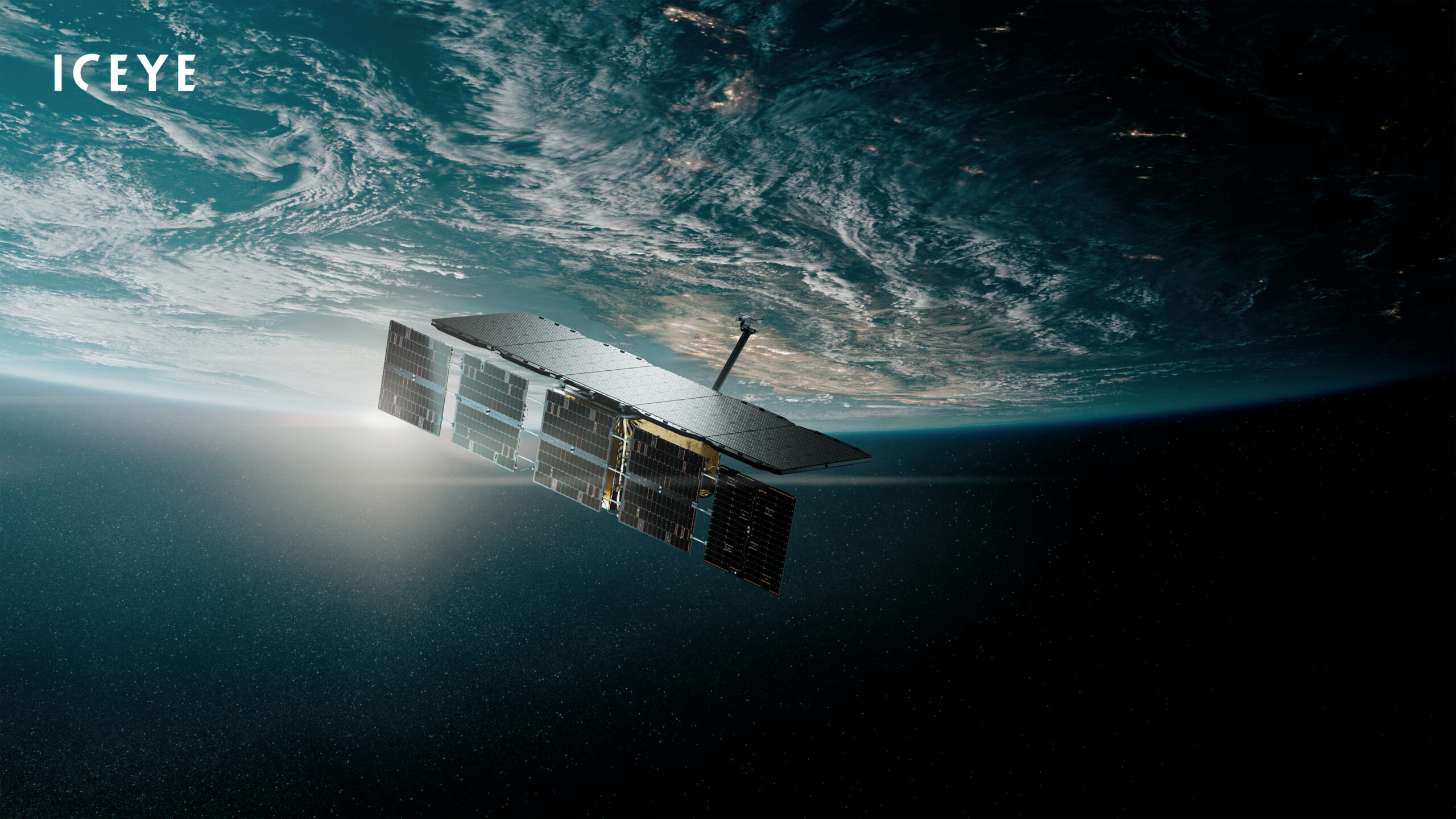
A Russian satellite executed a series of deliberate maneuvers in close proximity to a commercial Finnish satellite over a two-week period, from late September to mid-October. The Finnish satellite, owned by ICEYE, is known to provide intelligence services to the Ukrainian military.
This incident has prompted discussions among experts regarding Russia’s objectives, which could range from testing new space capabilities or gathering intelligence to attempting to intimidate commercial space operators. It also raises questions about the potential role and response of entities such as the U.S. Space Force in addressing similar events in the future.
While no U.S. assets were directly involved, the Russian actions underscore the increasing reliance of modern military operations on commercial space assets and highlight the inherent vulnerabilities of these systems, which are often less defended, both prior to and during conflict scenarios.
According to a detailed report by LeoLabs, a company specializing in space situational awareness, the Russian satellite, designated COSMOS 2612, engaged in precise, fuel-intensive orbital adjustments between October 15 and 19. These maneuvers brought it into close proximity with the ICEYE-X36 satellite.
The LeoLabs analysis indicates that COSMOS 2612 did not merely perform a standard flyby. Instead, it matched the ICEYE satellite’s orbit, shadowed it, and orbited around it, closing the distance to within approximately 500 meters. This behavior required significant orbital adjustments and precise control.
The Russian satellite reportedly spent several months refining its orbit before rapidly initiating the close approach with the ICEYE satellite. It maintained its position and continued maneuvering around the Finnish asset before abruptly ceasing its movements and increasing its distance on October 18-19.
LeoLabs characterized the event as a “red” on “blue” engagement in orbit, describing it as a planned and highly coordinated rendezvous and proximity operation. Such an operation demands advanced navigation capabilities and sophisticated onboard sensing systems.
An ICEYE spokesperson, when asked for detailed comment by Air & Space Forces Magazine, provided a concise statement: “We are aware of the situation and tracking it closely. Our constellation architecture is designed for continuity and resilience.” No further specifics on the incident were disclosed by the company.
The Center for Strategic and International Studies (CSIS) hosted an online discussion on October 21 to delve into the implications of this incident for the United States and the broader international community.
During the CSIS event, neither of the participating experts definitively stated Russia’s specific goals. However, Greg Gillinger, senior vice president of strategy and development at Integrity ISR, described the maneuvers as unusual and suggested they indicated an intent by Russia to convey a message to the Finnish company.
“I still scratch my head about what the Russian endgame is with this,” Gillinger commented, reflecting the ambiguity surrounding the motivations.
Clayton Swope, deputy director of the CSIS Aerospace Security Project, emphasized that the event was certainly not “benign.”
“I don’t think we have enough information right now to know whether or not Russia achieved the objectives it wanted to achieve here,” Swope added, highlighting the ongoing analytical challenge.
The COSMOS/ICEYE incident occurred approximately one month after U.S. Space Force leadership publicly disclosed the existence of on-orbit offensive space weapons under the control of its Guardians.
“Today, we continue to ensure we remain ready to meet the challenge of evolving threats wherever they exist,” stated Air Force Secretary Troy E. Meink during the opening keynote at AFA’s Air, Space & Cyber Conference on September 14. “This is why the Space Force now has on-orbit space control weapons capable of defending the joint force against hostile adversary action.”
Retired Air Force Col. Jennifer Reeves, a senior resident fellow for Space Studies at the Mitchell Institute, suggested to Air & Space Forces Magazine that the timing of the satellite maneuvers, following Meink’s announcement, could be interpreted as a signal, a threat, or an influence campaign by Russia. Such an action could be intended to deter external, commercial support for Ukraine, or it could even be a deceptive maneuver.
U.S. Space Force Capabilities and Future Responses
In 2025, the U.S. Space Force’s Rapid Capabilities Office initiated a project aimed at deploying threat-awareness sensors. These sensors are designed to communicate immediate hazards to space asset operators, potentially providing alerts if a satellite, such as the Russian COSMOS 2612, approaches another spacecraft too closely.
Beyond merely sensing and communicating, an April report from the Secure World Foundation noted a growing trend among nations to fund “bodyguard” capabilities for their space assets. As reported by Air & Space Forces Magazine, countries including Germany, India, France, and Japan are either actively developing or planning to acquire such space-based defense systems, which could offer protection against or counter space-based incursions.
Swope, commenting on the COSMOS/ICEYE incident, underscored the urgent need for clearer international expectations regarding appropriate behavior in space. He predicted that similar incidents are likely to recur, stating, “I just feel like it’s not a question of if; it is a question of when we see these satellites do something that we’re going to say is hostile again.”
He further emphasized that any deployment of “bodyguard” satellites would necessitate a transparent explanation of their intended functions and operational parameters in orbit.
Reeves echoed the sentiment that the Space Force must be prepared to both comprehend and effectively respond to future incidents of this nature. While acknowledging the significant strides the service has made in developing its space domain awareness capabilities, she noted that this represents only one component of a broader preparedness strategy.
“There’s a big difference between knowing where something is and understanding what it’s doing,” Reeves stated, highlighting the complexity of interpreting observed actions.
She recognized the “tremendous progress” the Space Force has achieved in tracking orbital objects through its sophisticated sensor networks and other analytical tools. However, Reeves stressed the necessity for the Pentagon to apply more “rigor” to the protection of both military and commercial assets operating in space.
“The Space Force needs to be running through these scenarios on the regular, and hopefully they are,” Reeves remarked, expressing confidence that such exercises are integral to the force’s wargames and training regimens.
These exercises, Reeves added, should encompass collaboration with both international allies and commercial partners. Key questions that must be addressed include, “We’ve got to determine how quickly we can determine what happened. Can we distinguish an accident from something deliberate? How confident are we in attribution?”
Both Reeves and Swope independently suggested that counteractions or deterrent measures against space-based provocations do not exclusively necessitate space-based retaliation or actions.
Reeves pointed to the potential for the U.S. to target ground-based facilities to disrupt satellite links. Swope, meanwhile, suggested that increased pressure on Russia’s “shadow fleet” of oil tankers—an estimated network of hundreds of older vessels used to circumvent sanctions—could serve as a non-space-based leverage point to influence Russia’s behavior in orbit.
The Need for Clear National Guidance
Ultimately, while the Space Force is tasked with addressing incidents of satellite harassment or attacks, its role requires clearer definitions regarding what constitutes aggression in space and what merits a response. This clarity is particularly crucial given the long-term consequences of space debris and other factors associated with kinetic actions in orbit, as articulated by Reeves.
“I don’t think it’s necessarily the Space Force itself that should be determining that,” Reeves asserted. “I think it should be our national leadership that’s coming up with that. … Because at this point in time, we don’t have that coming from the national-level leadership.”
This perceived absence of top-level guidance places a significant burden on military leadership to define what the U.S. considers hostile actions in space and how the military should appropriately respond.
“We don’t want to be doing this thought work when we’re living it in real time,” Reeves concluded. “There are dire consequences in space if the wrong action is taken or a hostile action is taken.”
Why This Matters
The recent maneuvers by a Russian satellite near a Finnish commercial satellite providing intelligence to Ukraine represent a significant escalation in the militarization of space and highlight several critical implications:
Geopolitical Stability and Escalation Risk:This incident demonstrates a willingness by state actors to engage in aggressive behavior in space, blurring the lines between peacetime competition and conflict. Such actions increase the risk of miscalculation or unintended escalation, potentially opening a new front in ongoing terrestrial conflicts or creating new ones in orbit. The proximity operations raise questions about the safety of all space assets and could lead to a more dangerous and less predictable operating environment.
Vulnerability of Commercial Space Assets:The targeting of a commercial satellite underscores the growing reliance of modern military operations on non-governmental space capabilities. Commercial satellites, often designed for cost-effectiveness rather than military-grade resilience, are increasingly vital for intelligence, communication, and navigation. Their vulnerability to interference, jamming, or direct attack poses a direct threat to the effectiveness of military forces, including those of the United States and its allies. This event forces a re-evaluation of how commercial space assets are protected and integrated into national security frameworks.
Urgency for Space Norms and Governance:The lack of clear international consensus on what constitutes aggressive or hostile behavior in space is a critical issue. Without established norms, incidents like this create ambiguity, making it difficult to attribute actions, determine intent, and formulate proportionate responses. The event highlights the urgent need for international dialogue and agreements to establish rules of engagement and responsible conduct in space to prevent a chaotic and dangerous “Wild West” scenario.
National Security and Deterrence:For nations like the U.S., which heavily rely on space-based capabilities for both military and civilian functions, this incident serves as a stark reminder of the threats to critical infrastructure in orbit. It compels a re-assessment of deterrence strategies, defensive capabilities (like “bodyguard” satellites), and response options, including non-kinetic and ground-based measures. The U.S. Space Force’s recent announcement of offensive space capabilities suggests an evolving approach to space defense, but the broader strategic framework needs clear guidance from national leadership to avoid unintended consequences.
Long-term Sustainability of Space:Any hostile action in space carries the inherent risk of creating space debris. Even non-kinetic actions, if they lead to collisions or the malfunction of satellites, contribute to an increasingly crowded and hazardous orbital environment. Such debris poses a long-term threat to all space operations, potentially rendering certain orbits unusable for generations. This incident underscores the importance of responsible space behavior for the sustainable use of outer space by all nations.