
A Mornings with Maria panel discusses Fed policy ahead of Chair Kevin Warshs Jackson Hole speech and the anticipated Nvidia earnings.
**Key Takeaways**
* **Strategic Continuity Amidst Leadership Shift:** Tim Cook’s transition to Executive Chairman ensures a degree of strategic oversight and continuity, while John Ternus, a seasoned hardware leader, takes the CEO helm. This internal promotion signals confidence in Apple’s existing talent pipeline and a likely continued emphasis on product innovation within the established ecosystem.
* **Cook’s Enduring Legacy of Shareholder Value:** His 15-year tenure transformed Apple into an unprecedented financial powerhouse, achieving a $4.6 trillion market capitalization through masterful supply chain optimization, aggressive expansion into high-margin services, and strategic diversification into new product categories like wearables and payments.
* **Ternus Faces High Stakes in a Dynamic Market:** The new CEO inherits a tech titan but must navigate intense competition, geopolitical headwinds, and the imperative to deliver transformative products (e.g., foldable iPhone, advanced AI integration, AR/VR) to sustain Apple’s premium valuation and growth trajectory amidst evolving consumer demands and a challenging economic landscape.
—
**Apple Enters New Era as Tim Cook Hands CEO Reins to John Ternus Amidst Shifting Tech Landscape**
In a move that reverberates across global markets and the technology sector, Apple CEO Tim Cook is stepping down from his pivotal role at the helm of one of the world’s most valuable companies. After a transformative 15-year tenure that redefined corporate valuation and consumer technology, Cook will transition to Executive Chairman, ensuring continued strategic input. His successor, John Ternus, most recently Apple’s senior vice president of hardware engineering, now assumes leadership, facing the formidable task of steering Apple through an increasingly complex and competitive landscape, even as the broader market grapples with Federal Reserve policy discussions at Jackson Hole and the impact of bellwether earnings like Nvidia’s.
Cook, who officially announced his departure from the CEO role at the end of August, leaves behind an indelible legacy of operational excellence and strategic foresight that translated into unprecedented shareholder value. He famously took the reins in August 2011, just six weeks before the passing of Apple co-founder Steve Jobs, having initially joined the company in 1998 as senior vice president for worldwide operations.
In a memo to employees on his final day as CEO, Cook reflected, “As you know, I am not leaving Apple. But I am stepping away from a role that I have loved deeply. I will miss this work in ways I can only begin to imagine, even as I remain completely at peace with my decision.” He added, “Together, we have created something far greater than any one of us could have imagined or accomplished alone. And that’s the secret to our success. We bring out the best in each other. We lift each other up. We have made it possible to leave our ‘dent in the universe,’ as Steve once described it, because of who we are and what we believe, because of what we value and how we see the world.”
**Cook’s Transformative Legacy: Beyond the Trillions**
Tim Cook’s leadership was characterized by a meticulous focus on supply chain efficiency, global market expansion, and a strategic pivot towards a services-driven ecosystem. Under his watch, Apple cemented its reputation not just as a hardware innovator, but as a holistic platform provider, expanding its reach far beyond the iconic MacBook, iPhone, and iPad. This diversification proved to be a masterstroke, de-risking the company from over-reliance on single product cycles and opening up new, high-margin revenue streams.
The financial milestones achieved under Cook are nothing short of historic. Apple became the first U.S.-based publicly traded company to reach a $1 trillion market capitalization in 2018. This feat was followed by the $2 trillion mark in 2020, briefly surpassing $3 trillion in intraday trading in 2022, and remarkably, crossing the $4 trillion threshold in October 2025. This meteoric rise in valuation, which briefly saw Apple overtake Nvidia for the largest market cap in July 2026, reflects not just market enthusiasm but a fundamental shift in how investors perceived Apple’s long-term growth potential and stability.
Cook orchestrated Apple’s aggressive expansion into new product and service categories. In 2014, the company launched the Apple Watch, marking its entry into the nascent but rapidly growing wearable health tech market, while Apple Pay simultaneously began to challenge traditional payment systems. The subsequent years saw a flurry of new offerings: Apple Music in 2015, transitioning from the download-centric iTunes to a subscription streaming model; AirPods in 2016, which supercharged the growth of Apple’s wearables division into a multi-billion dollar business; and in 2019, Apple TV+ and Apple Card further broadened the company’s service portfolio, deepening customer engagement and creating powerful switching costs within the Apple ecosystem. These initiatives have not only diversified Apple’s revenue base but also significantly bolstered its profitability, with services often commanding higher gross margins than hardware sales.
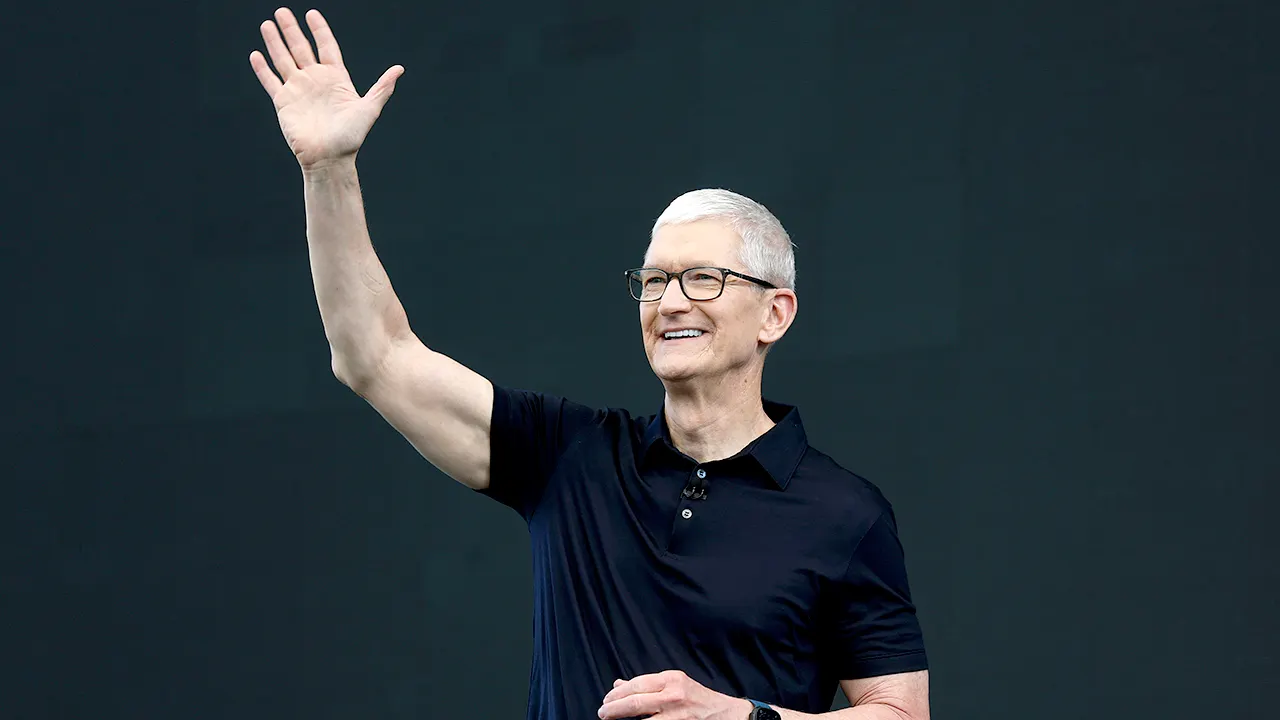
Apple CEO Tim Cook is stepping down from the role on Monday, Aug. 31, after leading the company to historic milestones during his tenure at the helm.(Justin Sullivan/Getty Images)
**The New Era Under John Ternus: Navigating Future Frontiers**
John Ternus steps into the CEO role with a strong background in hardware engineering, having overseen the development of critical Apple products including the iPhone, iPad, Mac, and AirPods. His appointment signals a potential focus on maintaining Apple’s hardware innovation edge, particularly as competition intensifies and new form factors emerge. Cook expressed immense confidence, stating, “I take enormous comfort in handing the helm to someone as brilliant and wonderful and capable as John…few people understand what it takes to build products that change the world the way John does and I could not be more excited for his leadership.”
Ternus’s immediate challenges include sustaining Apple’s innovation cadence and navigating a global supply chain increasingly susceptible to geopolitical tensions, particularly concerning manufacturing hubs in China. The company’s upcoming major event on September 9, where it is expected to unveil its newest iPhone and potentially the long-awaited foldable iPhone, will serve as an early litmus test for Ternus’s vision and leadership. Entering the foldable smartphone segment, as analysts expect, would pit Apple directly against Samsung in a growing, albeit still niche, market segment, demanding significant engineering prowess and marketing muscle.
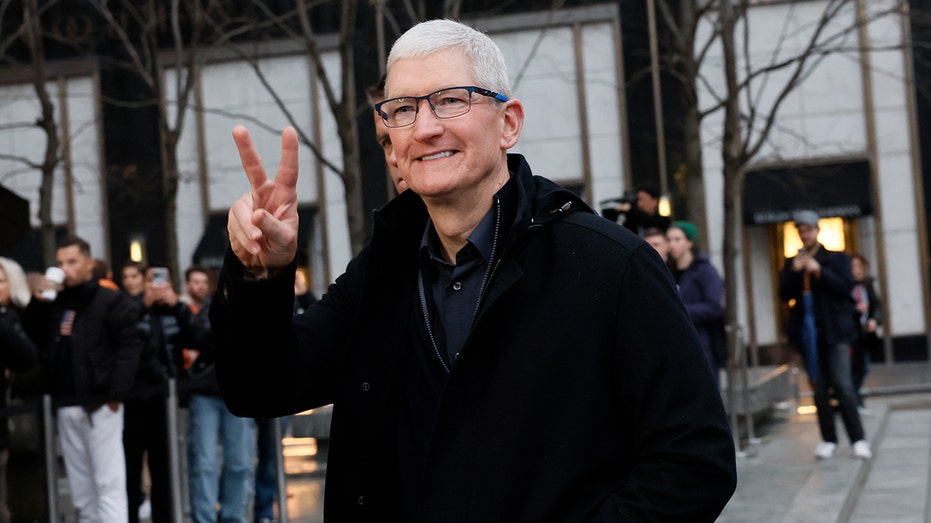
Tim Cook served 15 years as Apple CEO and will remain as the company’s executive chairman.(Michael M. Santiago/Getty Images)
Beyond product launches, Ternus will need to address the broader strategic imperatives: integrating advanced Artificial Intelligence capabilities more deeply across Apple’s product suite, exploring new frontiers like augmented and virtual reality, and potentially even the automotive sector. Maintaining service revenue growth and expanding the subscriber base will also be critical to satisfying investor expectations for continued top-line growth and margin expansion.
**Market’s Reaction and Investor Outlook**
Apple’s stock (AAPL) has historically been a bedrock of many institutional and retail portfolios, known for its resilience and consistent growth. On the news, Apple’s stock saw a slight dip, closing at $316.85, down -0.89%. This modest reaction suggests that while a leadership change at a company of Apple’s magnitude is significant, the market largely views Cook’s transition as well-managed and Ternus’s internal promotion as a move towards continuity rather than radical disruption. The presence of Cook as Executive Chairman likely provides an added layer of stability, reassuring investors of a smooth strategic handover.
| Ticker | Security | Last | Change | Change % |
|---|---|---|---|---|
| AAPL | APPLE INC. | 316.85 | -2.85 | -0.89% |
Apple currently holds a market capitalization of approximately $4.6 trillion, ranking second behind Nvidia’s $5.25 trillion, but comfortably ahead of Microsoft’s $3.79 trillion valuation. This constant jockeying for the top spot among tech giants underscores the dynamic nature of today’s market, where innovation, market dominance, and future growth narratives dictate valuations. The market will closely scrutinize Ternus’s first moves, particularly his approach to Apple’s immense cash pile, capital allocation strategies (dividends and buybacks), and any signals regarding potential new ventures or strategic acquisitions.
**Market Impact**
The transition of leadership at Apple, a company whose market capitalization profoundly influences major indices and investor sentiment, will be a focal point for the tech sector and broader market. While the immediate stock reaction appears muted, the long-term impact hinges on John Ternus’s ability to maintain Apple’s formidable innovation engine and navigate increasingly complex global challenges, including regulatory pressures, intense competition from peers like Nvidia and Microsoft in AI, and geopolitical tensions impacting supply chains and key markets like China. Success in launching compelling new products like a foldable iPhone and effectively integrating next-gen AI could catalyze further growth, reinforcing Apple’s premium valuation. Conversely, any perceived stumble in innovation or strategic missteps could lead to increased investor scrutiny and potential shifts in capital towards other high-growth tech opportunities. The continuity provided by Cook’s executive chairman role offers a buffer, but the onus is now on Ternus to prove he can not only sustain but also accelerate Apple’s trajectory in a highly dynamic global economy.