
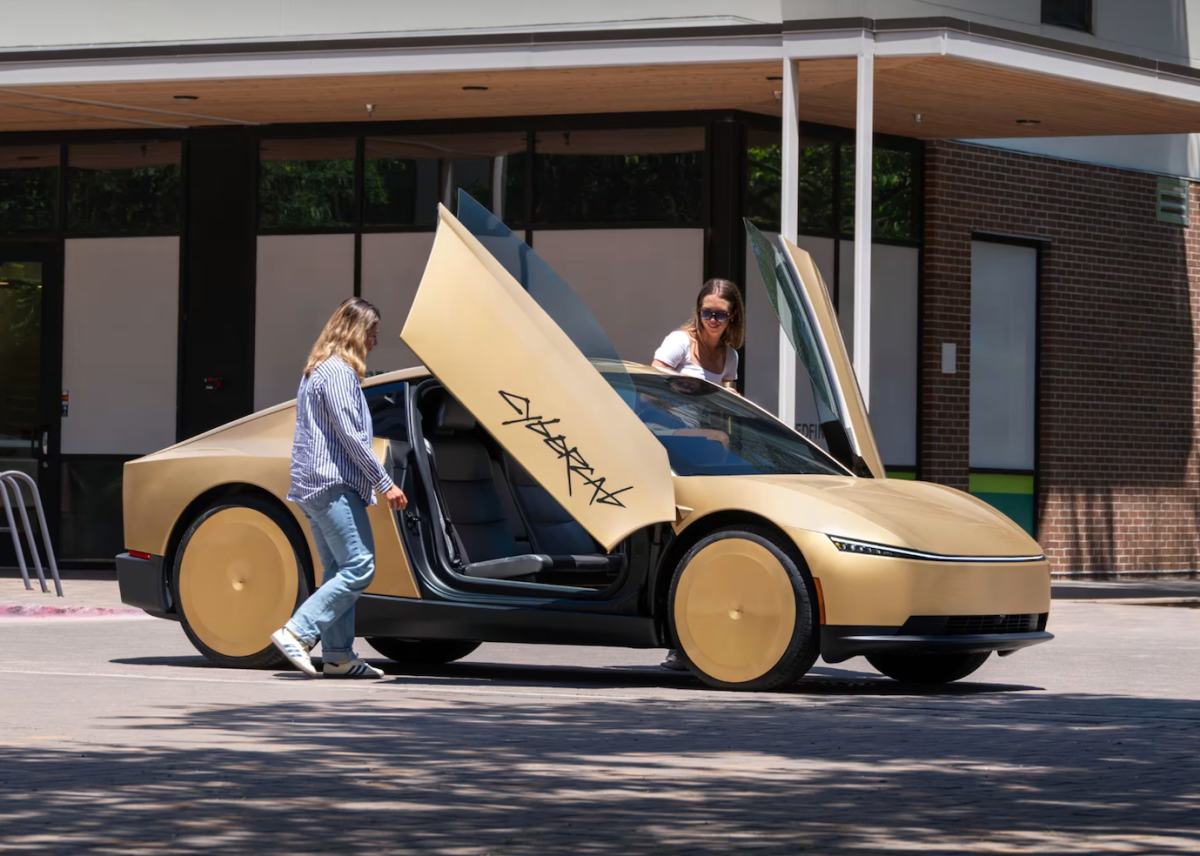
Key Takeaways: Tesla Cybercab’s Understated Debut
- Unconventional & Sparse Launch:Tesla’s highly anticipated Cybercab debut was a private, brief event, notably lacking CEO Elon Musk’s usual fanfare and a comprehensive public reveal, raising questions about its readiness and Tesla’s communication strategy.
- Safety & Design Quandaries:Key details reveal age restrictions for riders under 13, the absence of standard LATCH child seat anchors, and a reliance on electronic door latches, despite past safety concerns, though manual releases are improved.
- Bold Engineering, Lingering Questions:The Cybercab features a cost-saving brake-by-wire system, similar to Cybertruck’s steer-by-wire, alongside peculiar limitations like non-opening windows, underscoring Tesla’s unique approach to innovation and its resulting trade-offs.
Tesla’s private Cybercab event has come and gone, yet it left many observers with more questions than answers. Far removed from the bombastic, livestreamed spectacles characteristic of previous Tesla unveilings, this subdued launch for a product CEO Elon Musk has spent years hyping feels like an odd strategic pivot. The keynote reportedly lasted a mere 15 minutes, with Musk himself conspicuously absent from the podium, leaving a vacuum of detailed information that typically accompanies such a pivotal product introduction.
The promise of the Cybercab is monumental: a fully autonomous vehicle relying solely on cameras and advanced AI, designed to offer a significantly more affordable alternative to existing robotaxi services like Waymo. However, Tesla opted to scatter crucial specifics across obscure PDFs released on Thursday, updated terms of service within its “Robotaxi” app, and through a select circle of die-hard fans tasked with disseminating tidbits online. This fractured approach to information delivery only heightens the skepticism surrounding the vehicle’s imminent rollout, especially as the company faces the formidable task of proving its safety to a wary public, various local governments, and the National Highway Traffic Safety Administration (NHTSA), which has already initiated an investigation into the Cybercab program.
The implications of this low-key, almost evasive, launch are significant. It suggests either an extreme confidence in the product’s ability to speak for itself or, conversely, a cautious approach to revealing a technology that may still be in its nascent stages. Regardless, the details that have emerged, however piecemeal, offer fascinating insights into Tesla’s design philosophy, its priorities, and the potential challenges ahead. Here’s a deeper dive into the most intriguing revelations.
Rider Restrictions and Child Safety Concerns
One of the more surprising stipulations unearthed in the Cybercab’s fine print is the current prohibition of minors under the age of 13 from riding in the vehicle. This stands in contrast to Tesla’s existing “Robotaxi” Model Y SUVs, which permit minors between 8 and 17, provided they are accompanied by an adult. All children under 18 must be accompanied by an adult in both vehicle types, but the Cybercab’s specific restriction for younger children immediately raises a red flag regarding perceived safety or regulatory readiness.
Further compounding these concerns is the Cybercab’s lack of standard LATCH (Lower Anchors and Tethers for Children) anchors for child seats. Instead, child restraints can only be secured using the vehicle’s seat belts. Tesla executives, including Musk, frequently emphasize cost-cutting through the elimination of “unnecessary” parts. While this philosophy drives efficiency, sidelining a fundamental safety feature like LATCH anchors—especially given Musk’s public advocacy for increasing birth rates—seems a curious omission. This design choice could significantly limit the Cybercab’s appeal or practicality for families, pushing it further away from the broad public utility that a true robotaxi service aims to achieve.
Crash Response and Electronic Door Latches
Even with the most advanced autonomous driving systems, collisions remain a possibility. Tesla has outlined a comprehensive, automated response for the Cybercab in the event of a crash. Should an incident occur, the vehicle will automatically deploy airbags, unlock its doors, activate hazard and interior lights, disable the high voltage battery, move windows to a “vent” position, apply brakes to halt and park, and initiate a two-way communication link with Tesla’s rider support team via the infotainment system. This suite of automated post-crash procedures is designed to enhance safety and facilitate emergency response.
The automatic unlocking of doors is particularly noteworthy, given Tesla’s contentious history with its reliance on electronic door latches. The company has faced significant scrutiny, both in the United States and its largest market, China, where just last month Tesla recalled three million cars due to an investigation into electronic door latches that could trap occupants after a crash. This recurring safety concern highlights the critical importance of reliable emergency access, prompting a closer look at the Cybercab’s door mechanisms.
Addressing previous criticisms head-on, the Cybercab’s interior manual door releases appear to be significantly improved. While the primary method of ingress and egress remains electronic—either by pushing a button or using a smartphone, with a small exterior button for riders—the manual release is now prominently located on the armrest of each door. This is a welcome change from previous Tesla models where these manual overrides were often difficult to locate in an emergency, showcasing a direct response to safety feedback and a more user-centric design approach.
Innovative Engineering and Design Quirks
Tesla continues its tradition of pushing engineering boundaries with the Cybercab, notably incorporating a brake-by-wire system. This innovative approach replaces traditional hydraulic braking systems with electronic actuators that directly control the brake calipers. The shift is largely, though not exclusively, motivated by cost reduction and simplified manufacturing. As Elon Musk himself noted, “Having electric brakes avoids the complexity of a hydraulic system: no need to rout [sic] plumbing all around the car.” This mirrors the company’s pioneering use of steer-by-wire in the Cybertruck, which severed the physical connection between the steering wheel and the front wheels. While brake-by-wire promises benefits in terms of responsiveness and integration with autonomous systems, it also introduces new considerations regarding redundancy and reliability in a safety-critical system, areas that Tesla will need to rigorously prove.
Amidst these engineering feats, a peculiar detail emerged: the Cybercab’s windows “cannot be fully opened at this time.” Tesla’s documentation offers no explanation for this limitation, leaving observers to speculate on reasons ranging from climate control optimization to structural integrity or even a future software-locked feature. It’s a small but curious omission that detracts from the user experience, especially for those who appreciate fresh air or might feel claustrophobic.
On a more positive note for passenger convenience, influencer Jeremy Judkins reported that the Cybercab’s USB-C outlets deliver a robust 90W of power. This is roughly four times the power output typically found in a vehicle, allowing for rapid charging of laptops, tablets, and other high-demand devices. This thoughtful inclusion caters to the needs of modern, on-the-go passengers, providing a practical amenity that enhances the robotaxi experience.
The Road Ahead: Challenges and Uncertainty
The Cybercab’s quiet unveiling, coupled with the scattered release of crucial details, paints a picture of a company navigating a complex and highly scrutinized landscape. Tesla’s primary challenge now is not just to innovate, but to prove the unwavering safety and reliability of its camera-only autonomous system, especially in light of the NHTSA investigation and broader public apprehension about self-driving technology. The restrictions for young riders and the absence of LATCH anchors indicate either a cautious, phased rollout or fundamental design choices that might limit its initial market penetration and broad appeal as a family-friendly robotaxi.
Beyond technical validation, Tesla must contend with the regulatory labyrinth that varies significantly by jurisdiction, along with the immense task of scaling production and service infrastructure for a truly widespread robotaxi network. The company’s unique approach to product launches and information dissemination, while perhaps strategic, risks alienating a public and regulatory body that demands transparency and concrete assurances for such a transformative technology. The ultimate success of the Cybercab hinges not just on its technological prowess, but on Tesla’s ability to build trust, address safety concerns comprehensively, and articulate a clear, compelling vision for its deployment.
When you purchase through links in our articles, we may earn a small commission. This doesn’t affect our editorial independence.
The Bottom Line
Tesla’s Cybercab emerges from its unconventional debut as a product brimming with ambitious potential yet shrouded in mystery and questions. Its innovative engineering, exemplified by brake-by-wire and high-power USB-C, is tempered by peculiar omissions like non-opening windows and critical safety concerns surrounding child seat anchors and electronic door latches. The subdued launch, devoid of the typical Muskian grandiosity, underscores the immense hurdles Tesla faces in proving the Cybercab’s safety, reliability, and readiness for a broad public rollout amidst intense regulatory scrutiny. Ultimately, the Cybercab represents another bold gamble for Tesla, whose success will depend less on initial hype and more on meticulous execution and transparent communication to overcome skepticism and deliver on its transformative promise.
Source:{feed_title}